Skip to Content Facebook Feature Image

Tim Cook Just Snubbed Trump—and Doubled Down on China

Blog

Tim Cook Just Snubbed Trump—and Doubled Down on China
Blog

Blog

Tim Cook Just Snubbed Trump—and Doubled Down on China

2025-10-17 17:54 Last Updated At:17:54

While Trump fumes about bringing manufacturing back to America, Apple's Tim Cook just made his second pilgrimage to China this year. On October 15, he sat down with Industry Minister Li Lecheng in Beijing, and the message was crystal clear: Apple's betting bigger on China, not backing away.
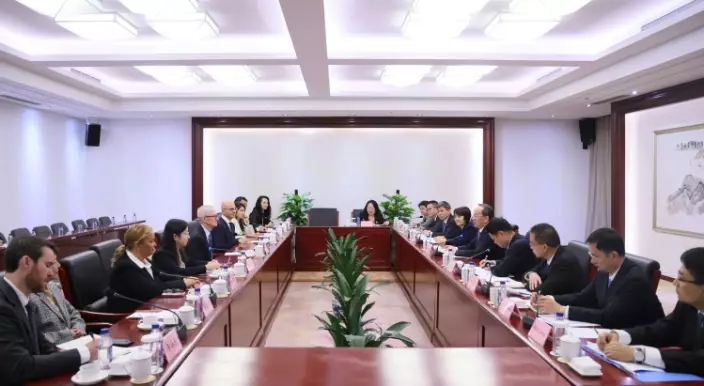
Industry Minister Li Lecheng and Apple CEO Tim Cook meeting in Beijing—where Cook made clear he's all in on China
Industry Minister Li Lecheng and Apple CEO Tim Cook meeting in Beijing—where Cook made clear he's all in on China

Cook didn't just talk—he committed to ramping up investment and tightening ties with Chinese suppliers. For analysts watching this dance, it's a telling moment. Despite all the noise about diversifying to India and Vietnam, China remains Apple's indispensable manufacturing backbone and its most lucrative market.

More Images
Industry Minister Li Lecheng and Apple CEO Tim Cook meeting in Beijing—where Cook made clear he's all in on China

Industry Minister Li Lecheng and Apple CEO Tim Cook meeting in Beijing—where Cook made clear he's all in on China

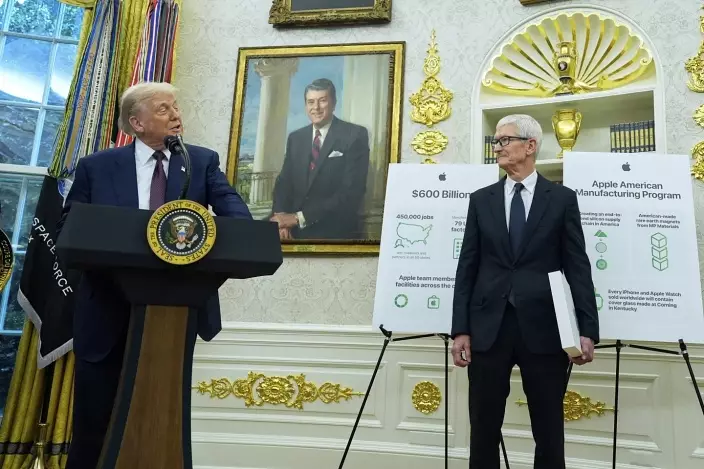
Cook's August meeting with Trump, complete with a $100 billion promise for US investment—but his real money's still flowing to China.
Cook's August meeting with Trump, complete with a $100 billion promise for US investment—but his real money's still flowing to China.

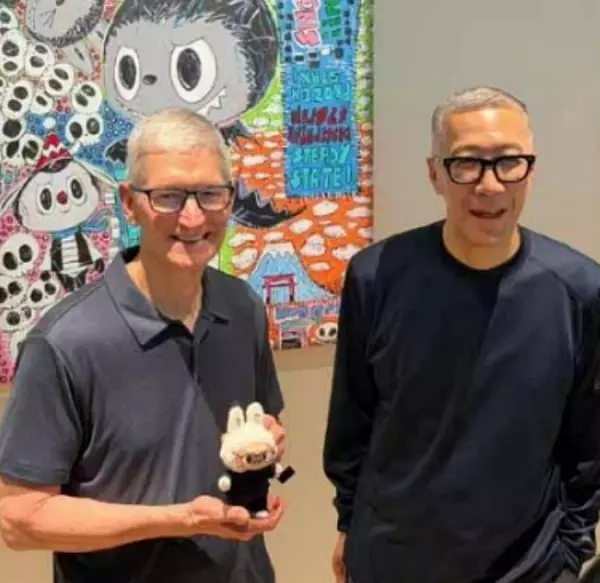
Cook meets LABUBU creator—soft power in action.

Cook meets LABUBU creator—soft power in action.

Cook's Douyin debut went viral—commitment looks like this.

Cook's Douyin debut went viral—commitment looks like this.

Reuters put it bluntly: with tariff tensions between the world's two biggest economies running hot—and Trump obsessed with reshoring manufacturing—most American companies are walking on eggshells around China. But Cook pledged to keep pumping money into China.

Cook's August meeting with Trump, complete with a $100 billion promise for US investment—but his real money's still flowing to China.

Cook's August meeting with Trump, complete with a $100 billion promise for US investment—but his real money's still flowing to China.

Compared to companies like Nvidia and Qualcomm, which are currently sweating under Chinese regulatory probes, California-based Apple has emerged relatively unscathed from the trade war carnage. Sure, Apple's made some token gestures to Trump. But Cook's playing a more sophisticated game.

Back in May, Trump publicly dressed down Cook, slamming Apple's strategy of spreading production beyond China and demanding they bring it all home to American soil. By August, Cook showed up at the White House with a 24K gold-mounted plaque reading "Made in America"—a shiny trinket to commemorate Apple's domestic investment program—and promised an extra $100 billion for US facilities.

Walking a Political Tightrope

A Shanghai-based US government affairs consultant told Reuters that American firms are terrified of looking "too pro-China" and getting roasted by the White House, potentially torching their domestic operations. But they're equally scared of appearing insincere to Beijing—especially after all those "in China, for China" promises they've been making. Cook kept mum on exactly how much he's planning to invest in China, keeping his cards close.

Apple's been making moves to shift some capacity to India, sure. But the reality? They're still massively dependent on Chinese suppliers and factories. That's not changing anytime soon.

When Cook visited China in March, he announced a new investment fund targeting clean energy expansion in China. That 720 million yuan commitment is aimed at helping Apple hit its goal of 100% renewable energy across its supply chain by 2030.

Apple's Chief Operating Officer Sabih Khan also hit the ground in China on October 14, touring AAC Technologies' iPhone 17 Pro vapor chamber module facility in Changzhou, Jiangsu, and Lens Technology's iPhone 17 mid-frame production line in Taizhou, Jiangsu. This was Khan's inaugural China trip to inspect the Apple supply chain since stepping into the COO role.

Green Energy, Big Numbers

That same day, Apple dropped another announcement: over 90% of its China-based manufacturing now runs on renewable energy. Plus, Apple's suppliers have jointly launched a new investment fund to bolster China's renewable energy infrastructure.

The "China Renewable Energy Infrastructure Fund" totals 1 billion yuan, entirely supplier-led, with plans to inject 1 million megawatt-hours of clean electricity into China's grid by 2030.

When Minister Li met Cook on the 15th, he urged Apple to deepen its roots in the Chinese market, actively participate in China's new industrialization drive, and collaborate with Chinese supply chain partners for innovation-driven growth.

Cook's China visit came right after Apple's latest iPhone launch, with Shanghai as his first stop. He popped up at THE MONSTER's 10th-anniversary tour, hanging out with POP MART founder Wang Ning and LABUBU creator Kasing Lung. He also swung by Apple's Shanghai retail stores and announced a donation to support environmental education and climate action projects at Tsinghua University in Beijing.

Cook meets LABUBU creator—soft power in action.

Cook meets LABUBU creator—soft power in action.

Cook Goes Viral on Douyin

Cook even jumped into his first-ever Douyin livestream at Apple's flagship store, which instantly became internet gold. He used the moment to announce iPhone Air's China release, with pre-orders kicking off on the 17th, then whipped out an iPhone Air for a demo, describing it as "so light it could fly away."

Cook's Douyin debut went viral—commitment looks like this.

Cook's Douyin debut went viral—commitment looks like this.

According to fresh data from IDC, Apple's smartphone shipments in China climbed 0.6% year-on-year in Q3 to 10.8 million units—this against a backdrop of sluggish demand in China's smartphone market overall. Powered by the iPhone 17 series, Apple was the only brand among China's top three manufacturers to post shipment growth during that period.

Industry watchers point out that despite Apple's recent efforts to expand manufacturing in India and Vietnam, China remains its most critical manufacturing and sales hub. Cook's signal to expand China investment is being read as Apple's strategic balancing act between diversifying its supply chain and keeping its Chinese market stable.

China has repeatedly emphasized that the business community serves as a stabilizer in China-US relations, a driver of practical cooperation, and a catalyst for people-to-people exchanges.

Chinese Ambassador to the US Xie Feng, speaking at the National Committee on US-China Relations' annual awards dinner on October 14, noted that numerous American companies have chosen China and grown alongside it, vividly embodying the principle of being in China, benefiting both China and the US, and contributing to the world.


Deep Throat

** The blog article is the sole responsibility of the author and does not represent the position of our company. **
Last Friday, Trump flat-out torpedoed a much-anticipated zero-emissions deal for the global shipping industry, smashing it apart at the United Nations' International Maritime Organization (IMO). The Financial Times lays it all bare: to kill the net-zero shipping pact, Trump didn’t just lean on the usual diplomatic muscle—Washington went full gangster. Think raised port fees, outright bans on ships passing through America, and direct threats, and even personal intimidation of diplomats and their families, with entry bans waved in their faces like warning flags.

The Financial Times lays it out: over a dozen diplomats, foreign officials, and industry insiders watched the US throw diplomacy in the mud at last month’s London summit. Washington came armed with bullying tactics, determined to smash the net-zero shipping pact by brute force.

US Bullying Blocks IMO’s Green Shipping Deal—Vote Delayed a Year. IMO website image.

US Bullying Blocks IMO’s Green Shipping Deal—Vote Delayed a Year. IMO website image.

US officials didn’t bother with backroom deals—they stalked the halls, cornering diplomats from Africa, the Pacific, and the Caribbean. The message was simple: cross the United States, and your ships might not reach America. Rock the boat, and your family could be locked out. These weren’t idle whispers. The intimidation played out in broad daylight during coffee breaks.

Social Media Taunts, Policy Upends

Trump didn’t bother hiding his true feelings. On social media, he slammed the agreement as a “global green shipping tax scam.” But this wasn’t just venting. In April, most countries had already green-lit the framework. It was set to become real policy—until Trump’s team blew it up, forcing a one-year “pause.” The global momentum froze on the spot.

One diplomat cut to the heart of it: “It’s like the streets of New York.” His country got the warning firsthand—keep backing the deal, and watch your sailors’ visas disappear. US port fees? Those would rise too. Another attendee was even more blunt: IMO bigwigs were left gobsmacked. “It’s like dealing with the mafia,” they said. “You don’t need details. You just know: cross us, and you’ll pay.”

The US State Department kept mum on the intimidation claims. Instead, American officials handed out praise to Greece and Cyprus. Those two broke rank from the rest of the EU—they cast abstention votes in the big one-year adjournment, even after they already gave the framework the green light back in April.

Secretary of State Marco Rubio, ahead of the IMO meeting in London, issued a joint statement with senior Trump officials warning that the administration was "evaluating sanctions on officials sponsoring activist-driven climate policies that would burden American consumers, among other measures under consideration." As Greece and Cyprus sided with the U.S., much of Europe—and the world—reacted with surprise.

Global Rules or American Muscle?

Chatham House’s head of global economy Creon Butler didn’t mince words. The US, he said, has ditched long-standing diplomatic etiquette. Instead, Washington's now muscling countries into backing its stance—especially on climate.

America Threatens: Support This, Your Crews and Ports Pay.

America Threatens: Support This, Your Crews and Ports Pay.

“In the very short term this might work, but in the medium term it increases the chances that non-US countries will conclude they cannot work with the US, making agreements independently among themselves which simply work around the US,” he said. Sooner or later, the rest of the world will ink deals that leave America in the dust.

The pushback reached fever pitch at the IMO. Brazil, among others, called out the methods “that should not ever be used among sovereign nations”. Washington wasn’t just rattling individuals—entire capitals, from Bangladesh to Japan and Indonesia, got notes threatening diplomatic smackdowns.

But let’s step back. The drive for a net-zero shipping pact isn’t about feel-good climate slogans.

As Niu Tanqin from Xinhua puts it: The pact itself is a brass-tacks response to global warming’s mounting cost. Whether you like it or not, global warming is simply an undisputable fact. Everyone is scrambling to stall off the climate catastrophes looming on the horizon.

So, in order to squeeze carbon emission: if your ship emits less than the set limit, you’re rewarded. Above the cut-off, you pay. China, the EU, Japan, India, Brazil—all were in. Even the big shipping companies joined the chorus.

Only a handful of oil states—think Saudi Arabia, Russia, the UAE—pushed back. Pacific island nations, unconvinced the pact was tough enough, simply abstained.

Trump Says Global Warming’s a Scam—US Walks Out.

Trump Says Global Warming’s a Scam—US Walks Out.

Then, everything changed. Once Trump 2.0 manifested, the US flipped from supporter to saboteur. In his mind, climate change is a hoax—or worse, a Chinese plot to corner American interests. Stopping this agreement wasn’t just policy—it was personal. He didn’t mind stooping low—pulling out every trick in the high school bully’s playbook: pressure, threats, and outright intimidation to make sure America got its way.

One official wasn’t shy: “It was completely exceptional. I have never heard of anything like this in the context of an IMO negotiation. These people [being threatened] are just bureaucrats, they are civil servants.”

If international law becomes a mere cheap disguise, you can bet real power will be the one pulling the strings.

Pause Button Pressed—World Left Reeling

Now, the deal waits on ice for another year, while “the world stares, shell-shocked”—witnesses to a new era of American brinkmanship.

Not the first time, either. Just look at tariffs: if Washington’s unhappy, it writes its own tax bill—no debate required. Venezuela and Nigeria have both fielded threats of military action; Canada and Panama know the taste of territorial intimidation. Lawless? That’s par for the course.


But payback, as always, has a funny way of coming due. Today, the US bullies island nations and slaps down climate claims. Tomorrow, who’s next? When “might makes right” replaces rules, every nation that depends on order will lose out. True justice may come late—but it never skips its date. Chip away at the pillars of fairness, and sooner or later, you bury the very house you live in.

The real question: how long can America’s strong-arm show go on before the world walks out?

Recommended Articles