Trump is to be sitting down with Chairman Xi now, and the anti-China crowd in the "Save Lai" camp is jumping on the opportunity to make waves.
More than 30 members of the US Congress have signed a joint letter pushing Trump to demand Jimmy Lai's release during the talks, and he's said yes to bringing it up. Folks still holding out hope for getting Lai out are buzzing with excitement, but if you take a look at how Trump has talked about the "Lai case" before, you'll see his positions flip more often than he chomps on a head of raw lettuce—each bite delivered with total conviction, only for him to pivot to something else soon after. After you've heard it a few times, it clicks: he's just shooting from the hip.
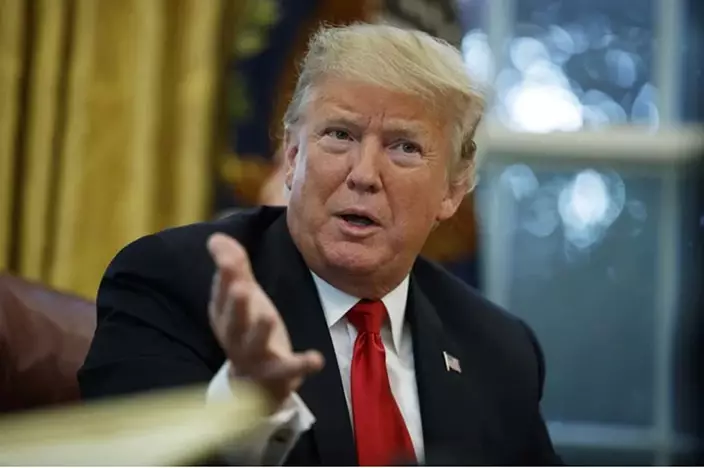
Trump's N flip-flops on Jimmy Lai scream insincerity about "saving" him—he knows China's rock-solid, so his chat with Chairman Xi won't let it touch the "big deal."
Trump’s whole "save Lai" spiel comes off as phony and half-hearted. So when he meets Chairman Xi, even if he mentions the Lai case, it'll probably be a casual aside at best—especially since he's admitted that "President Xi would not be exactly thrilled by doing it". With the other side holding firm, why on earth would he jeopardize the massive "big deal" with China over something this trivial?
Trump's statements are the kind you can just hit delete on and forget. Level-headed observers caught his recent Fox News interview, where the host brought up Jimmy Lai's son Sebastien Lai thanking him for last year's promise, during which he said “One hundred per cent, yes,” on getting Lai out. Trump shot back: "I didn't say 100% I'll save him." but only "I said 100% I'm going to be bringing it up" Those are two totally different commitments.
In that interview, Trump called Lai "a good man" once more, but he swiftly shifted gears to add "we also have to understand Chairman Xi won't be happy to release Jimmy Lai," making it plain he gets that the Chinese side isn't yielding an inch. If he pushed aggressively to save Lai, it'd be like slamming his head into a brick wall—hardly the "art of the deal" he prides himself on.
He's flat-out lying with a straight face when he denies ever saying "100%" on saving Lai. Back during last October's campaign, in a chat with right-wing podcaster Hugh Hewitt, when asked if he'd press Xi for Lai's release after taking office, he declared 100% he’d do it with zero hesitation. True to his big-talking style where bluster costs nothing, he even bragged that freeing Jimmy Lai would be simpler than asking for a light. “He’ll be easy to get out,” he bragged.
At that point, he was also boasting he could wrap up the Russia-Ukraine war in 24 hours flat once in office—we all know how that panned out—so hardly anyone buys that he could "easily save Lai," dismissing it as empty rhetoric.
Trump's Flip-Flops Exposed: From Bold Claims to Backpedaling
Come May this year, as US-China trade talks were already rolling, he popped up on Hugh Hewitt's show again and floated mentioning Jimmy Lai to China as "a very good idea," insisting he'd fold the Lai case into the negotiations. He said it with such earnestness, but to this day, no one's seen US reps slot the Lai case onto the formal agenda or even whisper about it—proving it's not "part of the negotiations" in any real sense.
CNN put the question to Jimmy Lai's former close aide Mark Simon: Has the US actually raised "releasing Lai" in the trade talks? This guy's got ties in Washington and ought to have some insider scoop, but all he could say was, the issue was informally raised in the negotiations, but he’s got nothing to share on the specifics. From that, it's clear it never made it into the official trade discussions—and it's even dubious whether it got a casual nod outside the rooms.

The "Save Lai" crew's recent buzz feels futile; this issue's fading from US-China talks, with zero twists expected in Lai's sentencing ahead.
That was the situation even when US-China trade talks were still in a heated back-and-forth. Fast-forward to now, with both sides having hashed out a consensus framework and just needing the leaders to sign off, Trump is this close to locking in the "big deal" and has zero interest in letting the "Jimmy Lai case" throw a wrench in it—particularly since he knows Chairman Xi isn't budging. Bringing up "releasing Lai" would only sabotage the agreement with no upside, clashing with his whole approach to bargaining.
The New York Times recently spoke with a senior China expert at a US think tank, and his take lines up spot-on: If Trump presses to save Lai, China will dig in hard, making the Lai case a liability for the US and possibly leaving Trump red-faced. Right now, the main flashpoints in US-China friction are strategic tech and tariffs; political sideshows like the "Lai case" are getting pushed further to the margins.
All in all, Trump has gotten this far and just wants to shake hands with Chairman Xi to seal the historic US-China "big deal"—he's not about to let the "Lai case" scuttle it. So even if the "Save Lai camp" keeps pulling these little stunts, it won't shift the facts on the ground.
They'd be smarter to stay sharp, drop the pipe dreams, and brace for the court to deliver Jimmy Lai's multiple sentences.
Lai Ting-yiu
What Say You?
** 博客文章文責自負,不代表本公司立場 **
The anti-immigration wave sweeping Britain isn't slowing down. In fact, it's getting worse. Even Labour—supposedly the left-wing party—is now racing rightward alongside Reform UK, building barrier after barrier to slash citizenship numbers. Friends are calling it a real-life "Squid Game," where anyone trying to settle in the UK faces brutal screening just to get through.

Britain just raised the English bar—and thousands of Hong Kong BNO holders might not clear it.
For those Hong Kong BNO holders, they're wondering if they'll be spared or if that blade hanging overhead is about to drop. The government's latest bombshell: raising English requirements for specific visa categories from B1 to B2 level—that's A-Level standard, university-level English. If this gets extended to permanent residency and citizenship down the line, plenty of Hong Kong BNO holders with "secondary school English" are going to fail. Young Hong Kong people who recently moved over are already venting online, terrified they won't pass and will be forced back, so they're cramming English courses like their lives depend on it.
Home Secretary Shabana Mahmood recently laid out the details of this "Squid Game," and each round is more brutal than the last. Earlier, at the Labour Party conference, she made it clear: permanent residency applicants need a job, must pay national insurance, can't claim benefits, and have to be fluent in English to prove their "value and contribution." If they enforce this strictly, masses of people won't make the cut.
This Wednesday, she went even further with concrete requirements. She announced that three "specific visa" categories—Skilled Worker visas, Scale-up Worker visas, and High Potential Individual visas—now require B2 level English, equivalent to A-Level standard. And as Mahmood emphasized, “If you come to this country, you must learn our language and play your part.” She didn't say whether future permanent residency applications would also need this threshold, but British media previously reported that to push immigrant integration, those granted permanent residence would need higher English proficiency too.
The whole direction is clear: reduce permanent resident numbers. Following this logic, there's no reason to think these harsh measures won't eventually hit Hong Kong BNO holders applying for permanent residency.
Right now, Hong Kong people living in the UK on BNO visas can apply for permanent residency after five years, then citizenship one year later. Their English just needs to hit B1 level—enough to handle daily life. But if the requirement jumps to B2, they'll need to understand complex texts, write proper articles, and articulate viewpoints clearly. Immigrants with average educational backgrounds are going to struggle hard with that standard.
The Panic Sets In
Sure, it's not confirmed yet whether these tough measures will target Hong Kong BNO holders, but those with weaker English are already experiencing full-blown "failure panic."
A post-90s young Hong Kong person who moved to the UK posted online earlier, admitting bluntly that after three years there, their English is only at UK primary school level—not even reaching the B1 level needed for permanent residency applications. Even if the government doesn't raise it to B2, they're worried about failing and being "forced back."
They pointed out that since coming to the UK on a BNO visa didn't require any English assessment, plenty of people are likely going to crash and burn when test time comes, wasting five years of their lives.
Another Hong Kong man also complained online about facing two major problems living in the UK. One of them: his poor English foundation means that even though a university accepted him, studying is brutally difficult. He struggles with assignments, can't keep up with the learning pace, and his grades are terrible, leaving him disheartened and considering going back to Hong Kong.
If this guy's English doesn't improve, his chances of clearing the even higher B2 barrier in the future are basically zero.
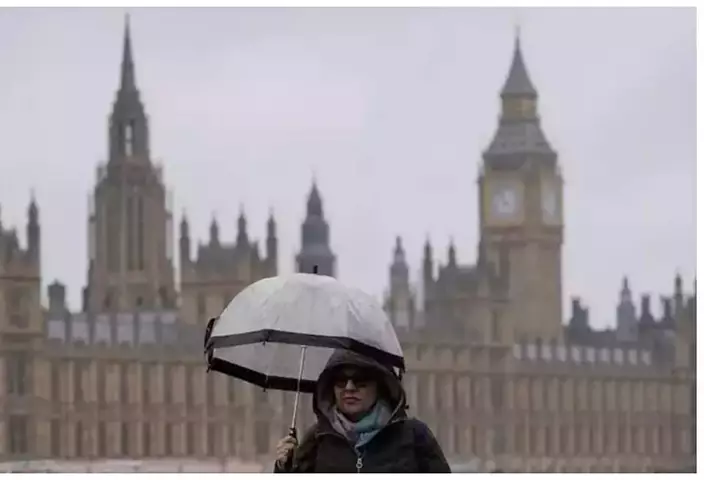
In fact, many Hong Kong migrants discover shortly after landing in the UK that insufficient English proficiency is a serious problem. Years ago, the "Welcoming Committee for Hong Kongers" conducted a survey showing nearly half of respondents still hadn't found work, with many lacking confidence in their English ability, creating major obstacles in job hunting.
It's tough to estimate exactly how many Hong Kong migrants fall into this category, but there are probably quite a few. There should be plenty more like the two men mentioned above sharing similar struggles.
They're already trembling at the prospect of passing the B1 English requirement for permanent residency and citizenship applications. If the government raises that threshold even higher, the risk of "failure" skyrockets. No wonder some people are panicking.
No Way Out
The worst part? The Labour government is actively competing with Reform UK over who can be tougher on immigration policy to reverse its collapsing fortunes. So establishing more barriers to filter out immigrants is an unstoppable trend now.
The "Squid Game" is only going to get harder to play, and raising English proficiency thresholds is just one challenge in this brutal game.
People in this category have only two options: cram English like crazy, or plan an exit strategy early and bail out of the game altogether.
Lai Ting-yiu
What Say You?