Long after the Black Riots ended, key pan-democrats who stuck around Hong Kong played it safe—low profile, out of headlines. But these same figures kept cozy ties with foreign consular powerbrokers, facts anyone can see from repeated public invitations. On this occasion, Anson Chan, Emily Lau, Alan Leong, and Kenneth Leung showed up as VIPs at the British Consulate. The warmth? It’s no mystery, if you know their backstory.
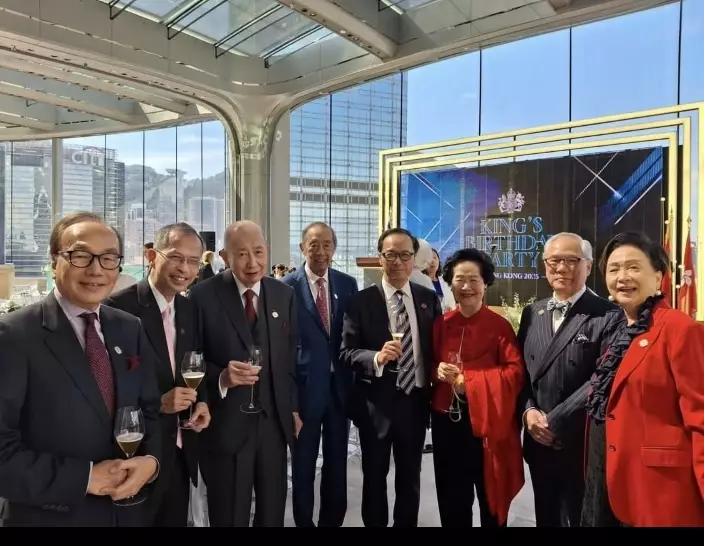
Reunion at the Consulate: Anson Chan, Emily Lau, Alan Leong, and Kenneth Leung pose at the British King’s birthday luncheon
Raising Questions, Finding Evidence
A friend dropped a telling remark after seeing the photo: British decision-makers groomed Anson Chan for power even before the Handover, and those links never really faded. The relationship is unusually tight—two behind-the-scenes stories make that fact plain. Must be why the British still roll out the red carpet for Chan.
After quitting the government in 2001, Chan inched closer to the opposition and even won a Legislative Council seat. For years, US and UK consuls wined and dined her—plenty of evidence in social media posts and diplomatic cables—to allegedly “discuss strategies” for Hong Kong. It’s not gossip; it’s documented pattern.
When the 2019 unrest exploded, Anson Chan took sides on the so-called “international front.” Prosecutors stated in open court that, behind the scenes, Jimmy Lai directed “Stand With Hong Kong” (SWHK)—led by Andy Chan, Andy Li, and Finn Lau—to carry out international lobbying and publicity campaigns, spending large sums of money.
Court documents further show that Anson Chan wasn’t a bystander: back in 2019, she brought Andy Li to a luncheon with then British Consul Andrew Heyn. Martin Lee, Dennis Kwok, and Charles Mok were also there. The prosecution records are clear—Chan leveraged her foreign contacts to make connections for SWHK, all with Jimmy Lai’s shadow looming in the background.
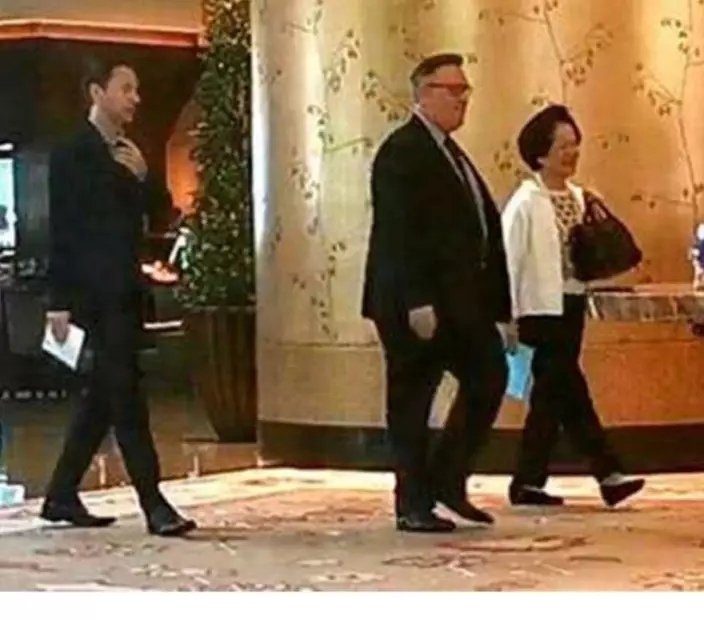
2019, Behind Closed Doors: Anson Chan sits down with Consul Andrew Heyn
Not Just a “Chat Over Tea”
There’s more. During anti-extradition protests, surveillance and eyewitnesses caught Anson Chan on August 13, 2019, holding secret discussions at a hotel with Andrew Heyn and his aide—documents in hand. That was no idle chat. The British Consulate’s involvement raises eyebrows, especially as staff like Simon Cheng were repeatedly spotted at protest sites. Cheng ran off to the UK, claimed political asylum, and neatly sidestepped questions about his activities.
With the national security law approaching, Chan made a quick exit from politics—claiming “retirement.” She kept out of jail, but her dealings with foreign diplomats never stopped. When the new US Consul General Julie Eadeh met her right on arrival, Beijing protested—an incident widely reported by state outlets and foreign press alike. Now, Chan’s red carpet invite to the British King’s birthday party again stirs scrutiny.
The rest of the guest list tells its own story. Emily Lau, Alan Leong, and Kenneth Leung all made appearances. Notably missing: Martin Lee, once the darling of the British. No explanation given—just another twist in an old game. For the establishment camp, only Deputy Chief Secretary Warner Cheuk attended, showing that official ties with the British remain careful and distant.
Looking at these staged reunion snapshots, my friend shakes his head—those glory days are long past. Wise up, he says: the era is over, and flirting with foreign consulates only ended up undermining Hong Kong’s stability. It’s time for these figures to accept reality and leave wishful thinking in the past.
What Say You?
** 博客文章文責自負,不代表本公司立場 **
Let’s cut through the hype: For years, we’ve heard the fantasy that American-style democracy would somehow fix everything in Hong Kong—even magically purify those in power. But if integrity really came with the ballot box, American officials should be saints. Instead, it’s a parade of self-dealing.
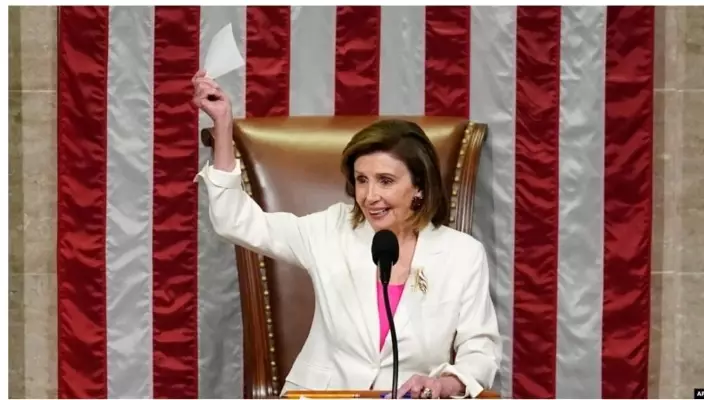
Pelosi’s investment windfall proved one thing—power and profit go hand-in-hand in US politics. American outlets exposed her 170-fold stock increase, rivaling the likes of Buffett, but with documented examples of insider trading.
Take Nancy Pelosi—former House Speaker and the infamous disruptor of Hong Kong. She just announced retirement next year. But the real headline: Pelosi’s been exposed for turning $130 million in stock profits over her political career, dwarfing Warren Buffett’s returns.
Pelosi isn’t winning through shrewd investing, but thanks to political insider trading. In American politics, those with power swim in money—the receipts back it up.
Pelosi’s Stock Market Game
Pelosi didn’t just dominate Congress—she owned the investment scene too. Dubbed the “Queen of Capitol Hill,” she’s picked up other nicknames over the years, like “Political Stock Market Goddess” and “She-Wolf of Wall Street.” Why? Pelosi and her husband trade stocks with ruthless speed and precision, consistently landing big profits. Their trades are so sharp and frequent that a crowd of retail investors tracks her every move—“How Pelosi Picks Stocks” has become a must-watch market signal.
It’s no exaggeration. The New York Post reports Pelosi and her husband Paul turned a $610,000–$785,000 portfolio into $133.7 million—growing 170 times over 37 years, with average annual returns of 14.5%. Bloomberg has the numbers: Pelosi’s investments returned 54% last year, demolishing the S&P 500 and every major hedge fund. People on X joke that Trump should hire Pelosi to invest for the American public—we’d be millionaires in half a year. The numbers aren’t hiding.
Pelosi is the ultimate example of a politician who gets filthy rich on the inside track. Her family’s estimated assets are up to $280 million—she started with just $3 million. Her trading record beats Warren Buffett. So did she outwit the ‘Oracle of Omaha’?
Trump didn’t mince words in Time magazine: “She got rich through insider trading.” Republican National Committee’s Kiersten Pels called Pelosi America’s most successful insider trader, saying any ordinary person would be retiring in jail.
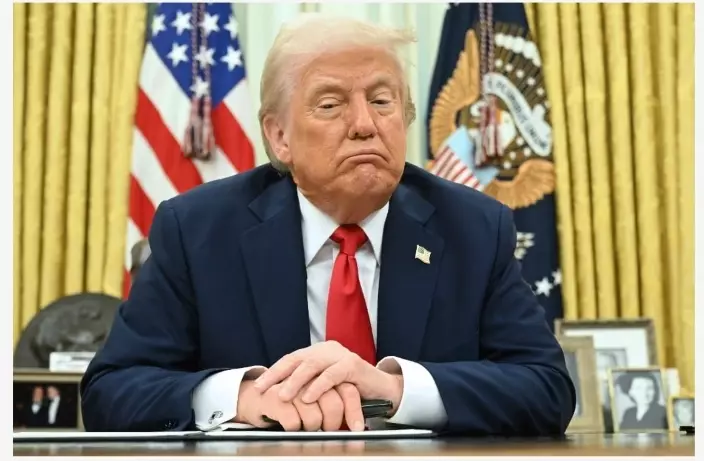
Trump accused Pelosi of outrageous corruption, cashing in with inside info. But let’s not kid ourselves—he’s just a case of the pot calling the kettle black.
The Timeline Doesn’t Lie
These aren’t wild accusations. Take 2022: Congress passed the CHIPS Act, pumping subsidies into chip companies. Just before, Pelosi’s husband dropped $5 million on 20,000 Nvidia shares. After the law, Nvidia soared. Coincidence? GOP lawmakers call it out—Pelosi clearly knew the CHIPS Act’s progress, and related trades reek of insider dealing.
Here’s another: Over two years ago, right before the DOJ moved to charge Google with monopoly, Pelosi dumped 30,000 shares of Google’s parent company. The timing says all you need to know.
Pelosi’s stock deals remain untouched by regulation. American media spells it out—she and Paul trade big and fast, dozens of times a year, no one watching. Only now is Congress even proposing a law to stop lawmakers trading individual stocks—named, hilariously, the “Pelosi Act.” But with Pelosi leaving Congress in weeks, new rules won’t touch her.
“World Model” or Cautionary Tale?
Trump and the GOP hammer her for insider trading, but let’s not pretend they’re clean. As the Chinese saying goes: “Those who have walked a hundred steps laughing at those who walked fifty.” Trump pushes policies boosting crypto, then his family clocks billions in profit. If he’s only second place in insider dealing, no one dares call themselves first.
As for the rest? Media calculations reveal: in one year alone—2022—Congressional stock trading clocked $355 million. Power means profit for everyone in DC. No exceptions.
These stories cut deeper than any slogan. America touts its democracy as a global template, exporting it abroad with missionary zeal. Yet behind the PR, it’s a system stuffed with corruption, rotted from the inside. The facts speak.
Lai Ting-yiu