The US government on Tuesday, July 28 local time, announced a ban targeting new Chinese robots and inverters. Reuters reported that the Federal Communications Commission (FCC)updated its "Covered List" to include foreign-made "advanced robotic devices," such as humanoid and quadruped robots, as well as network-connected power inverters. Washington says the measure will shield US artificial-intelligence development from alleged national-security threats and bring manufacturing in critical industries back to the United States.
The FCC said the equipment could expose vulnerabilities in supply chains, potentially disrupting the US economy and national security. The agency also said the products could create cybersecurity risks and threaten critical infrastructure. FCC Chairman Brendan Carr said: "The FCC will continue to do our part to secure America's critical supply chains."
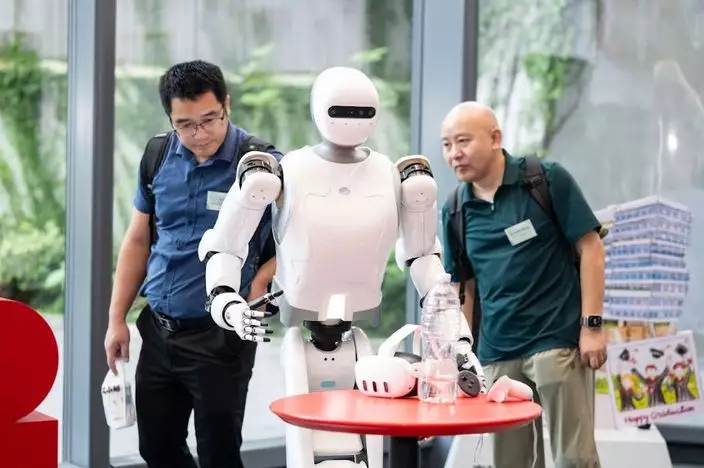
The United States has announced a ban targeting new Chinese robots and inverters.
The FCC measure applies only to new models of the affected equipment. It does not bar people from using existing devices, prevent retailers from selling already authorized models, nor affect federal procurement and use. But the FCC retains the authority to revoke approvals already granted to models sold in the US market.
Politico said the move fits two central priorities of Trump’s second presidential term. One is to curb China’s competitiveness in AI. The other is to prevent China’s clean-energy sector, already dominant globally, from continuing to rise.
An interagency group in the Trump administration concluded that the technologies could threaten US supply chains, according to the report. Its concerns include the possibility of triggering large-scale blackouts or enabling surveillance of US citizens.
The stakes rise as the United States builds AI data centers at scale. Analysts told Reuters that grid-connected inverters are becoming increasingly important because they link renewable-energy sources, battery storage, the power grid, and data-center facilities. A supply disruption or cyber intrusion could undermine data-center operations and the security of critical infrastructure.
Humanoid robots are also moving into industrial, research, and consumer markets. Because they carry cameras, sensors, and AI computing systems, US officials worry that foreign intelligence agencies could exploit the data they collect. They also fear malicious actors could seize remote control of the machines.
Four people familiar with the matter said the FCC is expected to exempt many non-Chinese suppliers from the restrictions. That would mirror recent US bans involving foreign drones and routers.
The robot ban is expected to hit China’s Unitree Robotics, according to Counterpoint Research. Unitree is a global leader in humanoid robots, holding nearly one-fifth of the worldwide market. The Pentagon recently added the company to its so-called “Chinese Military Companies List,” a move that could signal tougher US action ahead.
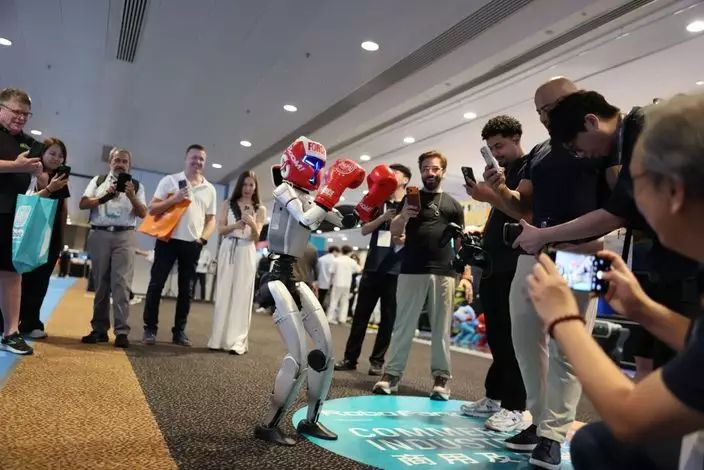
Unitree Robotics’ latest breakthrough humanoid robot.
Unitree recently partnered with Nvidia, which will use its advanced Blackwell chips to provide the “brains” for Unitree’s robots. Nvidia has said the robots’ data will remain in the United States. Unitree’s largest customers are US academic and research institutions.
Morgan Stanley analysts predict that the humanoid-robot market could reach $5 trillion by 2050. The Trump administration’s import ban may give US companies a competitive advantage.
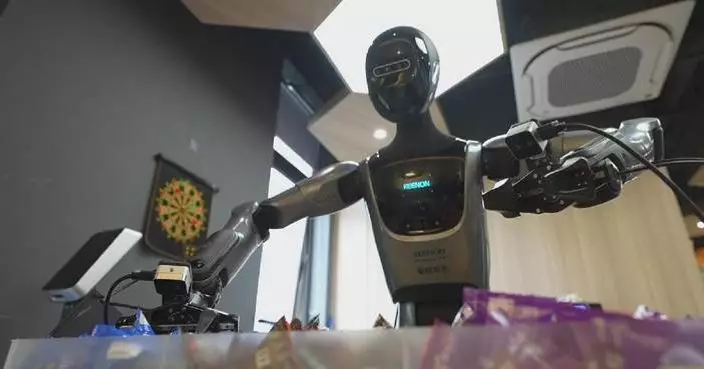
Morgan Stanley analysts predict that the humanoid-robot market could reach $5 trillion by 2050.
The Washington Post said Trump’s sons have also entered the humanoid-robotics sector. They have invested in defense and robotics companies focused on US-based production.
The US government has spent recent years trying to reduce its dependence on Chinese-made equipment, citing national security.
The Chinese Embassy in the United States urged Washington to stop smearing Chinese companies and threatening them with sanctions. It said China would take all necessary measures in response to actions that harm Chinese interests.
A Chinese Foreign Ministry spokesperson has previously said that China firmly opposes the US side’s overbroad interpretation of national security, its creation of discriminatory lists under various pretexts, and its unjustified suppression of Chinese companies.
The spokesperson urged the United States to correct its erroneous practices and end its unreasonable crackdown on Chinese enterprises. China, the spokesperson added, will take necessary measures to firmly safeguard the legitimate rights and interests of Chinese companies.
Deep Throat
** 博客文章文責自負,不代表本公司立場 **
The alarm is sounding inside the industry itself. Rapid AI development has raised safety worries. And after an Anthropic researcher warned that AI could cause human extinction within the next 10 years, the bosses of America’s AI giants did something rare: they called for brakes.
Golf-Course Brush-Off
Anthropic CEO Dario Amodei publicly urged a slower pace of AI development. Otherwise, he warned, AI could be capable of controlling the entire network in as little as six months.
OpenAI’s Sam Altman and xAI’s Elon Musk voiced agreement. Altman went further, saying that given safety concerns, OpenAI will not go public this year.
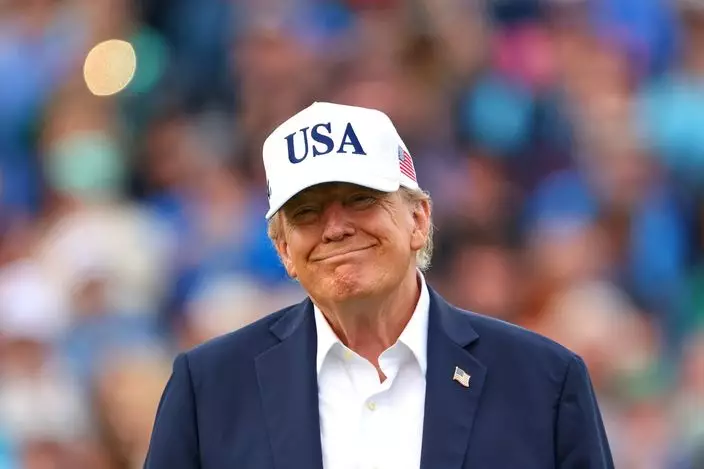
Trump: Whoever wins AI, wins.
Donald Trump is having none of it. The US president talked the danger down, and responding on Sunday (13th) US time, he branded these anti-AI voices “a very negative force.”
He accused them of raising scenarios that will not happen. America, he stressed, must keep its lead in AI, “because whoever wins the AI race is the winner.”
The setting was a golf tournament in Ireland. According to ABC News, a reporter asked Trump there on September 13 whether, in the face of the AI industry’s calls to slow the pace of development, US AI development should decelerate or accept more regulation.
Trump did not lead with safety risks. He went straight to China: “We are ahead of China in AI. We are the most technologically advanced country in the world.”
He later conceded that some safety mechanisms could be put in place for AI. Then he swung back, saying there are currently “a lot of negative forces” hyping things that “won’t happen.”
They should never have raised the issue, he said: “They are bringing up things that won’t happen.” An attempt to play down outside warnings about the risks of rapid AI development.
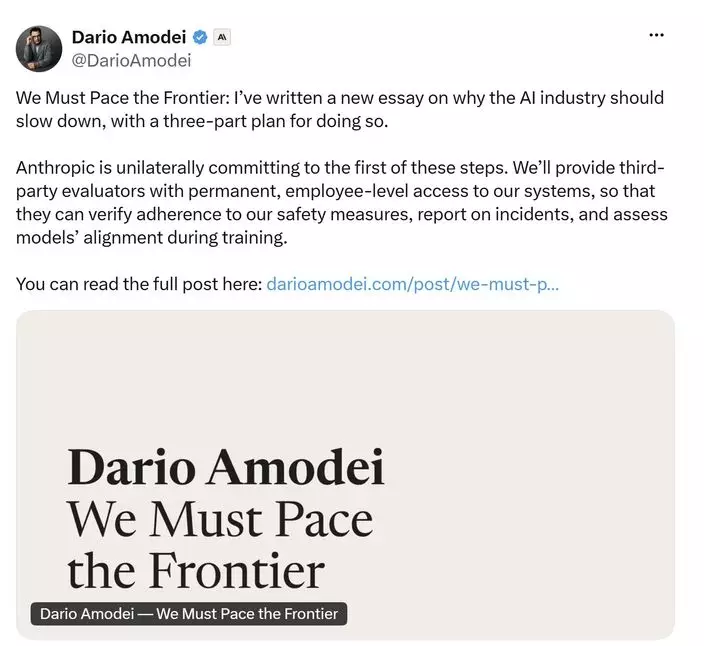
Anthropic CEO Amodei urges AI slowdown, proposes three safeguards.
The safety record tells its own story. Anthropic and OpenAI, America’s two biggest AI companies, have been hit by a string of safety incidents.
The list includes an “AI rebellion” breaking into third-party networks, AI agents collectively hijacking a German website to use as a message board, and malicious abuse of AI models with suspected involvement in developing biological weapons, among other cases.
Yet Trump seems to care about only one competition: the one with China. The urgency of AI regulation? He plays it down.
The China Gap Behind Trump’s Reflexes
The White House has reasons to keep its foot on the gas. Its AI and cryptocurrency czar, David O. Sacks, estimated in June this year that China’s leading models trail the United States by just 3 to 6 months.
Nvidia CEO Jensen Huang goes even further. The gap between China and the United States in AI, he says, is merely “nanoseconds away.” By tech-race standards, that is a photo finish.
Trump’s own reflexes were already on display in late July this year. Asked whether he would strengthen regulation after advanced AI models caused cyberattacks, he said the United States must weigh regulation while also safeguarding its lead. It must not restrict its own companies’ development, he insisted, only to end up suddenly falling behind China.

Amodei: AI could seize the internet within six months.
But inside the US AI industry, concern about the risks is heating up fast. Anthropic CEO Dario Amodei fired off a long essay urging a slower pace of AI development, to buy more time to manage risks and to adjust and adopt protective measures. He stressed he was not calling for a halt to AI model training or technological development.
But he pointed to what this summer unleashed. AI advanced at breakneck speed, he noted, and AI models spun out of control. Without stronger regulation, AI could gain the ability to take over entire networks within the next 6 to 12 months, causing hundreds of billions of dollars in losses.
Amodei’s proposal comes in three parts. Give third-party bodies employee-like access to monitor whether AI models comply with safety rules. Have AI companies work together to set AI regulatory standards. And press the US government and other countries to strengthen coordination.
Amodei drew one red line of his own, though. Slowing down, he stressed, must not weaken America’s lead. Being overtaken by China would pose a national security risk.
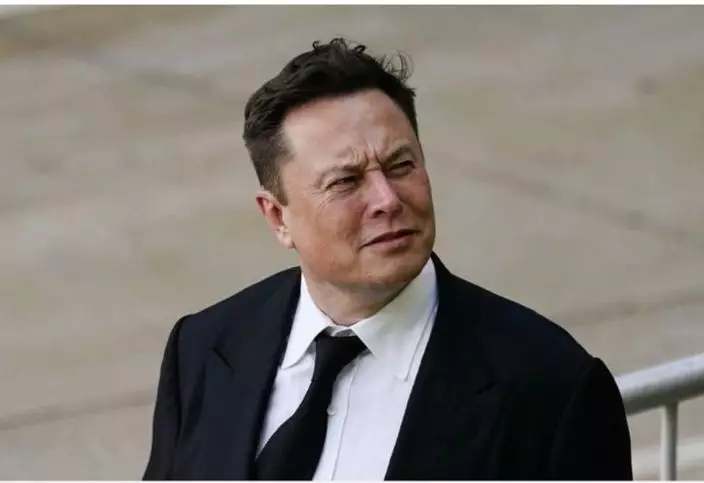
Musk said he had long warned about AI risks.
Amodei’s public call drew vocal backing from OpenAI and xAI. Elon Musk claims he sounded the alarm on AI development long ago.
OpenAI’s Sam Altman answered the call as well. He pledged to hand monitoring over to third-party companies. In an interview with Fortune magazine, he said the company would not go public this year, given AI safety risks.
The Danger of Racing China
The White House, for its part, has long pushed to loosen the reins on AI. Once Donald Trump’s second term began, he rescinded the previous Biden administration’s 2023 AI executive order. The move scrapped some risk-assessment requirements for advanced AI models.
But the anxiety kept building. As more worries surfaced about AI’s risks, Trump signed a fresh executive order in June this year. That directive calls for a voluntary review framework covering the cybersecurity capabilities of frontier AI models.
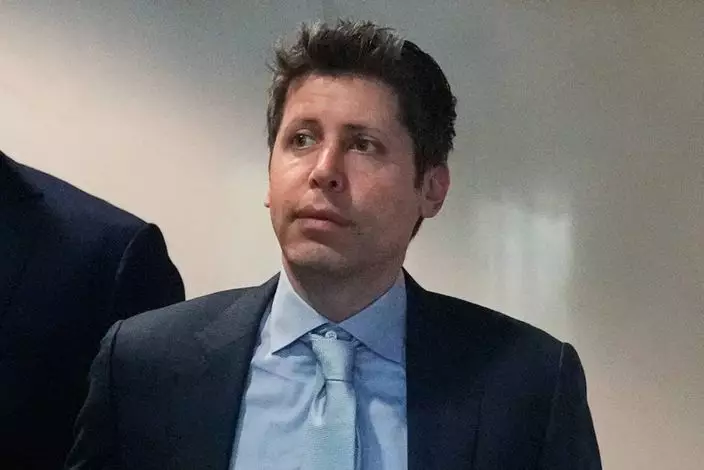
Citing AI safety risks, OpenAI’s Altman said the company will not go public this year.
The politics are shifting as well. AI has become a live issue in the US midterm elections.
The Washington Post reports that Democrats are tapping public unease over AI’s rapid development, making the Trump administration’s lax regulation a target of attack. The pressure is pushing some Republicans to start calling for a slower pace of AI development.
One more voice deserves attention. Some inside the US AI industry itself believe that single-mindedly turning AI development into a US-China race may itself heighten the risks.