After a series of internet outages earlier, government agency systems have recently also been found to have suffered cyber intrusions.
The New York Times, citing people familiar with the matter on local time November 24, reported that the US Central Intelligence Agency (CIA) and at least two other intelligence agencies have recently discovered cybersecurity intrusions, resulting in the leakage of some information. It is understood that what was breached was an "open-source intelligence analysis system" used to search for intelligence information from publicly available non-classified material.
Click to Gallery
CIA and two other agencies hit by cyber intrusions; data leaked.
FBI discloses two separate data breaches.
On November 13, FAA grounds all US flights for over four hours.
Apple outage hits iCloud, Apple Pay and more.
However, some analysts point out that "spy agencies" can use such data together with other intelligence sources to inform analytical judgments.

CIA and two other agencies hit by cyber intrusions; data leaked.
Breach hits US spy agencies
The Times added that although it remains unclear exactly what non-classified material was leaked, information from other government agencies is known to have also been exposed in the incident. But the US Office of the Director of National Intelligence stressed that "no critical capabilities or classified systems were disrupted"
According to The New York Times, citing people familiar with the matter, it is not yet clear what information was leaked, but it can be confirmed that classified material was not affected. Two people familiar with the matter disclosed that, in addition to the CIA, the US National Geospatial-Intelligence Agency (NGA) and the Office of the Director of National Intelligence (ODNI) were also affected by the intrusions. But the problem is understood to have now been resolved.
Unclassified but still revealing
Reuters frames the hack as the latest in a string of recent US technical failures and cybersecurity incidents. The list includes a data breach reported by the US Department of Agriculture.
The Federal Bureau of Investigation (FBI) recently disclosed two separate data breaches of its own. The Pentagon and the Department of Homeland Security have also been swept up in recent cybersecurity incidents.

FBI discloses two separate data breaches.
What counts as open-source intelligence? The New York Times spells it out: vast commercial datasets, social media content, satellite imagery and other online material.
Most of this material is public. But open-source intelligence can also include information sold by data vendors, and that material can be highly revealing, especially when pieced together with other data.
A cascade of crashes
In addition, "spy agencies" can also use these data together with other intelligence sources to inform analytical judgments.
The report noted that cybersecurity breaches at US federal agencies are not uncommon, but some agencies have recently discovered intrusions into parts of their systems, drawing intense concern from current and former US intelligence officials.
On November 12, a global service outage struck Microsoft 365, disrupting services for businesses and government agencies, after which a series of "network outage" or "system crash" incidents occurred, even triggering public "doomsday panic" and runs on emergency supplies.

On November 13, FAA grounds all US flights for over four hours.
The next day, a router failure caused instability in air traffic control communications and radar data transmission, prompting the US Federal Aviation Administration (FAA) to order a nationwide grounding of flights that lasted more than four hours.
By November 16, a system failure at JPMorgan Chase delayed a large number of customer transactions. One day later, NSANet, the classified communications network inside the US National Security Agency (NSA), also suffered an outage; on the same day, Apple's iCloud sign-in service and other online services including Apple Pay experienced large-scale "crashes."

Apple outage hits iCloud, Apple Pay and more.
Trump spins the hack
US President Donald Trump has repeatedly downplayed cybersecurity crises hitting government departments.
But on November 21, in a phone interview with Fox News, he confirmed the suspected hack of the National Crime Information Center (NCIC) database. "Well, we just heard about it, and I will say that it's not good. I don't like that," he said during the interview.
Then came the pivot. Trump suggested the intrusion might have a "positive spin".
In his telling, the leak might surface secrets the public would never otherwise learn, such as the so-called "election fraud".
And he seized on the issue, arguing the hack might even help clarify the "Russiagate" investigation once aimed at him, along with the controversy over his 2019 call with Ukrainian President Volodymyr Zelensky.
Deep Throat
** 博客文章文責自負,不代表本公司立場 **
Two US Democratic senators have written to Elon Musk, demanding that SpaceX preserve every record tied to restrictions on Ukraine's use of Starlink and Starshield.
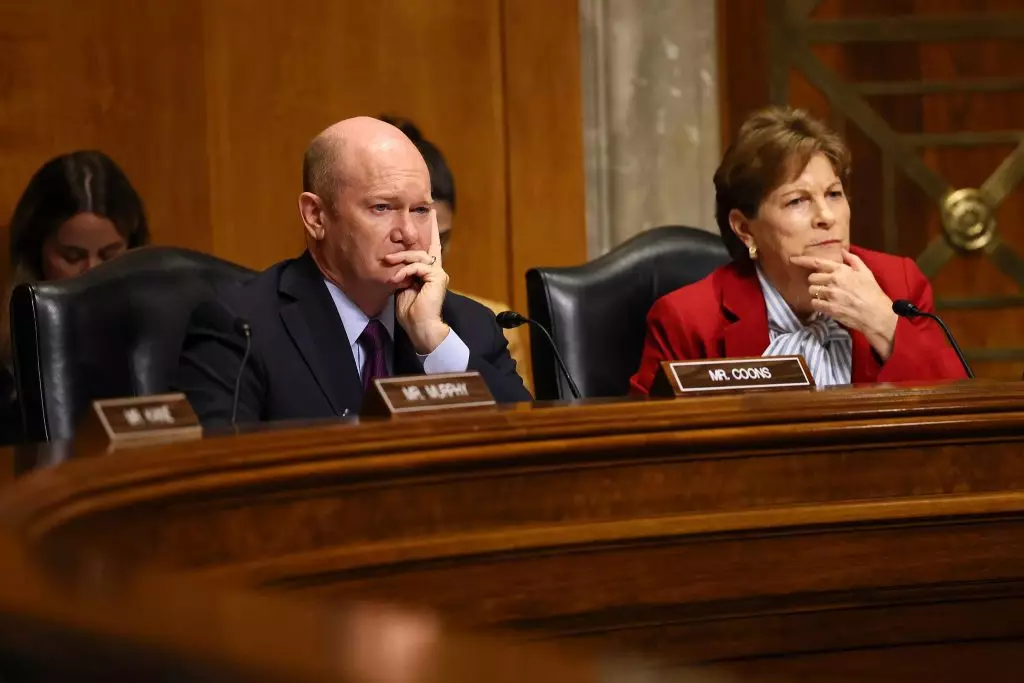
Senators demand SpaceX keep Ukraine Starlink records.
Democrats Demand the Records
The dust had barely settled on Nvidia founder Jensen Huang's resignation saga when Washington swung its political spotlight onto another Silicon Valley titan: Elon Musk.
Huang announced his departure on November 12 over a personal controversy. The very next day, November 13, Senate Foreign Relations Committee ranking Democrat Jeanne Shaheen and Senator Chris Coons moved in. They wrote to SpaceX CEO Musk demanding the company preserve all documents and communications since September 1 concerning restrictions on Ukraine's use of the Starlink and military-grade Starshield satellite networks.
No wonder the news set Chinese-language social media buzzing, with some joking that after dealing with 'Daddy Huang,' it was now 'Old Ma's' turn.
The two lawmakers set a hard deadline. SpaceX must confirm in writing by November 30 that it has properly preserved all records, including Musk's communications with the White House, the Pentagon and Trump. They also pressed three core questions: Who conveyed, approved or issued the restrictions? Which restrictions remain in force today? And has SpaceX assessed the consequences of these practices for Ukraine's air defense?
This is not the first time Democrats have pressed the issue. Back on October 15, the same two senators joined four Republican senators in a letter to the Department of Defense Inspector General, pressing for an answer as to whether senior Pentagon officials took part in the decision-making. On October 19, four Democratic lawmakers also wrote to SpaceX seeking an explanation.
Now the stakes are higher. With the midterm elections settled and Democrats holding a Senate majority, Coons is expected to chair the Foreign Relations Committee once the new Congress takes office in January 2027, formally wielding congressional subpoena power.
In an earlier interview with CBS, Coons said bluntly that if Musk could, on personal whim or political judgment, arbitrarily shut down a communications service funded by US taxpayers and vital to the battlefield, it would mean too much power concentrated in one person's hands.
The 161 km/h Cutoff
To understand why Washington politicians refuse to let this go, let's take a look at how the satellite system actually works on the battlefield. Starlink is SpaceX's low-Earth-orbit satellite internet for civilian and commercial users. Starshield is the encrypted military version the same company has built specifically for the US government and military.
Since the Russia-Ukraine conflict broke out, that satellite link has carried almost everything on the Ukrainian front line, from drone operations, artillery coordination to logistics supply.

Satellite gear: vital lifeline on Ukraine's front lines.
Then came the cutoff. Starting in mid-October this year, Ukraine says, Starshield and Starlink terminals on the front line were hit with a movement speed limit, without any prior warning. Any equipment carrying a terminal that moves faster than 161 kilometers per hour (about 100 miles per hour) loses its satellite connection automatically.
The problem is that the target flies much faster. The Associated Press notes that Russia's main jet-powered drones can reach about 370 kilometers per hour (about 230 miles per hour). Picture a high-speed chase where the moment a race car floors it past the speed limit, someone remotely kills its navigation signal. Ukrainian drones that take off to intercept inside Ukraine go dark the instant they accelerate, and simply cannot catch their targets.
The letter says these communications outages hit in two windows: October 13 to 24, and November 12.
In a mid-October media interview, Ukrainian President Zelensky complained publicly about the restrictions. The same batch of terminals, he noted, still connected normally above 100 miles per hour when traveling outside Ukraine, yet were restricted only inside it. He said bluntly that he felt betrayed by the US side.
Who Gave the Order
From Washington's vantage point, this is the strange part. The technical fingerprints of the satellite speed limit are there for all to see. Yet not one senior American political or business figure will admit to giving the order.
Musk moved fast to wash his hands of it. When news of the speed limit first broke on October 14, he drew a sharp line on the social platform X. The Starshield system, he stressed, is owned and controlled by the US government: "Starshield systems are owned and controlled by the US government. Any limits on speed or usage are decided by the US military and ultimately POTUS". The civilian Starlink service, he added, is strictly barred from offensive military operations.
The message was clear. Musk was kicking the responsibility straight through the White House gates.
Yet the leaks from officials flatly contradict one another. Reuters at one point cited sources saying the restriction order originated inside the White House. CNN quoted senior officials denying the order came from Trump, with some even suggesting Musk bore the greater responsibility. The Wall Street Journal and CBS, citing people in the know, said it was Musk's own call.
Trump himself flatly denied any role when reporters asked in mid-October. It was not him, he said, and he did not think it was Musk either.
Then came the twist. Just 10 days later, on October 24, with service back to normal, Musk reversed himself on X. He accused Ukraine of violating Starlink's terms of service by using the civilian service for lethal offensive drone strikes, and hinted the earlier restrictions were meant to close a system loophole.
That account pulled the initiative right back to SpaceX itself. The Ukrainian military shot back that Starlink simply cannot operate on the Russian territory. As Kyiv put it: "Ukraine replied that this was technically impossible over Russian territory."
The story did not end there. On November 12, Ukraine said the 161 km/h speed limit had resurfaced on the front lines. On November 15, Zelensky publicly urged the US side and Musk to lift the restrictions, warning they would weaken Ukraine's ability to protect energy facilities before winter.
SpaceX hit back at once, publicly dismissing the claims as false and insisting that no changes had been made to the system. Even inside Ukraine's Ministry of Defense, accounts differed on whether the front lines were under restrictions again.
Outsourcing Runs Wild
This murky saga keeps getting louder in Washington, and for two reasons. Democrats have added Musk's past work leading the "Department of Government Efficiency" (DOGE), which sharply cut federal spending, to their list of investigations. Just as important, wariness over runaway military-industrial outsourcing now crosses party lines.
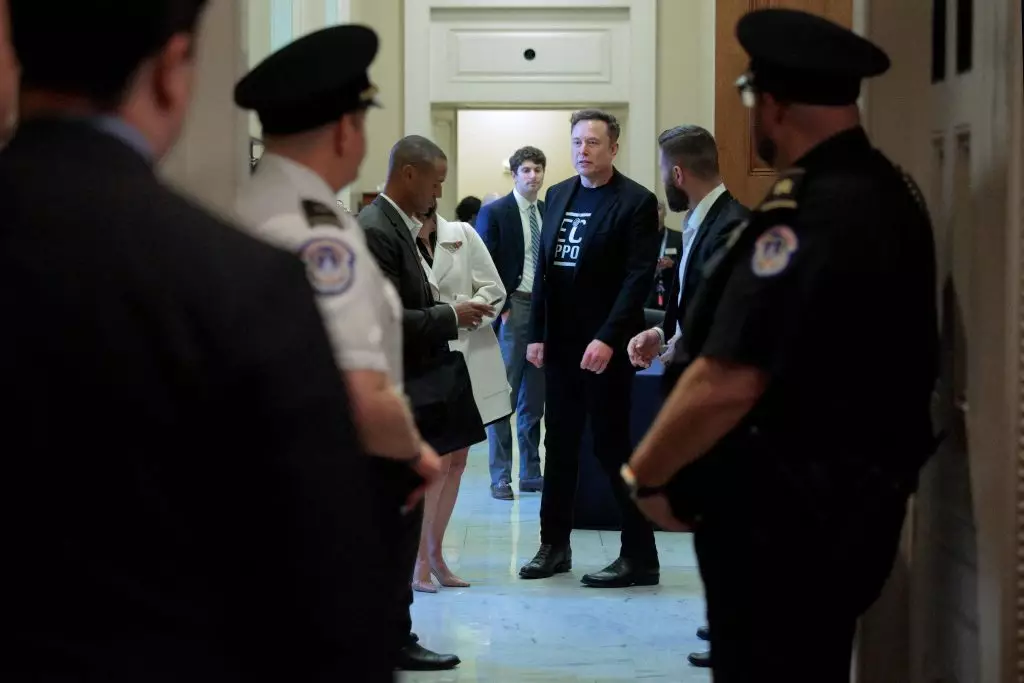
Democrats target Musk's DOGE stint, Starlink records.
Four Republican senators who signed the earlier letter to the Department of Defense Inspector General, including Cornyn, Tillis, Collins and Murkowski, are demanding to know whether the Pentagon took part in the decision. After receiving a classified briefing, Republican Senator Cramer publicly conceded that the United States should not put too many eggs in one company's basket.
The warning signs were already there in 2023. That year, Musk refused a Ukrainian request to activate Starlink service near Crimea, setting off a storm of controversy. The episode exposed the hidden risk of leaving the battlefield switch for commercial satellites in the hands of a single corporate executive.
Starshield was supposed to fix all this. It was billed as a more reliable communications system for the US military, one fully controlled by the government. Yet even the military network Washington itself relies on has produced a Rashomon-style dispute with no clear lines of authority or responsibility.
This is what happens when the US government hands its most core military communications services to private tech giants. Once something goes wrong on the front lines, the White House and the company cannot even say clearly who actually holds the final switch.
The Fight Is Not Over
One thing is certain: the fight over who controls battlefield communications is far from over.
Come January, a new US Congress is sworn in and Democrats pick up subpoena power in the Senate. A political-business mystery so murky that US senators are sending letters demanding to know "who exactly is giving the orders" is set to stay a flashpoint in Washington's power games.