Just six years after the "black riots" tore through Hong Kong, the city has found its footing again—thanks largely to police who've learned to stay one step ahead of trouble. But as Chief Executive John Lee rightly points out, we must not let down our guard for national security. The anti-Hong Kong brigade isn't going anywhere, and they're nothing if not persistent.
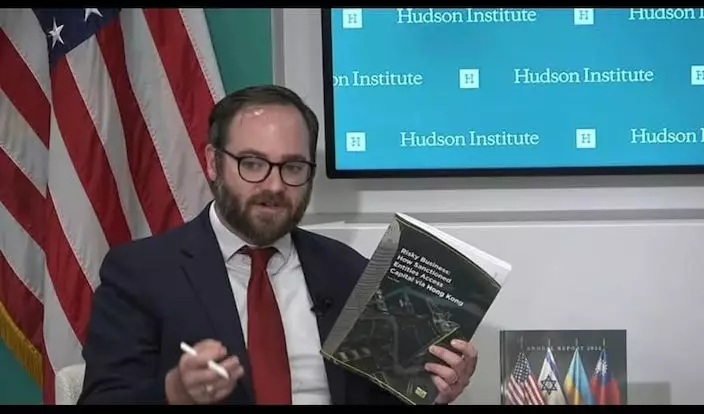
"Hong Kong Watch"—that familiar gang of anti-Hong Kong agitators—just dropped a report specifically designed to tank Hong Kong's stock market. Talk about showing your hand.
Here's what's fascinating: with Hong Kong's IPO market absolutely booming and capital flooding in, these political opportunists have pivoted their strategy. They've now got their sights set squarely on the stock market.
Market Reality vs. Political Theater
Hong Kong's stock market has been absolutely stellar. HK$108.7 billion raised in IPOs during the first half of the year, capturing 24% of global IPO activity and ranking first worldwide. That's got to sting for the crowd who've been predicting Hong Kong's demise.
Financial sector insiders aren't losing sleep over these political theatrics, and frankly, they shouldn't. Money follows opportunity, and as long as Hong Kong's markets are performing, Wall Street will keep showing up. The "poisonous plot" brigade can scheme all they want—profit-seeking capital doesn't care about their political narratives.
The "Risky Business" Report: A Calculated Attack
Enter their latest weapon: a report cheekily titled "Risky Business: How Sanctioned Entities Access Capital via Hong Kong." The premise: that Chinese companies are supposedly using Hong Kong's markets to dodge sanctions, and American investors need protecting from having their money "siphoned off."
The real objective here is clear: crashing Hong Kong's stock market. It's a pretty brazen move, even by their standards. Of course, Wall Street doesn't particularly care about political posturing when there's money to be made. If Hong Kong stocks are turning a profit, that capital will keep flowing eastward regardless. Still, these kinds of coordinated political attacks are worth watching.
The anti-Hong Kong outfit "Hong Kong Watch" has been making the rounds—from Washington's Hudson Institute to planned events in London—trying to drum up support for investment restrictions. They've even wheeled out Joey Siu, the fugitive wanted under the National Security Law, to scaremonger about the risks of doing business in Hong Kong. It's the same tired playbook: create fear, lobby for restrictions, hope the market tanks.
The Jimmy Lai Gambit: Canada Says No
Meanwhile, they've been pulling out all the stops trying to save Jimmy Lai. The latest scheme involved Canadian MPs proposing to grant him "honorary Canadian citizenship"—putting him in the same category as Nelson Mandela and the Dalai Lama, which is quite something.
Under Trudeau, this sort of grandstanding might have sailed through. But times have changed. With Mark Carney now leading the Liberal Party—the same guy who stood firm against Trump's trade war tactics—Canada's priorities have shifted. The government needs China as an economic lifeline, not another diplomatic headache.
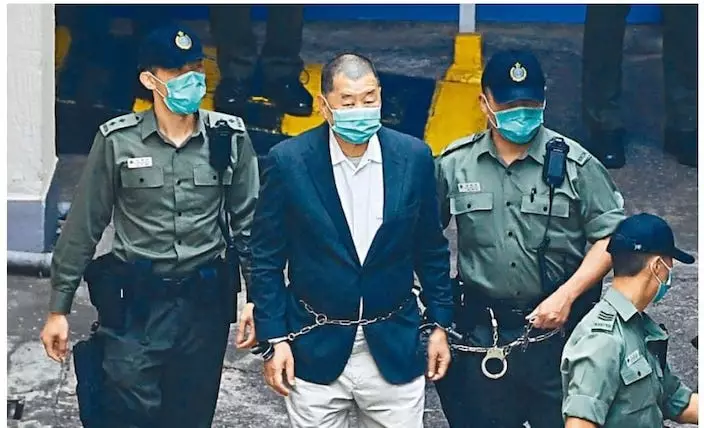
They tried teaming up with Canadian MPs to fast-track Jimmy Lai's "honorary citizenship," but the Liberal Party's House Leader wasn't having it. Another swing and a miss for the "Saving Lai" campaign.
Sure enough, Liberal House Leader Steven MacKinnon stepped in last Friday and shelved the motion. His diplomatic language about "consensus" and "proper foreign policy" was code for: we're not torpedoing our relationship with Beijing over this.
Conclusion: Bad Timing, Worse Strategy
As Jimmy Lai's case heads toward its conclusion, expect his supporters to ramp up their efforts even further. But here's their problem: the timing couldn't be worse. When the Canadian government focuses on economic recovery, these anti-Hong Kong campaigners are bound to keep hitting brick walls.
Their latest efforts are just more evidence that their influence is waning, and Hong Kong's resilience is only getting stronger.
Lai Ting-yiu
What Say You?
** 博客文章文責自負,不代表本公司立場 **
A few days shy of the sixth anniversary of the "black-clad riots," Joshua Wong in jail was hit with another charge: "conspiring to collude with foreign forces" under the National Security Law. Predictably, the US State Department wheeled out its usual strong condemnation, demanding the charges be dropped. But as a friend in political circles told me with a cold laugh, this is the same US government that slammed the door in Wong's face when he came begging for help.
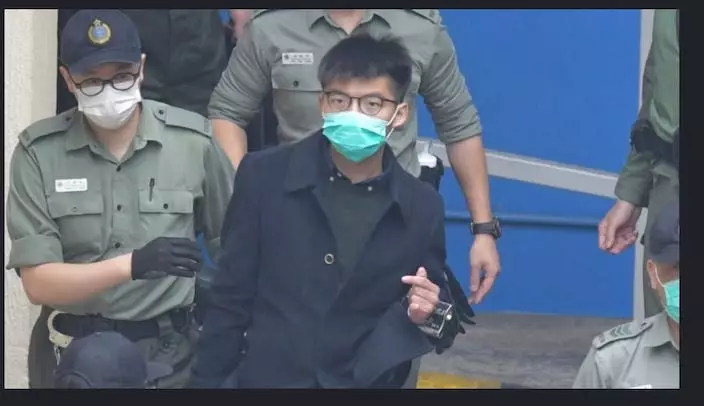
The US State Department's condemnation of Joshua Wong's arrest rings hollow. When Wong came knocking at their consulate begging for asylum, they slammed the door in his face. It's hypocrisy at its finest
When Wong sensed the law was closing in, he naively believed his American "masters" would swoop in to save him. He was wrong. Officials at the US Consulate General in Hong Kong flatly denied him entry, and a direct plea to the Secretary of State went unanswered. The US ruthlessly discarded its pawn then, so its outrage now, echoed by the shameless "feigned compassion" of figures like Marco Rubio, rings utterly hollow. Meanwhile, the foot soldiers of the riots who fled to the US are discovering their American dream is a waking nightmare, stuck in a years-long asylum limbo with no end in sight.
A 'Leader' Left Out in the Cold
This whole sorry affair has ripped the hypocritical mask right off the US government's face. On the eve of the National Security Law's implementation in June 2020, a panicked Wong arranged a meeting with US consular officials. He asked to enter the consulate to seek political asylum, but was met with a blunt "no." The official excuse—that asylum can only be sought on US soil—was a flimsy fob-off, barely concealing the real political calculations at play. It's a classic case of all talk, no action. Denied entry, Wong had no choice but to walk away.
He then fired off a desperate email to then-Secretary of State Mike Pompeo, again pleading for help. The response was silence. US media later confirmed what was obvious: the Americans were worried that sheltering Wong would risk the consulate being shut down. When it came down to it, American interests came first, and Joshua Wong was left to his fate.
No Room at the Inn
And if that's how they treat a supposed "leader" like Wong, what hope did the ordinary "foot soldiers" have? Take Tony Chung, former convenor of "Studentlocalism." When he found himself cornered in October 2020, he too made a run for the US consulate. He was similarly turned away and promptly arrested by National Security officers just outside. Then there's Tsang Chi-kin, who was shot after assaulting a police officer. He also tried the consulate, was ordered to leave, and ended up living like a fugitive for nearly a year.
These stories all point to the same grim reality: to the US government and its politicians, people like Joshua Wong are assets, not allies. They are judged purely on their utility, with no regard for loyalty. Senator Marco Rubio, who once championed Wong and hosted him in Washington, is a prime example. Now that Wong is arrested, the State Department issues its standard condemnation, but it’s just a convenient pretext to attack China. The words of support are empty; the "feigned compassion" is there for all to see.
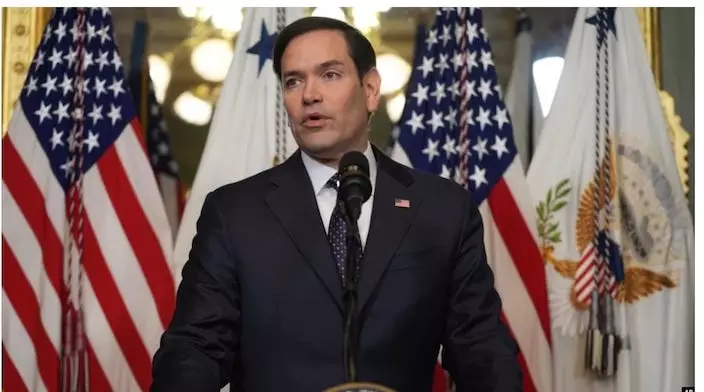
"Senator Marco Rubio couldn't praise Joshua Wong enough when he was a useful political asset. His newfound 'concern' now? Textbook case of 'feigned compassion'.
An American Dream Turned Nightmare
The "brothers-in-arms" who managed to flee to the US are learning this lesson the hard way. Some applied for political asylum four years ago and are still waiting, without so much as an interview. They’ve watched as undocumented migrants from Mexico leapfrog them in the queue and gain asylum much faster. As long as their applications are pending, they have no official status. Now, with the looming possibility of a Trump presidency and a massive crackdown on "illegal immigrants," these activists are stuck in a miserable limbo.
Whether it's Joshua Wong being shown the door or his followers being left to languish in America, their six-year illusion of American righteousness ought to be well and truly shattered by now.
Lai Ting-yiu