So here we are again – the CIA pulling back the curtain on its own operations, and frankly, what's revealed isn't particularly shocking if you understand how intelligence agencies actually work. The agency has been putting out recruitment videos on social media, brazenly targeting Chinese civil servants, while CIA Director Ratcliffe has made it crystal clear that China sits at the top of America's intelligence wish list. But what's fascinating is how a new book called "Supercommunicators" has inadvertently exposed the playbook these spies use – and it's basically the same tricks your grandmother warned you about regarding online dating scams.
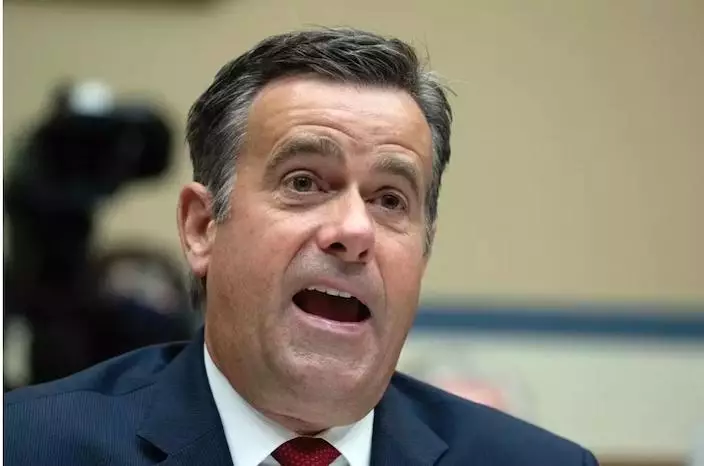
CIA Director Ratcliffe isn't even trying to be subtle anymore - he's openly declared China as America's top intelligence target, and the agency is literally posting recruitment videos on social media trying to flip Chinese government workers. Talk about putting your cards on the table.
When Spycraft Meets Psychology 101
Charles Duhigg's book dives deep into what he calls "super communication," and wouldn't you know it, the CIA has turned this into an art form. The premise is simple enough: people crave connection, and when you can make someone feel truly understood, you've got them hooked. It's psychological manipulation dressed up in academic language, but let's call it what it is.
The book features interviews with CIA operatives, including one called "Lawler" (obviously an alias), who trained at the infamous Camp Peary in Virginia. Here's the thing that might surprise you – these agents aren't spending all their time skulking around in shadows. They're at embassy parties, making small talk, being the most charming person in the room. Because that's what modern espionage really looks like.
A new book accidentally spills the tea on how CIA operatives recruit foreign officials - and surprise, surprise, their "super communication" techniques are basically the same psychological tricks used in romance scams. When you compare it to actual cases China's caught, the playbook is almost identical.
The Chinese Target Who Wasn't Having It
Lawler's story gets interesting when he describes his failed attempt to recruit a Chinese official in Europe. The approach was textbook: repeated invitations to lunch and drinks, building rapport, then the soft pitch about sharing information for compensation. But here's where it gets real – the Chinese official shut it down immediately, saying such activities "would cost one's life."
That response tells you everything about how seriously China takes these threats. While Western officials might hem and haw, this person understood exactly what was being proposed and the consequences that would follow.
But here's where the CIA's persistence comes in. After striking out with the Chinese target, they didn't just give up – they reassigned Lawler to a new mission. This time, the target was a female diplomatic official from a Middle Eastern country who happened to be vacationing in Europe. Lawler "orchestrated" – their word, not mine – a chance encounter at a restaurant. After what the book describes as "considerable effort," he finally managed to establish what they call "emotional trust" and successfully opened his first gateway to intelligence gathering.
The Honey Trap Playbook
What's really eye-opening is comparing the CIA's documented techniques with actual cases published by China's Ministry of State Security. There's a striking pattern here that should make anyone working in sensitive positions sit up and pay attention.
Take the case of a Chinese military-industrial researcher who was approached while studying in the US. The recruitment followed the classic playbook: start with technical questions, build friendship through meals and conversations, gradually introduce financial incentives, and finally reveal the true nature of the relationship. It's a slow-burn approach that relies on the target becoming emotionally invested before they realize what's happening.
The researcher was eventually caught, but not before signing documents and providing intelligence for over a year. The "consulting company" employee who recruited him? Turns out he was working for American intelligence all along.
Why This Matters More Than Ever
Here's what should worry everyone: these techniques work because they exploit basic human psychology. The need for connection, friendship, and yes, financial security, are universal vulnerabilities. What we're seeing isn't some sophisticated James Bond operation – it's systematic emotional manipulation on an industrial scale.
The parallels to romance scams aren't coincidental. Both target isolation, build false intimacy, and use financial incentives to seal the deal. The only difference is the end goal: instead of draining your bank account, they want access to state secrets.
In today's geopolitical climate, where tensions between major powers are escalating, everyone needs to understand these tactics exist and are being actively deployed. Whether you're a government employee, work in tech, or have access to any sensitive information, you could be a target.
Stay sharp out there.
Lai Ting-yiu
What Say You?
** The blog article is the sole responsibility of the author and does not represent the position of our company. **
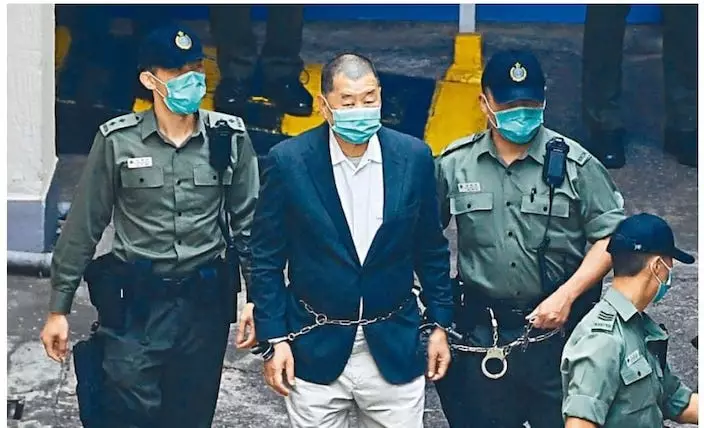
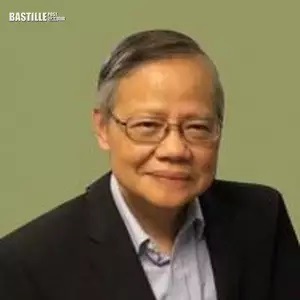
Think back to Hong Kong's turbulent years. Jimmy Lai had three brothers-in-arms, comrades he bankrolled through thick and thin – Cardinal Joseph Zen, Martin Lee, and Anson Chan. But their bonds weren't just ideological. Money changed hands, and plenty of it. Anson Chan pocketed HK$3.5 million from Lai's war chest. Cardinal Zen took in far more – at least HK$26 million in secret donations that the Hong Kong Diocese never knew about and never investigated. Where did all that cash go? That's the million-dollar question. Or rather, the 26-million-dollar question that remains unanswered.
Cardinal Zen met Pope Leo XIV in Rome, reportedly pushing for Jimmy Lai's release – but Vatican intervention looks unlikely.
Word broke earlier that Cardinal Zen just made a pilgrimage to the Vatican for a sit-down with the newly minted Pope Leo XIV. The private meeting lasted about an hour. On the agenda: the conviction of "Catholic" Jimmy Lai. Sources say Zen pressed the pontiff hard to "save Lai." What did the Pope say? Nobody's talking. But you can bet the Vatican knows all about the questionable financial ties between Zen and Lai – a relationship the Cardinal has never properly explained to his own Diocese. Did personal interests play a role? The doubts are real.
A Vatican Gambit
Cardinal Zen's "612 Humanitarian Relief Fund" case is still grinding through the courts, and authorities had confiscated his passport. But when the Vatican called its recent "Special Consistory" – bringing cardinals from around the world to Rome – the court granted him temporary travel privileges. During the gathering, Pope Leo XIV carved out time for a private one-on-one with Zen after a breakfast session. The topics? Whether the China-Vatican agreement should be renewed, and the fate of Jimmy Lai, now convicted under Hong Kong's National Security Law. But whether the Pope took any position on Lai remains under wraps.
Zen views Jimmy Lai as both a close friend and a comrade-in-arms, so naturally he's pushing the Vatican to intervene. But here's the Vatican's dilemma: it's not just about China-Vatican relations. It's about the unresolved financial relationship between Zen and Lai – a relationship that has seriously damaged the Cardinal's credibility.
The Secret Pipeline
October 2011 brought a massive leak. Jimmy Lai's secret donations to political parties, politicians, and organizations spilled into public view – and Joseph Zen, then Bishop of Hong Kong, was on that list. Between 2006 and 2010, he received HK$20 million from Lai over four years. From 2012 to 2014, another HK$6 million landed in his hands. The total: a staggering HK$26 million.
When the news broke, Zen went silent. Only after relentless media pressure did he offer an explanation, claiming the money went to support underground churches in the Chinese Mainland and other charitable organizations. With a casual smile, he described himself as a "spendthrift," saying most of the money had already been spent with only a few hundred thousand remaining – and even expressed hope that Lai would keep the donations coming.
Talk is cheap. He provided no concrete evidence to back up his claims. The Hong Kong Diocese knew nothing about his receipt of this massive sum from Lai – the entire "money pipeline" operated in secret. To this day, he has never given the Diocese a complete accounting.
Because this financial channel remained so deeply hidden, suspicions naturally arose that personal interests were involved. But given Cardinal Zen's position, the Diocese refrained from investigating him. The true destination of the funds? Still shrouded in doubt.
HK$26 million from Jimmy Lai to Cardinal Zen – Diocese in the dark, money's whereabouts still a mystery. The trio behind Hong Kong's unrest!
Vatican Cold Shoulder
Cardinal Zen's questionable relationship with Jimmy Lai, combined with his overly hawkish stance toward China, put him in the Vatican's bad books after Hong Kong's National Security Law took effect in late June 2020. Around that time, Zen traveled uninvited to the Vatican, demanding a meeting with then-Pope Francis to discuss Hong Kong's bishop selection and issues facing underground churches in the Mainland. The Pope gave him zero face. Francis refused to see him. After cooling his heels in Rome for four days with nothing to show for it, Zen returned to Hong Kong empty-handed.
Later, Zen and Lai joined forces on Jimmy Lai's "Live Chat" livestream program to blast the Vatican, accusing it of staying silent on underground churches, Tibet, and Hong Kong human rights issues. This clearly shows how the "Zen-Lai duo" consistently conspired to incite underground church activities in the Mainland, stir up religious conflicts, and undermine China-Vatican relations.
Cardinal Zen's latest Vatican trip for a private papal audience, where he lobbied to "save Lai" and reiterated his opposition to renewing the China-Vatican agreement, proves one thing: at 94 years old, the cardinal's anti-China, pro-chaos heart hasn't changed one bit.
Long Odds
The new Pope's willingness to meet him represents a slight thaw from his predecessor's icy attitude. But the chances of Vatican intervention to "save Lai"? Extremely low. The unresolved questions about Zen's financial relationship with Jimmy Lai have significantly diminished his influence with the Vatican.
From a legal perspective, his cardinal status currently shields him from serious consequences. But risks remain. Perhaps it's time for him to follow Anson Chan's example and retire from such activities while he still can.
Lai Ting-yiu