
Skip to Content Facebook Feature Image

Five Years On: How Hong Kong's National Security Law Puts an End to Street Terror

Blog

Five Years On: How Hong Kong's National Security Law Puts an End to Street Terror
Blog

Blog

Five Years On: How Hong Kong's National Security Law Puts an End to Street Terror

2025-07-01 23:05 Last Updated At:23:05

June 30, 2025 marks the fifth anniversary of Hong Kong's National Security Law coming into effect, and frankly, it's worth reflecting on just how bad things had gotten before Beijing stepped in. The streets are peaceful now, but let's not forget the absolute horror show that was unfolding during those dark months of 2019.

Among all the shocking scenes from that period, one incident stands out as particularly brutal and frankly, stomach-turning. A man – the media later dubbed  him Uncle Lee - tried to reason with black-clad protesters who were trashing Ma On Shan Station. For his trouble, he got doused with flammable liquid and set on fire like some medieval execution. Uncle Lee literally became a human torch, and somehow survived, though I'm not sure you'd call what followed "living."

When Setting People on Fire Becomes "Normal"

Here's the bit that'll really make your skin crawl - after this horrific attack happened, over 5,000 people on the LIHKG forum actually thought setting someone on fire wasn't "excessive." Only about 300 thought it crossed a line. Let that sink in for a moment. We're talking about thousands of people who basically gave a thumbs up to attempted murder by immolation.
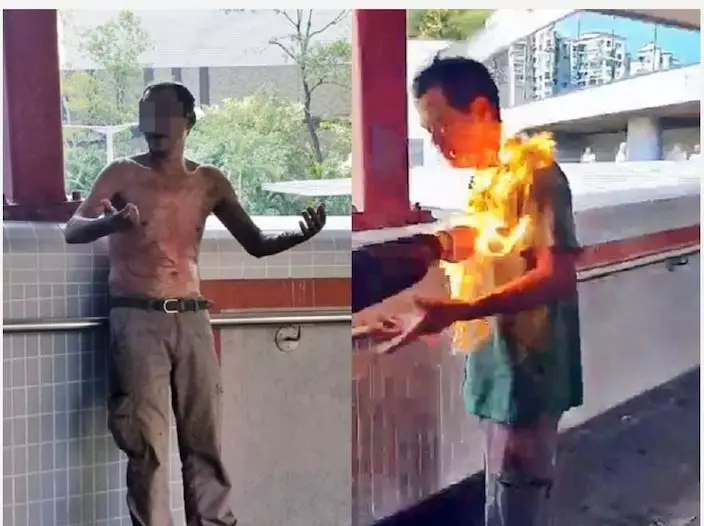
"Five years after Hong Kong's National Security Law brought peace back to the streets, we're reminded of just how brutal things got - like when protesters literally set Uncle Lee on fire. What's truly shocking? Over 5,000 people online thought this wasn't even 'excessive.' That's how far gone things were."

"Five years after Hong Kong's National Security Law brought peace back to the streets, we're reminded of just how brutal things got - like when protesters literally set Uncle Lee on fire. What's truly shocking? Over 5,000 people online thought this wasn't even 'excessive.' That's how far gone things were."

This wasn't just random internet trolling either. These were likely the same people out on the streets, and if they genuinely believed burning someone alive was acceptable, how many more Uncle Lees would there have been? It's honestly chilling to think about.

The attack happened on November 11, 2019. Uncle Lee had simply had enough of watching protesters vandalize public property and decided to make a stand. During a heated argument on a pedestrian bridge, some masked coward splashed him with accelerant and lit him up before disappearing into the chaos. Classic hit-and-run tactics.

Five Years of Living Hell

What happened next was five years of absolute agony. Uncle Lee suffered burns across 40% of his body and needed multiple skin grafts. During treatment, he had a cardiac arrest and nearly died, then suffered a stroke on top of everything else. His left hand is basically useless now - wounds that wouldn't stop bleeding, constant itching that drives him mad, fingers that won't extend properly.

Half his teeth fell out from the trauma, and eventually he lost them all. The man can only eat soft food or liquids. Even now, with new dentures, eating is a struggle. His skin still feels tight, like ants constantly biting him. Elizabeth Quat, who's been helping him, describes someone living in constant torment.

The poor guy was offered corrective surgery on the mainland that might restore some hand function, but he's terrified of going under the knife again after the cardiac arrest and stroke during surgery. So he just endures it, day after day, while his attacker presumably lives it up somewhere in Taiwan, having fled Hong Kong shortly after the incident.
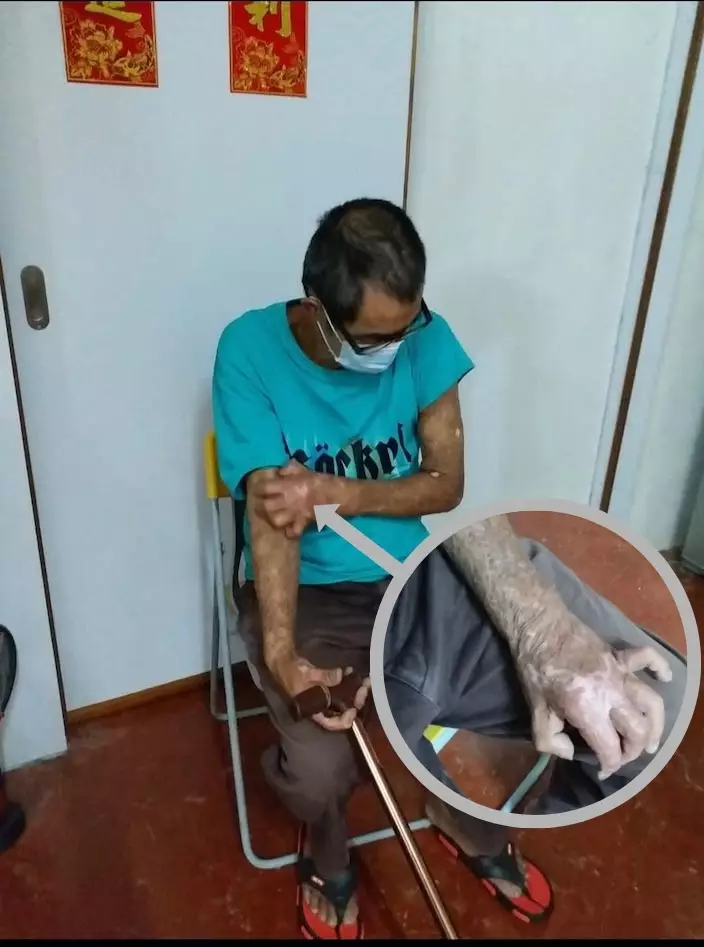
"Uncle Lee's nightmare didn't end with the attack - multiple surgeries, a stroke, and a near-fatal cardiac arrest later, he's still dealing with the aftermath. The man who did this to him? Still on the run, probably living it up somewhere while his victim suffers daily."

"Uncle Lee's nightmare didn't end with the attack - multiple surgeries, a stroke, and a near-fatal cardiac arrest later, he's still dealing with the aftermath. The man who did this to him? Still on the run, probably living it up somewhere while his victim suffers daily."

The Madness Had to Stop

Meanwhile, the perpetrator vanished into thin air - probably with help from those behind the scene - and remains on the run despite a HK$400,000 bounty. The police classified it as attempted murder.

This is where the pan-democrats and their overseas cheerleaders really showed their true colors. Jimmy Lai might have expressed "concerns" about the violence during his recent testimony, claiming he wanted some kind of leadership structure to control the "valiant faction." But let's be honest - he and others were perfectly happy to use these violent elements as shock troops against the government. They drew no meaningful red lines, made no serious efforts to rein in the lunatics, and basically gave tacit approval to increasingly barbaric behavior.

It took Beijing's intervention in June 2020 to finally put a stop to this madness. The National Security Law came down like a hammer, and suddenly the streets went quiet. Without that intervention, we'd likely have seen more Uncle Lees turned into human torches by radicals who'd completely lost their moral compass.

A Necessary Reality Check

Five years later, Hong Kong is peaceful again, but Uncle Lee continues to suffer every single day. His attacker roams free, probably living comfortably while his victim endures constant pain and disability. If that doesn't tell you everything you need to know about the moral bankruptcy of that whole movement, I don't know what will.

The bottom line: Sometimes you need tough measures to stop society from sliding into complete barbarism. The National Security Law wasn't some authoritarian overreach - it was emergency surgery on a city that was hemorrhaging from self-inflicted wounds.

Lai Ting-yiu


What Say You?

** The blog article is the sole responsibility of the author and does not represent the position of our company. **

Sentencing pleas in the Jimmy Lai case took a stark turn on day two. Two of Apple Daily's most senior executives—publisher Cheung Kim-hung and deputy publisher Chan Pui-man—laid bare the brutal reality of working under Lai's thumb.
 
Through their lawyers, Cheung and Chan described an environment where dissent was futile, orders were absolute, and resistance meant risking everything. Both painted a picture of powerless lieutenants dragged down an illegal path by a boss who wouldn't budge.

Defense counsel argued Cheung Kim-hung held the CEO title but lacked real authority. He could only execute the "mastermind's" orders—objection achieved nothing.

Defense counsel argued Cheung Kim-hung held the CEO title but lacked real authority. He could only execute the "mastermind's" orders—objection achieved nothing.

During trial testimony, both executives recounted losing their free will under Lai's command. On Tuesday, Chan went further. She revealed she'd considered quitting but couldn't afford to walk away because of her own medical need. She told the court she deeply regretted failing to hold fast to journalistic principles.
 
Lai's Top Gun

Cheung Kim-hung was Lai's number one. He'd jumped ship from Apple Daily back in 2005, only to return five years later and climb to publisher and CEO. But when the anti-extradition protests erupted, Cheung became what his lawyer called an "execution tool"—someone who could only carry out the boss's orders.
 
Yesterday's plea hearing revealed a telling example. Lai wanted to bring former US Army Vice Chief of Staff Jack Keane onto his interview show. Cheung pushed back, asking whether it "might be too sensitive." Lai ignored him. After the Hong Kong National Security Law took effect, Cheung tried again—this time urging Lai and colleagues not to break the law. The evidence speaks for itself: despite repeated warnings, Lai pressed on, only tweaking his methods slightly.
 
Defense counsel made it clear: Cheung wanted to limit the damage but had no real control. Yes, he held the CEO title. But actual power? Limited. He could only follow the "mastermind's" instructions and try to minimize the fallout from the coverage.
 
In court testimony, Cheung didn't mince words about being trapped. He called himself a "tool." Lai constantly issued editorial directives and had the final say on everything. Refusing wasn't really an option. Editorial autonomy existed only in the gaps—those rare moments when Lai hadn't issued orders. At the infamous "lunchbox meetings," Lai would spell out his political stance and tell everyone to fall in line.
 
About a month after the National Security Law came into force, both Cheung and Chan worried they were heading into legal danger. They opposed some of Lai's moves. Lai went his own way and dismissed their concerns.
 
Chan's Impossible Choice

Deputy publisher Chan Pui-man faced the same crushing dynamic. When Lai proposed using Apple Daily to mobilize a "one person, one letter" campaign urging Trump to intervene, Chan did raise objection. Lai pushed ahead anyway.
 
During her testimony, Chan revealed Lai went even further. He ordered her to compile a "Shit list"—a sanctions target list naming HKSAR officials and political figures. This dragged her beyond editorial work into outright political action.
 
The mitigation hearing added new details about Chan's predicament. Her lawyer said she tried blocking controversial articles from publication, had even considered resigning early to escape Apple Daily. But serious illness and mounting treatment costs trapped her. She faced financial hardship and needed the paycheck to survive. So she stayed.

Chan Pui-man expressed deep regret for abandoning journalistic principles. She'd wanted to quit Apple Daily, but mounting medical bills for serious illness left her no choice but to stay.

Chan Pui-man expressed deep regret for abandoning journalistic principles. She'd wanted to quit Apple Daily, but mounting medical bills for serious illness left her no choice but to stay.

In her mitigation letter, she expressed profound regret for failing to stand firm on journalistic principles.
 
The pleas from Cheung and Chan expose the human cost of working under Lai's boulder-like pressure. Unable to uphold their principles, they were dragged onto an illegal path and ended up behind bars. Little wonder both pleaded guilty and turned prosecution witnesses against their former boss. After years of submission, testifying became their final act of resistance.
  
Lai Ting-yiu

Recommended Articles