The League of Social Democrats (LSD) went out with a bang recently, shouting "Rather be ashes than dust” " as they dissolved – a rather theatrical exit that reminded me of the fictional character Ah Q and his delusional heroics. Political insiders I know just sneered at this performance, saying bluntly: "They've been causing chaos for years, damaging rather than helping Hong Kong's democratic development. Now that it's all over, they should be remembered as 'democracy sinners.'" I couldn't agree more.
Recently, Civic Party founding member Ronny Tong posted on Facebook about the LSD's demise, echoing similar sentiments. He pointed out how “Long Hair” Leung Kwok-hung and "Mad Dog" Wong Yuk-man brought their "struggle culture" into the legislature, corroding the political ideals of the democratic camp and ultimately causing the complete failure of the pan-democrats. He also admitted quite candidly that the "blue blood" Civic Party got sucked into this dark vortex, and his inability to save it led to his disheartened departure from the party. Having dug into some insider information from that period, I find myself deeply sympathizing with his words.
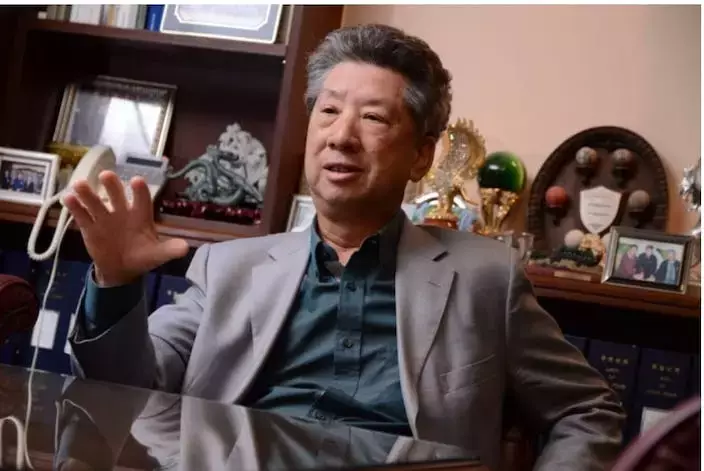
Ronny Tong delivered his Facebook verdict on the LSD's dissolution, pointing out how leaders Wong Yuk-man and Long Hair's radical culture "eroded" traditional pan-democrats, leading to their ultimate complete failure – even dragging the "blue blood" Civic Party into the dark vortex.
From Gentle Protests to Legislative Mayhem
Tong wasn't surprised to see the LSD dissolve after the Civic Party and Democratic Party had already folded, but it brought back memories of the old days. He recalled how back in 2004, when he and Long Hair were both elected as New Territories East Legislative Council members, the most intense behavior of Long Hair in the legislative Council was standing up to shout his protests. Council President Mrs. Fan would respond like a patient parent teaching her child: "Long Hair, please sit down," and Long Hair would obediently comply, never actually disrupting the meeting order.
But things changed dramatically after Wong Yuk-man (the LSD chairman) entered the Legislative Council in 2008. He brought what you might call a "new culture" of foul language, verbal abuse, and physical confrontation into the chamber. It was quite the transformation.
The Civic Party's Descent Into Chaos
Tong noted that while it was understandable for the LSD to establish a distinctive image, he never expected the "blue blood" Civic Party to be gradually sucked into this dark, bottomless vortex of struggle politics. Later, they even became a main force behind the "Five Constituencies Referendum." The traditional democratic camp's inability to stick to their own governing philosophy was the primary cause of their ultimate complete failure.
Looking back at insider information from that time, the Civic Party being dragged into Wong Yuk-man's "Five Constituencies Referendum" was indeed the beginning of their radical turn. The LSD already harbored ambitions to seize leadership of the democratic camp at that point. Mad Dog vigorously pushed for five district legislators to resign, followed by by-elections, using this as a "de facto referendum" on political reform. The Civic Party was dragged along as if blind-folded, while Democratic Party heavyweight Szeto Wah (Uncle Wah) strongly opposed it, firmly resisting the LSD's "invasion" and blocking Jimmy Lai's behind-the-scenes manipulation.
Internal Warfare and Prophecies of Doom
Within the Civic Party, core member Ronny Tong consistently opposed the "Five Constituencies Referendum" and even organized a party member forum, inviting Uncle Wah to attend and analyze the harm this action would cause. But his honest advice fell on deaf ears, and he became a minority voice within the party, suffering severe ostracism. During one internal discussion, after he voiced his opposition, a scholar colleague tried to speak in support, only to be pointed at and verbally abused by other party members present, while the chairman failed to intervene. At that moment, he first sensed that the Civic Party would eventually perish. Subsequent developments proved his prediction completely correct.
In his Facebook post, Tong mentioned that by 2016, the universal suffrage proposal was rejected due to unanimous opposition from pan-democratic legislators, because they insisted that universal suffrage must include "civic nomination," which contradicted Article 45 of the Basic Law. He remembered that when Long Hair first proposed "civic nomination," all traditional pan-democrats opposed it, but as "struggle culture" gradually eroded democratic ideals, they eventually became the main force opposing the universal suffrage proposal.
The proposal failed and died in the womb, universal suffrage progress stagnated, and a golden opportunity for democratic reform vanished into thin air. Tong lamented that every pan-democratic figure bore responsibility for the failure of universal suffrage. He himself, having failed to persuade the Civic Party, ultimately resigned from the party and his position in accountability.
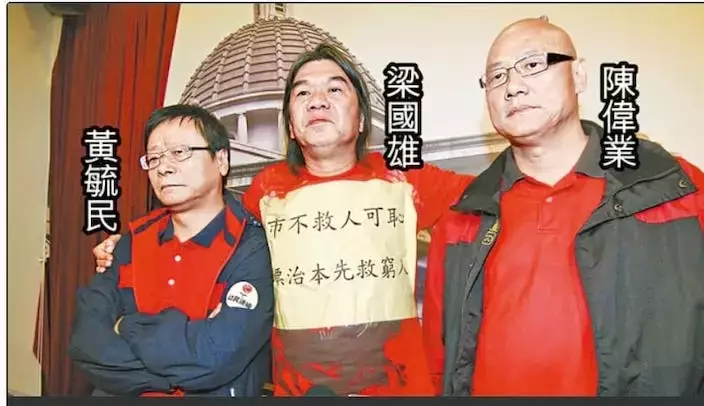
When Mad Dog and Long Hair pushed the "Five Constituencies Referendum," Tong fought hard against it within the Civic Party, resulting in his ostracism and eventual angry departure from the party.
The Real Reason Behind the Pan-Democratic Collapse
As someone who lived through it all, Tong hit the nail on the head about why pan-democratic parties fell one by one: they were continuously "eroded" by the "radical struggle culture" of groups like the LSD, causing their original political ideals to crumble. As a result, they were led by the nose and ultimately walked down a dead-end path.
Before its "death," the LSD shouted "Better be ashes than dust," appearing heroic but actually embodying a "mutual destruction" mentality. They didn't just self-destruct – they dragged other traditional pan-democratic parties off the cliff with them, taking the universal suffrage proposal to the grave as well.
When we're recording historical merits and faults, radical organizations like the LSD, including leaders such as Mad Dog and Long Hair, are all sinners who destroyed Hong Kong's democracy. That's the harsh truth of it.
Lai Ting-yiu
Trump's brazenness in refusing to admit defeat is, admittedly, a cut above the rest.
News broke the morning of June 15th that the US and Iran will sign a Memorandum of Understanding on Friday, 19th of June, ending this absurd war. Trump gained nothing. He should have been left red-faced. Instead, he took to social media with characteristic swagger to declare himself the first American president to bring peace to the region — and claimed victory. Clear-eyed observers tallying up his original campaign objectives find that most were never achieved. Five goals missed in their entirety.
For this pointless war, Trump burned through hundreds of billions of dollars, depleted vast stockpiles of advanced weaponry, and watched his approval ratings plummet. By any measure, this was a "failed deal." Iran, for its part, outlasted America through a war of attrition — prevailing against a far stronger foe through sheer resilience, and emerging as the ultimate winner.
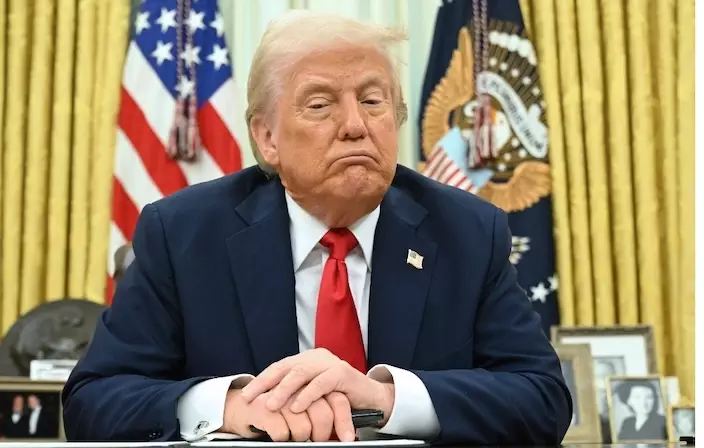
Trump failed all five Iran goals, yet shamelessly declares himself the Middle East peacemaker.
The full text of the US–Iran agreement will only be released after the formal signing. Iranian media has already leaked the document's 14 points, and the contents are not expected to change significantly. At least five of them directly contradict Trump's original objectives. When you tally up the final score, it couldn't be clearer who won and who lost.
Goal One: Regime Change
At the outset of the US–Israeli campaign, the plan was to use overwhelming force in a lightning strike — to "decapitate" Supreme Leader Khamenei and topple the government in one blow, replacing it with a pro-American puppet regime. That vision collapsed entirely. The Iranian government stands firm as a rock. Any pro-American administration remains a pipe dream.
The forthcoming MOU includes a clause in which the US pledges not to interfere in Iran's internal affairs and to respect the sovereignty of the Islamic Republic of Iran. In plain terms: Washington may no longer pursue regime change. The original conspiracy has come to nothing.
Goal Two: Destroying Iran's Military Capability
At the war's outset, Trump and Netanyahu were riding high, overestimating the combined might of US and Israeli forces. They believed they could completely destroy Iran's missiles, drones, military-industrial production, and naval power — rendering it utterly defenseless and at their mercy. This goal, again has not been achieved.
According to US military assessments, Iran has retained 70% of its pre-war missile stockpile, still possesses thousands of drones, and its naval attack boats remain a pervasive presence throughout the Strait of Hormuz. Trump's repeated claims that Iran's military has been entirely destroyed are nothing but hot air.
The MOU stipulates that Iran's missile program will be excluded from the agenda during the 60-day negotiation period. Iran may therefore continue to retain and produce missiles. Trump's plan to defang Iran has essentially failed.
Goal Three: Retaking the Strait of Hormuz
After Iran seized control of the Strait of Hormuz, Trump set his sights on recapturing it by force. He knew well that this chokepoint — through which 20% of global oil exports flow — was the real prize of the conflict. But seizing the strait proved far too difficult and far too risky. Left with no viable option, Trump was compelled to accept Iran's continued control of the waterway.
On the question of who controls Hormuz, the MOU states: the Strait will be reopened within 30 days, under arrangements made by Iran. The critical phrase is "under arrangements made by Iran." Washington has effectively acknowledged Iranian management of the strait. As a senior State Department official from the Biden era remarked: this is a major concession by Trump to Iran.
Goal Four: Dismantling Iran's Nuclear Program
Trump's foremost objective in launching this war was the complete destruction of Iran's nuclear capability — removing enriched uranium, banning all enrichment activities, and eliminating the nuclear threat to the region. Towards the end of the negotiations, he even entertained the idea of sending special forces on a raid into Iran to seize the enriched uranium by force.
But the preliminary agreement tells a very different story. Within 60 days of signing, both sides will work towards a final agreement on the management of enriched uranium and enrichment activities. Iran has reiterated only that it will not develop nuclear weapons — not that it will stop enriching.
Recent reports indicate that the US has agreed to allow Iran to dilute uranium on its own soil rather than transferring it abroad. Compared with Trump's original demands, the gap is enormous. Iran has clearly won this round — and one imagines Netanyahu is absolutely furious.
Goal Five: Lifting Sanctions and Unfreezing Assets
Trump had long relied on freezing Iran's $24 billion in assets and maintaining long-term sanctions as economic strangleholds to try bringing Tehran to its knees. After this war, that leverage is gone.
Under the MOU, both sides have agreed to gradually unfreeze the $24 billion in assets during the negotiation period, with half handed over to Iran before talks formally begin. Sanctions on Iranian oil, petrochemical, and related product sales will be suspended. Iran will be permitted full access to the associated financial revenues.
Trump's willingness to "let Iran off the hook" on this front was clearly driven by necessity. Ever the businessman, he saw the situation deteriorating and wanted out as quickly as possible — cutting his losses and quietly folding. He may also have a separate calculation in mind: positioning himself to profit from Iran's future reconstruction.
Trump has always fancied himself the "King of the Deal." In this Iran campaign, every calculation, every plan, every move was wrong from start to finish. After burning through hundreds of billions of dollars, he ends up empty-handed — his credibility and his dignity in tatters.
Most damaging of all, America has paid a steep price for this misadventure. Its hollow strength has been laid bare for the world to see. It has forfeited the trust of many allies. This was a crushing defeat — and it may well mark the inflection point in the decline of this superpower.
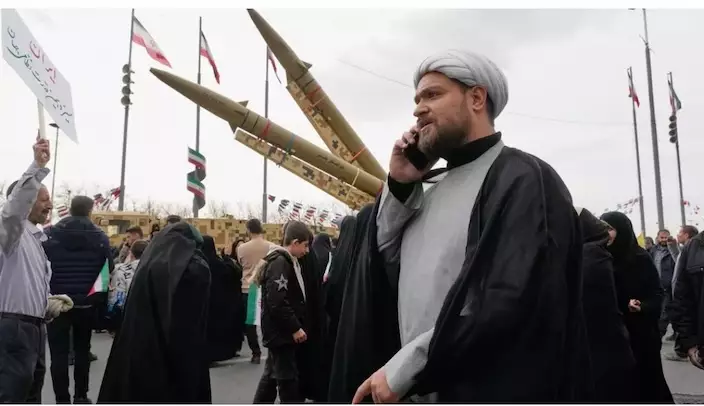
Iran outlasted the US alliance, leaving Trump a colossal bill and a shattered reputation.
Lai Ting-yiu