Hong Kong’s National Security Police have just delivered a powerful blow, launching a full-on crackdown targeting the masterminds and candidates behind the so-called “Hong Kong Parliament.” Nineteen individuals, including key figures like Elmer Yuen Gong-yi and Victor Ho Leung-mou, have been declared fugitives, accused of conspiring to subvert the HKSAR government. All have skipped town, but arrest warrants are in the air. But mind that it's not just these big players in the crosshairs. A senior political insider told me that the scope is vastly wider—over 15,000 people who cast votes as “electors” could be in legal jeopardy too. If the authorities can tie a ballot to your name, you may find police at your door. And that doesn’t just stop at voters—any locals who pitched in money or provided tech help might be next on the list.
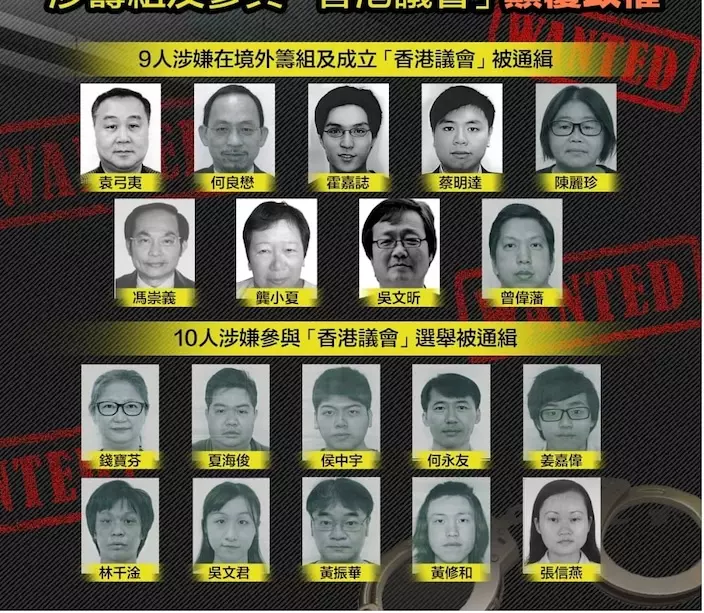
Nineteen ringleaders and “candidates” from the so-called ‘Hong Kong Parliament’ are now wanted—and police are eyeing thousands more supporters and voters who threw in their lot.
What Was Behind the “Hong Kong Parliament” Push?
Now, the group headed by Yuen wasn’t exactly secretive. Despite plenty of missteps (and more than a few meme-worthy moments), their objective was crystal clear: set up a government-in-exile, and take down the HKSAR administration. They weren’t shy about it. Some “candidates” were even promising military training and open talk of buying weapons for armed revolt—hardly subtle stuff. No surprise, then, that the National Security Police have only just started a bigger clean-out, aiming to dismantle this entire operation.
Web of Connections: More Than Just Local Trouble
Several newly “elected” members of this Parliament, however, turn out to be cozied up to other anti-Establishment factions abroad. There’s a real pipeline of overseas support being funneled in. Take Keung Ka-wai, the “top vote-getter”—he’s teamed up with exiled protesters in Taiwan to launch their own “Hong Kong Democratic Independence Union.” They even had their own press conference propagating Hong Kong independence, which earned Keung a swift ejection from Taiwan as a security risk. Meanwhile, back in Hong Kong, police have nabbed several members of that organization —some shockingly young, just 15—showing just how far their ambitions run.

Elmer Yuen and Victor Ho once bragged voting was “absolutely confidential.” That guarantee didn’t last, leaving voters now “shaking with fear and losing sleep.”
Anyone Who Participated Could Be at Risk
Let’s talk about the law. When I pressed a veteran source about whether all 15,702 “voters” also broke the law, the answer was an unambiguous yes. Simply participating in these ballots can be construed as subversion under the National Security Law—Articles 22 and 23 have that covered. So for anyone who voted, there’s genuine cause for worry. Originally, Yuen and Ho made grand promises that a million people, both locals and overseas Hongkongers, would join in. But many were already wary—it was clear from the start that voting carried serious risks, and most people didn’t buy assurances of confidentiality. Some 15,000 did go through with it, but stories of sloppy ballot handling quickly eroded trust, leaving many voters anxious about leaks. For those still in Hong Kong, this has turned into a real nightmare.
And it won’t end with voters: authorities are expected to hunt down any support staff—donors, techies, or PR boosters—relentlessly severing underground networks to prevent Hong Kong from being used as a remote-controlled base for disruption.
To sum up, police defines the “Hong Kong Parliament” as a subversive group. The warrants for the 19 fugitives are just the opening act, aimed not just at showing muscle, but at wiping out local support networks and sending a clear message to would-be backers and “voters” alike. If any of those 15,000 voters end up being prosecuted, it’s going to be a cautionary tale for anyone still thinking about flirting with such risky activism.
Lai Ting-yiu
What Say You?
** 博客文章文責自負,不代表本公司立場 **
The world is getting more chaotic. Someone who benefits you today may hurt you tomorrow, and not just a little. The damage can be catastrophic.
The Strike and the Immediate Fallout
Amazon boss Jeff Bezos is a living example. Not long ago, he and a group of tech giants became Donald Trump's honored guests. They figured that with the president covering them, they were bound to cash in.
But then Donald Trump suddenly went to war against Iran, and Amazon took collateral damage. Its large data center in a Gulf country came under Iranian attack. The damage was severe.
Reuters reported yesterday that the center in Bahrain was almost completely destroyed. Cloud services across the entire region were paralyzed, and customers had to relocate on a large scale to other regions. Amazon suffered heavy losses, and its AI money-making plan went up in smoke.
Other tech giants had been ambitiously preparing to make big money in the Middle East. That dream has also shattered. Donald Trump truly harms people without limit.

Iran destroyed Amazon’s Bahrain cloud hubs, wrecking regional expansion plans.
The report said Amazon Web Services assessed the damage to the data center and said cloud services in the Bahrain area could no longer be repaired.
That center was one of three 'data hosting zones' the company had built in the United Arab Emirates. With one zone paralyzed, the impact already exceeded the load capacity the system was originally designed for. Operations across the whole region became difficult to maintain.
The customer base using services in the region is huge, and banking operations have taken the most direct hit. The situation is catastrophic.
According to reports, Amazon Web Services has sent notices to customers advising them to relocate operations to other regions. The company will provide assistance.
War is merciless. One attack threw the entire system into chaos. The company is suffering, customers are suffering too. The UAE government is suffering even more. They are all left in tears.
Why Iran Hit the Cloud and How Tech Giants Froze
The disaster began shortly after the US-Iran war broke out. Iran launched large-scale drone strikes on two of the three large data centers Amazon had set up in the UAE. The center in Bahrain took the heaviest damage.
The Iranian military said it targeted the data centers because the United States was using AI to formulate combat plans. Amazon's centers had provided support to US forces. That put them on the strike list.
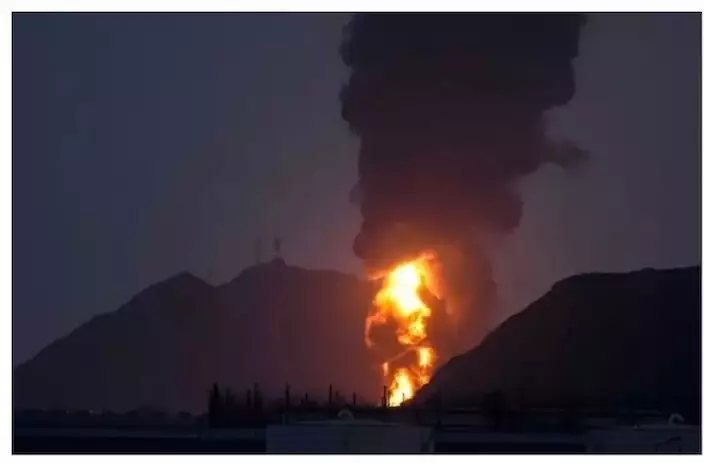
Targeted data-center airstrikes now terrify tech giants eyeing Gulf AI.
That was only the stated reason. Iran had another strategic calculation. Destroying digital infrastructure in the UAE would strike the country's economy and force it to pressure the United States to end the war as soon as possible.
The move was ruthless. Gulf states such as the United Arab Emirates, Saudi Arabia, and Qatar have been racing to transform their economies. They are investing heavily in high-tech sectors, with AI as the centerpiece, and courting American tech giants.
They knew this was a super gold mine. The giants were drooling, rubbing their hands, and ready to march in.
Amazon led the charge. Amazon Web Services quickly built three large data centers in the UAE, betting on the first taste of the broth and a fortune to follow.
At that time, OpenAI, Oracle, and Nvidia were also preparing to build mega AI campuses in the Gulf states. Shortly after Donald Trump took office, the giants accompanied him on a visit to the Middle East and signed a series of investment plans. Nvidia moved to supply its most advanced chips to AI companies in Saudi Arabia.
They all saw it as a sure-fire path to wealth.
But when the US-Israeli coalition launched its war against Iran in late February, their get-rich dreams went up in the flames of war. Iran immediately struck Amazon's large data center in the UAE and scored a direct hit, causing severe damage.
The Islamic Revolutionary Guard Corps (IRGC) then released an attack list. Amazon, Google, Microsoft, Nvidia, Oracle, and others were all named, identified as accomplices of the United States.
With the Gulf states suddenly engulfed in war and danger, the giants immediately shrank back. Every plan was frozen.
Gulf Stalls, Hong Kong Contrast
The reality is the Gulf states suffer most. Their grand plans to develop innovation, technology, and AI industries just took a heavy blow. After this data center attack, finding brave investors will be even harder.
Some US media commentaries have already drawn a blunt conclusion. The Gulf can no longer become a major AI hub, and critical technology infrastructure will not be built in the Middle East.
After reading this Reuters report, a friend immediately thought of Hong Kong's Five-Year Plan. It stresses that "Security is the prerequisite for development, whereas development reinforces security." The plan will strengthen top-level design and efficiently safeguard national security.
That naturally includes a safe business environment. If data centers were located in Hong Kong, they would be a hundred times safer than in the war-torn Gulf region.
Lai Ting-yiu