Remember Stephen Roach? Yep, the former Morgan Stanley Asia chairman who not so long ago declared “Hong Kong is finished.” Well, he’s done a proper about-face and is now waving the China flag, much to everyone’s surprise. Recently, in his Project Syndicate piece, he spotlighted how China’s investment in scientific R&D has leapfrogged to match the US, warning that American government support is falling way behind. If you think the US still has AI in the bag – not so fast. China’s catching up, and fast.
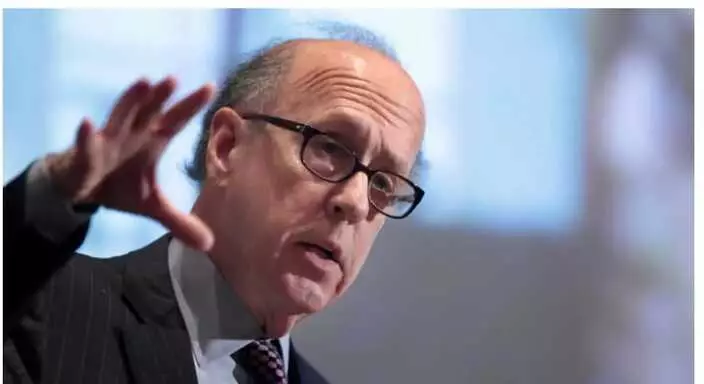
After declaring “Hong Kong is finished,” Roach has now become “China’s best friend.” Lately citing data, he notes that China’s investment in scientific R&D has reached parity with the US, and government support for basic research is far greater than in America. While the US still leads in AI, China is set to overtake.
Trump’s Budget Axe: Making It Easy for China
In his article, Roach points out that while the US kicked off the AI arms race, it doesn’t mean it’ll have the last laugh. There’s more to winning than just powerful chips; talent, strategy, and software matter big time – and China’s been getting its long game on. The “2024 Global Innovation Index” backs this up: China’s now ranked 11th (that’s up 32 slots in 15 years!), while the US holds onto 3rd. Roach warns that the critical bit – basic scientific research – is precisely where Trump’s slashing funding. US federal support for foundational R&D has plummeted from over 30% in the late ’70s to around 10% by 2023, with Trump aiming to cut it even further to levels not seen since 2002. Not exactly a winning strategy.
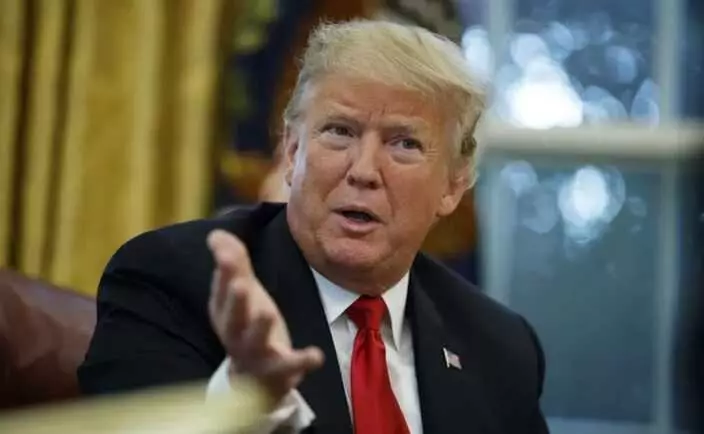
Roach says Trump’s deep cuts to federal basic research funding have rolled it back to 2002 levels, handicapping scientific innovation and surrendering the lead to China.
Meanwhile, China isn’t just resting on its laurels. By 2023, Chinese spending made up 28% of global R&D—almost neck-and-neck with America’s 29%. Given Beijing’s momentum, Roach suggests China likely hit parity last year – and it’s poised to surge ahead. He even cites Jimmy Goodrich (Center for Strategic and International Studies) who argues that Trump’s decisions are basically handing over America’s long-held research lead to China.
Swapping Tunes: Roach’s Change of Heart
If you’re wondering why Roach sounds so different these days, here’s the tea: After his infamous “Hong Kong finished” call, he faced some serious blowback. Realizing you don’t mess with the financial gravity of mainland China and Hong Kong, he started laying the groundwork for a dramatic turnaround. Now he likes to quote John Maynard Keynes: “When the facts change, I change my mind.” That’s not flip-flopping, he says—just smart thinking. Unlike “China collapse” prophets like Gordon Chang, Roach claims he’s always been Team China.
So, what do we make of Roach’s latest? It’s simple: China’s gunning hard in the AI race, thanks in no small part to America’s own self-inflicted wounds. As Roach tells it, the US should be genuinely worried.
Lai Ting Yiu
What Say You?
** 博客文章文責自負,不代表本公司立場 **
Let's talk about how these so-called "Yellow Media", or as they say: pro-liberal media, outfits from Hong Kong's chaotic anti-extradition days are making a comeback. You know, outlets like Apple Daily and Stand News were the big agitators back then, stirring up trouble with US-funded Radio Free Asia (RFA) jumping in to amp up the momentum. It all peaked until the Hong Kong National Security Law kicked in and Trump yanked RFA's funding, scattering everyone. But these guys didn't just fade away—some fled overseas, set up their little operations, and kept at it.
Now, word is, UK-based "The Chaser News" and Taiwan's "Photon Media"—both launched in recent years—are merging into this new set-up called "Chase The Light PULSE HK." They're bringing in teams from both, plus former RFA Cantonese head Wu Lik-han. It's pretty obvious they're trying to repackage and resurrect those fractured "yellow media" brands under a fresh name. The real question? How will this stir things up in Hong Kong? Authorities better keep their eyes peeled.
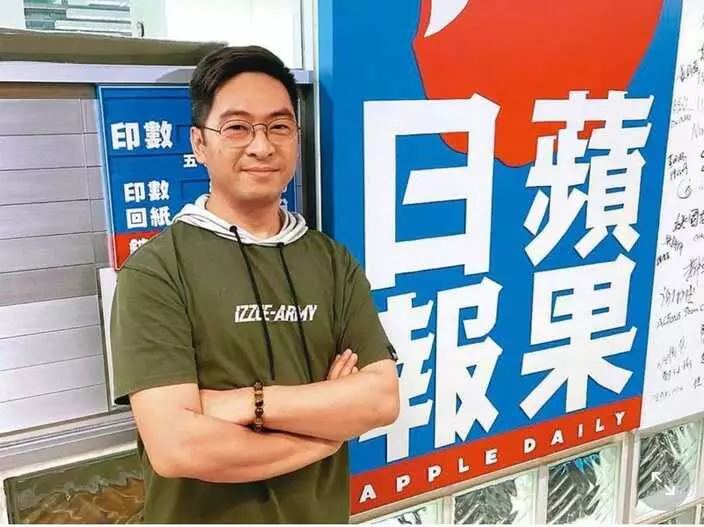
The three "yellow media" factions exiled overseas are merging to launch a new platform. One of the masterminds is former Apple Daily Motion News chief Edward Lee, partnering with the teams of Photon Media and The Chaser News—looks like they're not done causing headaches yet.
This merger drops officially on Friday at a press conference in Taipei—yeah, that tells you they're having their base in Taiwan while linking up with the UK crew for editing and reporting. Key players include Wu Lik-han, ex-Apple Daily Motion News boss Edward Lee, and Photon Media founder Shirley Leung, a former Apple Daily reporter.
Digging into the Backgrounds
I've got industry pals who dug into Photon Media and The Chaser News, and surprise, surprise—they're stuffed with former Apple Daily and Stand News staff, plus some folks wanted by Hong Kong Police's National Security Department and shady foreign anti-China types. These aren't your everyday news ops, that's for sure. Let's face it, this smells like more than just journalism.
Photon Media kicked off in Taipei back in April 2023, led by Shirley Leung and a bunch of Hong Kong journalists. In her opening piece, she talked about feeling "chilled" in Hong Kong and needing to start fresh in a "free" overseas spot—the subtext is loud and clear. Their advisory board? Super political. Take Joseph Lian, ex-Stand News director, who was in Japan when cops raided the outlet and slapped him with a warrant.
The foreign advisors are no slouches either. Mark Clifford, once on Next Media's board, now runs the US-based "Committee for Freedom in Hong Kong Foundation" (CFHK), chaired by James B. Cunningham—a US politico cozy with Jimmy Lai. Then there's Steve Vines, a longtime anti-China British journo whose new book, Defying the Dragon: Hong Kong and the World's Largest Dictatorship, hails the 2019 mess as a "revolution" and goes full throttle on the glorification.
The Chaser News Crew and Their Troublemakers
Now, merging with them is The Chaser News, launched in the UK in March 2022 by a crew of "yellow-leaning" media folks who bailed from Hong Kong. Their board features two real stirrers: Yang Yingyu, the guy who set that infamous DSE history exam question pushing kids to argue Japan's invasion of China did more good than harm. He left under heat, started "Education Needle" in the UK to bash education policies, and got called out by Security Secretary Chris Tang for "soft resistance." The other? Huang Weiguo, a chronic rabble-rouser at Hong Kong Baptist University who lost his contract over radical views, fled to the UK in 2021, and kept the activism going as a director there.
They've also pulled in "problem scholars" who escaped to the UK for commentaries, like Chung Kim-wah, former VP of the defunct Hong Kong Public Opinion Research Institute—he's on the police wanted list too.
RFA's Fallout and the Big Reunion
As for the latest joiner, it's from the now-suspended RFA, run by the US Agency for Global Media (USAGM)—you know, the outfit pushing "color revolutions." Seen as foreign meddlers, they ditched Hong Kong for Taiwan in 2024. Then in March this year, Trump slashed USAGM funding, shutting off RFA's tap and leaving director Wu Lik-han, a former Hong Kong media guy, high and dry.
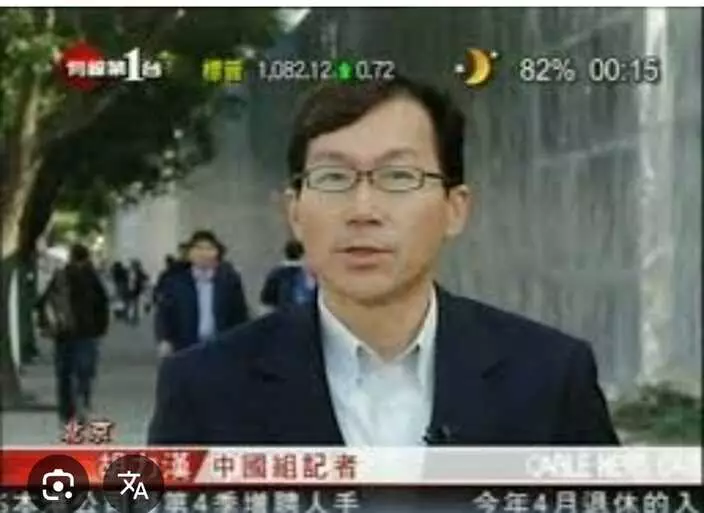
Former Cable TV reporter and ex-RFA Cantonese director Wu Lik-han is jumping in too. RFA, bankrolled by the US government, folded after Trump cut the cord—talk about a plot twist.
With their backing gone, these folks needed a new spot, which is probably why they're hopping on this Chase The Light PULSE HK bandwagon—gearing up for round two. It's a bit worrying how these ex-"yellow media" types are regrouping with unapologetic Hong Kong disruptors, clearly aiming to bring back Apple Daily, Stand News, and RFA in disguise.
All this points to one thing: these former agitators are reassembling to resurrect their old brands under a new banner. Moves are coming, no doubt, and authorities need to stay on guard.
Lai Ting-yiu