Skip to Content Facebook Feature Image

The Jimmy Lai Trial's Game-Changer: When Loyalty Turns to Testimony

Blog

The Jimmy Lai Trial's Game-Changer: When Loyalty Turns to Testimony
Blog

Blog

The Jimmy Lai Trial's Game-Changer: When Loyalty Turns to Testimony

2025-08-18 20:14 Last Updated At:20:47

After 146 days of proceedings, Jimmy Lai's national security trial reaches its climax on 18 August with closing arguments. What really caught everyone's attention is that four of Lai's most trusted lieutenants have flipped, becoming key prosecution witnesses in what many are calling the trial of the century. 

We're talking about some serious heavyweights here: Next Digital CEO Cheung Kim-hung, Apple Daily Associate Publisher Chan Pui-man, Chief Writer Yeung Ching-kei, and Group Chief Operating Officer Chow Tat-kuen. These weren't just employees – they were Lai's inner circle, receiving daily instructions and messages from the boss himself.

The Mystery of Cheung Kim-hung's return to Lai’s empire

A friend who's known Cheung Kim-hung for years has finally solved a puzzle that's had Hong Kong media watchers scratching their heads for ages. Why did this guy walk away from Lai's empire in 2005, only to come back five years later? The answer, it turns out, reveals quite a bit about how these media moguls operate.
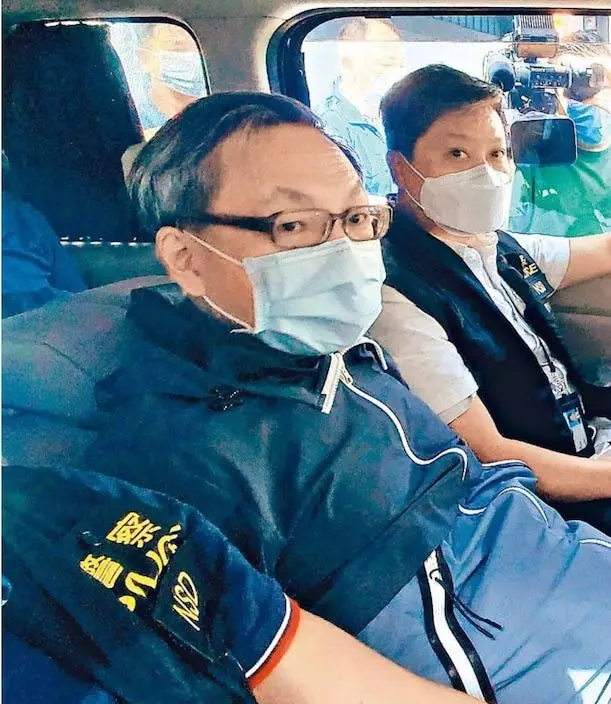
Four Next Digital senior executives turned against Jimmy Lai as prosecution witnesses, with CEO Cheung Kim-hung's testimony proving crucial. A friend reveals why he left Lai in 2005 only to return five years later.

Four Next Digital senior executives turned against Jimmy Lai as prosecution witnesses, with CEO Cheung Kim-hung's testimony proving crucial. A friend reveals why he left Lai in 2005 only to return five years later.

The prosecution needed to prove three key points against Lai: whether he manipulated his media outlets to incite anti-extradition bill protests, whether he funded the "Fight for Freedom Stand with Hong Kong" international campaign, and whether he continued these activities after the National Security Law took effect in June 2020. And boy, did these four witnesses deliver.

When Editorial Independence Becomes a Myth

Cheung Kim-hung and his fellow executives were refreshingly blunt about how things really worked at Apple Daily. "Editorial independence" apparently only existed when Jimmy Lai wasn't giving orders – which wasn't very often. Cheung testified that Lai held weekly "lunch box meetings" where he'd lay out his political stance and tell everyone to operate according to his direction. When asked directly whether Lai influenced editorial policy, Cheung's response was crystal clear: "Of course he did!"

The timeline is particularly damning. After Lai's July 2019 trip to Washington, where he met with Vice President Mike Pence and Secretary of State Mike Pompeo, things escalated quickly. Suddenly, "talk of sanctions seemed to increase more and more," and Apple Daily's editorial line became increasingly radical, painting violent protesters as victims forced into action.

Following the Money Trail

Chow Tat-kuen, handling both the company's finances and Lai's personal accounts, had some explosive revelations about the money flow. He testified about co-signing an $80,000 cheque with Lai's assistant Mark Simon to "Fight for Freedom Stand with Hong Kong" member Chan Tsz-wah, paid from Lai's personal company account.

But that's not all. Chow also revealed giving $3 million to Mark Simon for unspecified "projects" after June 2019, presumably to support overseas propaganda efforts. The web of financial connections between Lai's personal wealth and political activities was becoming clearer by the day.

The Stubborn Defiance That Sealed the Deal

Even after the National Security Law came into effect, Lai apparently couldn't help himself. When Cheung visited him in detention in December 2020, Lai's message was defiant: "Don't be scared, keep going! Do it the same way as before!" He continued his live streaming program, engaging American politicians like former American Institute in Taiwan Chairman Raymond Burghardt, while his terrified staff begged him to stop.

Now, about that mystery of Cheung Kim-hung's return to Next Digital. Turns out "Bold Hung" (as he's nicknamed) wasn't just bold at work – he was equally aggressive with stock and property investments. After leaving Next Digital in 2005, he threw himself into the markets with typical gusto. Problem is, while he gambled big, he also lost big. By the time Lai came calling again, Cheung's finances were in rough shape, and Lai – now increasingly obsessed with politics – needed someone capable to "watch over the shop."
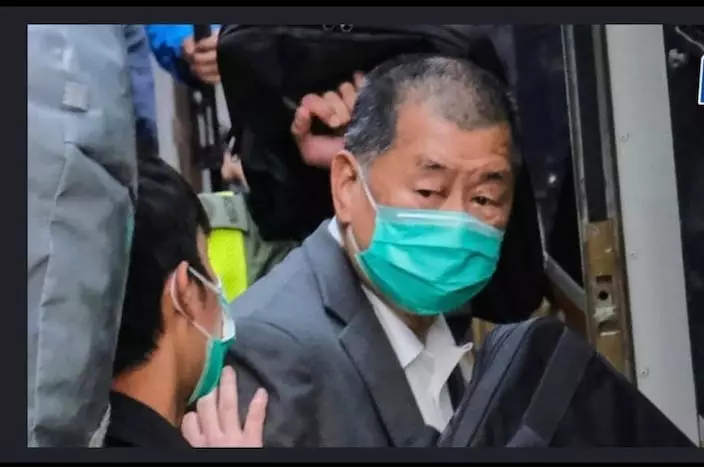
Cheung Kim-hung went to prison for his boss, but Lai coldly testified they were not even friends.

Cheung Kim-hung went to prison for his boss, but Lai coldly testified they were not even friends.

The tragic irony? While Cheung Kim-hung ended up in prison for helping his boss play "democracy fighter," Lai coldly testified in court that they weren't even friends – just boss and employee who only talked about work. Talk about loyalty being a one-way street.

Perhaps that's why Cheung finally saw the light and agreed to become a prosecution witness. Combined with his early guilty plea, he's likely looking at a significantly reduced sentence and won't have to wait too long for freedom. Meanwhile, his former boss faces the consequences of a political gamble that's looking increasingly like it didn't pay off.


What Say You?

** The blog article is the sole responsibility of the author and does not represent the position of our company. **

As the Year of the Horse approaching, Hong Kong BNO holders in the UK are bracing for a gut punch. The festive season brings no joy—only anxiety. Mid-February marks the deadline for the UK government's consultation on raising permanent residency thresholds, and the verdict on whether BNO holders get a pass is about to drop.

The Home Office floated immigration reforms that would keep the "5+1" rule intact—five years of residence before you can apply—but the bar just shot up, with higher English proficiency requirements and stable income. For many, these hurdles are insurmountable.

Mahmood's stonewalling to BNO holders' demands signals bad news. The February verdict looms.

Mahmood's stonewalling to BNO holders' demands signals bad news. The February verdict looms.

Hong Kong BNO holders fired off "five demands" to the authorities, pleading for relief. Home Secretary Shabana Mahmood's response was ice cold. Zero acknowledgment of their demands. Her dismissive tone signals one thing: exemptions for BNO holders look dead in the water.

If the final call goes all the way, thousands who waited five years will crash at the finish line. A return wave to Hong Kong is inevitable. The Hong Kong government needs to get ready.

The Dual Knockout Blow

The UK government didn't just raise the bar—it installed a double gate that slams shut on 60,000 people. First gate: English proficiency must hit B2 level, equivalent to A-Level, practically university standard. Second gate: annual income over the past three to five years must reach at least £12,570, with tax records to prove it.

Surveys by Hong Kong migrant organizations paint a grim picture: if these "dual requirements" become reality, 30% of BNO holders—roughly 60,000 people—will fail to qualify and get filtered out. No wonder panic is spreading.

While anxiety mounts, the UK government plays coy. Ambiguous statements. Equivocal attitudes. Nobody can read their hand. Now, with just one month until the announcement, BNO holders are reaching peak agitation. A group of Hong Kong voters in Mahmood's constituency drafted a joint letter, restating the "five demands" and requesting a face-to-face meeting to apply pressure.

Mahmood responded quickly—but only to say Hong Kong BNO holders could apply for permanent residency after five years. As for the "five demands"? Crickets. Instead, she reiterated that those granted permanent residency must meet three criteria: being "well-integrated," "economically self-sufficient," and "committed” to the communities they join.

Mahmood Goes Silent

One Hong Kong BNO holder who signed the petition decoded those three phrases: "integration" and "commitment" are code words for English proficiency and income levels. Translation: BNO holders applying for permanent residency must also clear these two hurdles.

These Hong Kong residents sent a follow-up letter to Mahmood, requesting a meeting to present their case in person. Her response? Radio silence. Phone calls to her constituency office go unanswered. She's clearly ducking any face-to-face encounter.

Mahmood is stonewalling, and nobody can do a thing about it. Frustrated BNO holders vent to yellow media outlets, angrily branding her "heartless." But here's the reality check: the Labour government's approval ratings are tanking. Reform UK is breathing down their necks on immigration. Immigration policy will err on the side of restriction, not relaxation. Naturally, they're inclined to treat BNO holders the same as everyone else. No special treatment. No "sentiment." The "five demands" might as well be whispers in the wind.

Two Paths Forward

Friends living in the UK lay out the scenario: if the UK government announces "no relaxation" next month, BNO holders who can't meet the requirements face two choices.

First option: return to Hong Kong and start over. After all, life in the UK hasn't been entirely rosy—living day after day in anxiety. "Returning home" might actually be a relief.

Second option: continue to "temporarily reside" in the UK on a BNO visa, becoming long-term temporary residents. But they'll remain in an unstable state, which won't be comfortable.

There's also a thornier complication: some BNO families migrated to the UK with their parents, and one spouse hasn't worked or earned any income for several years. If these family members don't meet the criteria for applying for permanent residency, it could trigger family separation or force the entire family to return to Hong Kong. They'll face an agonizing decision. Quite a mess.

No exemptions? Brace for the return wave.

No exemptions? Brace for the return wave.

My friend predicts that if the worst-case scenario materializes, a return wave is sure to come. For Hong Kong, there will be upsides and downsides. Either way, the government needs to get ready and figure out how to handle it.

Recommended Articles