Jimmy Lai’s closing arguments kicked off Monday with the prosecution spotlighting a stark fact: even after the Hong Kong National Security Law (NSL) came into force, Lai stubbornly kept colluding with foreign forces to push sanctions against Hong Kong—this is the linchpin in proving his guilt.
A close insider told me that once Lai crossed the line, he tossed caution to the wind and charged forward full throttle, despite his top executives’ deep anxiety. They begged him to rein it in, but Lai was hellbent on driving the “war chariot” nonstop. Stuck in the driver’s seat with no escape, Lai’s team scrambled to reduce internal risks by setting up an “NSL Contingency Committee.” Each step was nerve-wracking, but in the end, they all paid the price, dragged down together by their boss.
Panic and the Great Escape
Among Lai’s inner circle, the fastest to jump ship was his so-called protégé, Simon Siu-fat Lee. Just four hours after the NSL took effect, Lee bailed and later fled to the US, successfully dodging prosecution.
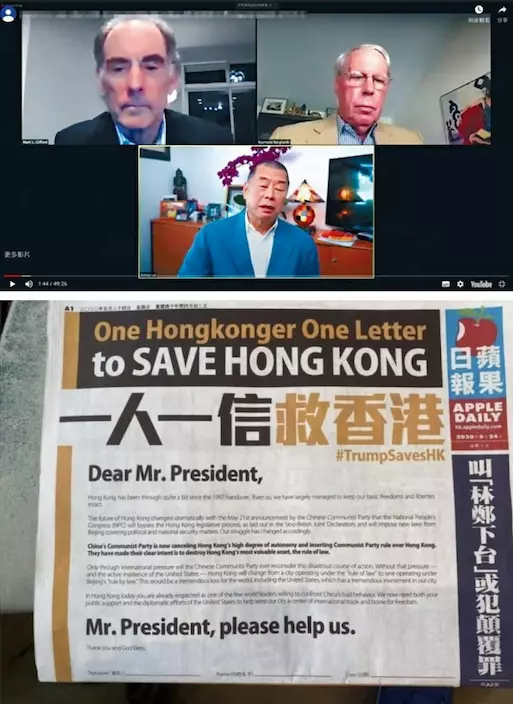
After the NSL took effect, Jimmy Lai kept livestreaming and pushing the “One Person, One Letter” campaign urging Trump’s intervention, despite his team’s alarmed opposition.
Court testimony reveals that a month before the NSL’s arrival, Lai already knew how severe the law was but still pressed on, provoking the US to pressure Hong Kong’s government. One of his moves included launching Apple Daily’s “One Person, One Letter to Save Hong Kong” campaign, rallying citizens to write to Donald Trump for intervention, betting that only international pressure could make Beijing reconsider its “disastrous crackdown”.
This alarmed senior figures like Cheung Kim-hung and Chan Pui-man, who saw Lai’s strategy as highly risky and voiced opposition. Yet Lai shot back, telling Chan the only way to handle Beijing was boldness, urging bravery at this “emergency” moment. This campaign was later pushed on social media like Facebook, Twitter, and the White House Petition platform.
When the NSL officially landed in June 2020, Lai showed zero signs of slowing down. He doubled down, launching “Live Chat with Jimmy Lai” livestreams featuring foreign politicians and anti-China figures. His senior staff reportedly feared this would cross the NSL line, but Lai just brushed aside their worries, growing even more fired up as he surged forward.
Desperate Measures Behind the Scenes
Apple Daily’s management knew they were stepping on thin ice. Chan Pui-man testified to advising Cheung Kim-hung about carefully choosing language to adhere to journalistic principles and even organised legal seminars to help staff avoid violations. The prosecution displayed a screenshot of chief editor Yang Qingqi’s phone showing a Signal group named the “NSL Contingency Committee,” made up of Cheung, Chan, and English edition chief editor Fung Wai-kwong. They’d switched from WhatsApp to Signal where messages would disappear automatically within hours — a clear sign of their panic.
Despite all this, Lai told his team not to be “overly afraid, but cautious,” pushing for more meetings with foreign writers. His subordinates were caught between fear and loyalty, trapped “on the vehicle” with no way out as their boss sped toward legal disaster.
Only one confidant acted decisively: Simon Siu-fu Lee, who messaged Lai just four hours after the NSL kicked in, saying he could no longer manage Lai’s Twitter. Mark Simon, Lai’s assistant, kept this quiet for fear it would trigger more resignations.
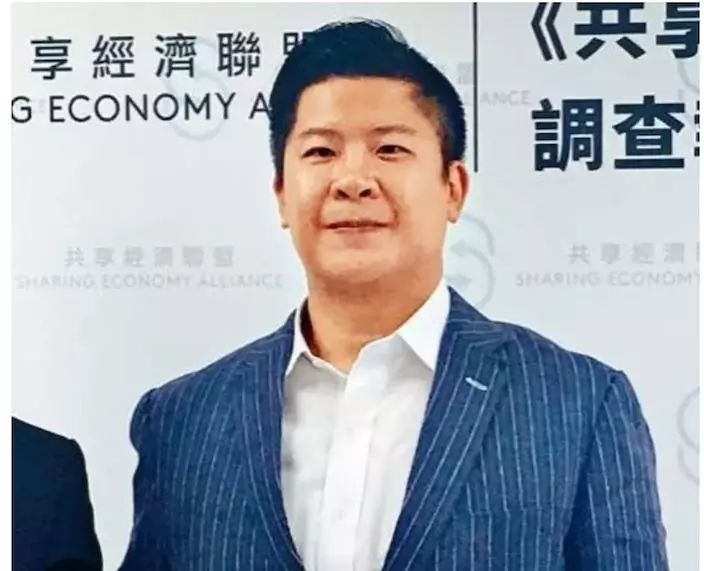
Lai’s protégé Simon Siu-fu Lee cut ties within four hours of the NSL’s start, escaping prosecution.
Lee’s swift escape prevented his arrest, unlike many other senior Next Digital executives swept up later. The lesson: sometimes, jumping ship quickly is your best shot at survival. The others, tragically, were dragged down, caught in the same downward spiral.
This is a textbook tale of reckless leadership driving a team over a cliff—Lai full speed ahead while his subordinates scrambled desperately to avoid falling too, with only one managing to get off in time. The rest paid the price for their boss’s brazen gamble.
Lai Ting-yiu
What Say You?
** 博客文章文責自負,不代表本公司立場 **
After 146 days of proceedings, Jimmy Lai's national security trial reaches its climax on 18 August with closing arguments. What really caught everyone's attention is that four of Lai's most trusted lieutenants have flipped, becoming key prosecution witnesses in what many are calling the trial of the century.
We're talking about some serious heavyweights here: Next Digital CEO Cheung Kim-hung, Apple Daily Associate Publisher Chan Pui-man, Chief Writer Yeung Ching-kei, and Group Chief Operating Officer Chow Tat-kuen. These weren't just employees – they were Lai's inner circle, receiving daily instructions and messages from the boss himself.
The Mystery of Cheung Kim-hung's return to Lai’s empire
A friend who's known Cheung Kim-hung for years has finally solved a puzzle that's had Hong Kong media watchers scratching their heads for ages. Why did this guy walk away from Lai's empire in 2005, only to come back five years later? The answer, it turns out, reveals quite a bit about how these media moguls operate.
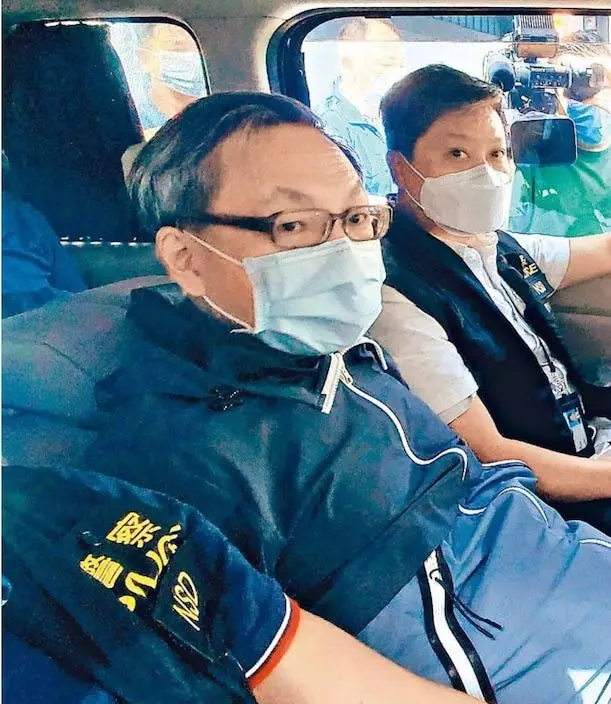
Four Next Digital senior executives turned against Jimmy Lai as prosecution witnesses, with CEO Cheung Kim-hung's testimony proving crucial. A friend reveals why he left Lai in 2005 only to return five years later.
The prosecution needed to prove three key points against Lai: whether he manipulated his media outlets to incite anti-extradition bill protests, whether he funded the "Fight for Freedom Stand with Hong Kong" international campaign, and whether he continued these activities after the National Security Law took effect in June 2020. And boy, did these four witnesses deliver.
When Editorial Independence Becomes a Myth
Cheung Kim-hung and his fellow executives were refreshingly blunt about how things really worked at Apple Daily. "Editorial independence" apparently only existed when Jimmy Lai wasn't giving orders – which wasn't very often. Cheung testified that Lai held weekly "lunch box meetings" where he'd lay out his political stance and tell everyone to operate according to his direction. When asked directly whether Lai influenced editorial policy, Cheung's response was crystal clear: "Of course he did!"
The timeline is particularly damning. After Lai's July 2019 trip to Washington, where he met with Vice President Mike Pence and Secretary of State Mike Pompeo, things escalated quickly. Suddenly, "talk of sanctions seemed to increase more and more," and Apple Daily's editorial line became increasingly radical, painting violent protesters as victims forced into action.
Following the Money Trail
Chow Tat-kuen, handling both the company's finances and Lai's personal accounts, had some explosive revelations about the money flow. He testified about co-signing an $80,000 cheque with Lai's assistant Mark Simon to "Fight for Freedom Stand with Hong Kong" member Chan Tsz-wah, paid from Lai's personal company account.
But that's not all. Chow also revealed giving $3 million to Mark Simon for unspecified "projects" after June 2019, presumably to support overseas propaganda efforts. The web of financial connections between Lai's personal wealth and political activities was becoming clearer by the day.
The Stubborn Defiance That Sealed the Deal
Even after the National Security Law came into effect, Lai apparently couldn't help himself. When Cheung visited him in detention in December 2020, Lai's message was defiant: "Don't be scared, keep going! Do it the same way as before!" He continued his live streaming program, engaging American politicians like former American Institute in Taiwan Chairman Raymond Burghardt, while his terrified staff begged him to stop.
Now, about that mystery of Cheung Kim-hung's return to Next Digital. Turns out "Bold Hung" (as he's nicknamed) wasn't just bold at work – he was equally aggressive with stock and property investments. After leaving Next Digital in 2005, he threw himself into the markets with typical gusto. Problem is, while he gambled big, he also lost big. By the time Lai came calling again, Cheung's finances were in rough shape, and Lai – now increasingly obsessed with politics – needed someone capable to "watch over the shop."
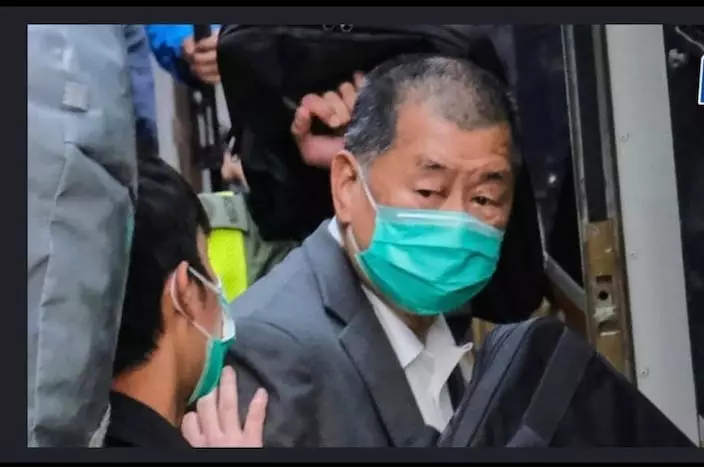
Cheung Kim-hung went to prison for his boss, but Lai coldly testified they were not even friends.
The tragic irony? While Cheung Kim-hung ended up in prison for helping his boss play "democracy fighter," Lai coldly testified in court that they weren't even friends – just boss and employee who only talked about work. Talk about loyalty being a one-way street.
Perhaps that's why Cheung finally saw the light and agreed to become a prosecution witness. Combined with his early guilty plea, he's likely looking at a significantly reduced sentence and won't have to wait too long for freedom. Meanwhile, his former boss faces the consequences of a political gamble that's looking increasingly like it didn't pay off.