Skip to Content Facebook Feature Image

Jimmy Lai's Secret Meeting That Destroyed His Defense

Blog

Jimmy Lai's Secret Meeting That Destroyed His Defense
Blog

Blog

Jimmy Lai's Secret Meeting That Destroyed His Defense

2025-08-22 14:02 Last Updated At:14:02

The prosecution in Jimmy Lai's case has clearly done their homework – and it shows. Over two days, they methodically presented their 860-page closing arguments with the kind of meticulous evidence arrangement that would make any lawyer proud. On the other hand, the defense’s performance was rather lackluster, with judges repeatedly questioning their preparation.

Prosecution Comes Prepared, Defense Falls Flat

The defense's central argument hinges on a simple claim: Jimmy Lai supposedly stopped advocating for "sanctions" and other hostile actions once Hong Kong's National Security Law took effect, insisting he wouldn't knowingly break the law. However, the evidence tells a completely different tale. The prosecution has systematically demolished this defense line with concrete proof that Lai never actually stopped his activities – he just got craftier about how he went about them.

The evidence shows that some 10 days before the National Security Law even came into effect, Lai secretly met with Chan Tsz-wah, leader of "Stand with Hong Kong Fight for Freedom," at Next Digital headquarters. What did they discuss? Lai explicitly told Chan to keep fighting on the "international front" and boldly declared he would lead by example in continuing to promote foreign sanctions.

According to Chan's testimony, on June 16, 2020, Lai sent his car to pick him up and had him enter through the back door – clearly trying to keep this meeting under wraps. When Chan expressed concerns about the looming National Security Law and suggested they should stop their advocacy work, Lai dismissed these worries, claiming the law was "all thunder but little rain." He confidently declared he'd continue calling for sanctions through the media.
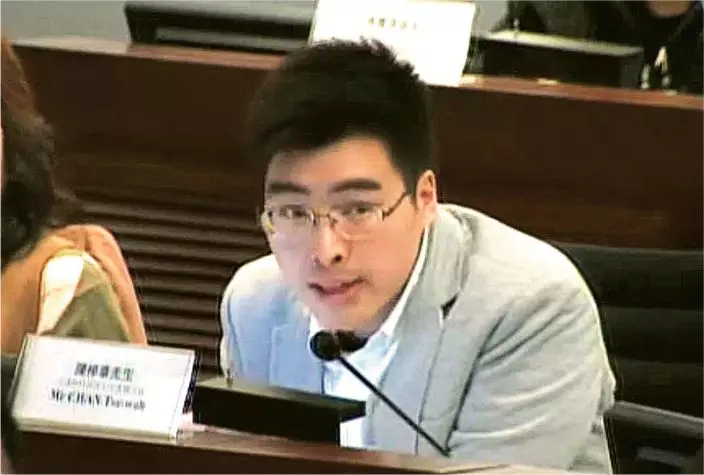
Chan Tsz-wah's testimony reveals the secret meeting that proves Lai never intended to stop his activities after the National Security Law.

Chan Tsz-wah's testimony reveals the secret meeting that proves Lai never intended to stop his activities after the National Security Law.

Even before this secret meeting, Lai had messaged Chan in May stating that they shouldn't worry about personal safety and be prepared to fight to the end. After the National Security Law took effect, his attitude remained unchanged – he continued encouraging co-conspirators to keep up their "international lobbying" efforts without missing a beat.

No Signs of Stopping After the NSL

The prosecution asked Chan a crucial question: between that secret meeting and his arrest in February 2021, did Jimmy Lai ever indicate he wanted to change their "4-step international lobbying" approach or stop urging foreign countries to sanction China and Hong Kong? Chan's answer was crystal clear: "No!"

The evidence keeps piling up. In his "Live Chat with Jimmy Lai" program after the National Security Law's implementation, during a conversation with Israel's former Deputy Prime Minister, Lai openly acknowledged that colluding with foreign forces was a serious crime with legal risks. But instead of backing down, he doubled down, saying "I cannot retreat, I can only move forward... I will still take risks to carry out related actions."

Even while in custody awaiting trial in December 2020, Lai told visiting Next Digital CEO Cheung Kim-hung, "Don't be afraid, keep doing it! Do it the same way as before!" – hardly the words of someone who'd supposedly seen the error of his ways.

The American Connection Continues

And, Lai's communications with American political figures didn't cease after the National Security Law. Based on his private communication records, he maintained contact with former military Vice Chief of Staff Keane, former Defense Department Deputy Secretary Wolfowitz, and senior State Department advisor Whiton, among others. He also continued liaising with various "under-the-table" figures in American political circles – hardly the behavior of someone who'd genuinely stopped his activities.

Despite claims of compliance, Lai kept his American political contacts active, completely undermining his defense strategy.

Despite claims of compliance, Lai kept his American political contacts active, completely undermining his defense strategy.

From all this concrete evidence, it's obvious that while Lai became more careful with his language after the National Security Law – using euphemisms like "punishment" and "pressure" instead of directly saying "sanctions" – he clearly had no intention of actually stopping. It was essentially a game of linguistic camouflage while continuing the same activities.

The defense's argument that Lai "wouldn't knowingly violate the law, and hoping for sanctions in his heart doesn't equal advocating for them" simply doesn't hold water when faced with such overwhelming evidence to the contrary.

What's most baffling is this: if Lai truly believed he was fighting the good fight with a "do or die" mentality, why not own it completely? Instead, he's stubbornly insisting he stopped breaking the law once the National Security Law kicked in. You can't play the freedom fighter card while simultaneously claiming legal innocence – and the prosecution's mountain of evidence proves exactly that.

Lai Ting-yiu


What Say You?

** The blog article is the sole responsibility of the author and does not represent the position of our company. **
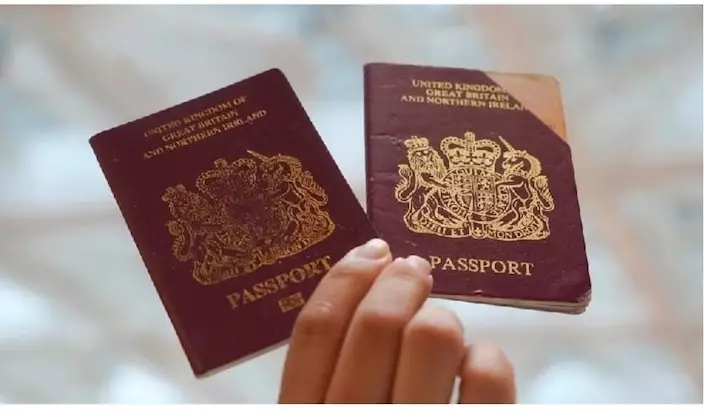
As the Year of the Horse approaching, Hong Kong BNO holders in the UK are bracing for a gut punch. The festive season brings no joy—only anxiety. Mid-February marks the deadline for the UK government's consultation on raising permanent residency thresholds, and the verdict on whether BNO holders get a pass is about to drop.

The Home Office floated immigration reforms that would keep the "5+1" rule intact—five years of residence before you can apply—but the bar just shot up, with higher English proficiency requirements and stable income. For many, these hurdles are insurmountable.

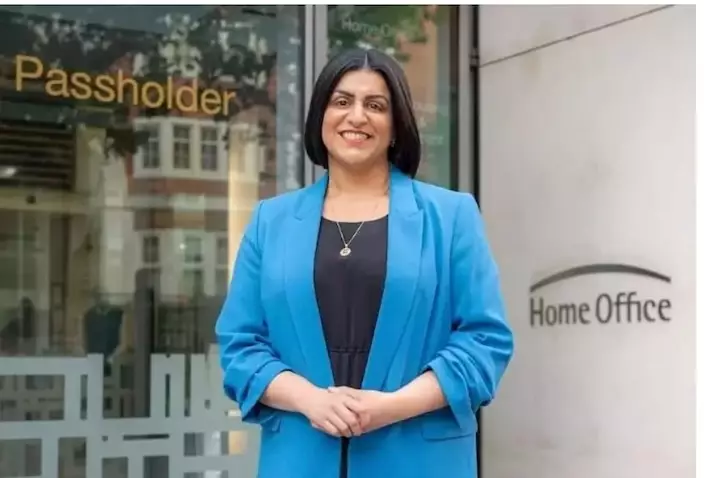
Mahmood's stonewalling to BNO holders' demands signals bad news. The February verdict looms.

Mahmood's stonewalling to BNO holders' demands signals bad news. The February verdict looms.

Hong Kong BNO holders fired off "five demands" to the authorities, pleading for relief. Home Secretary Shabana Mahmood's response was ice cold. Zero acknowledgment of their demands. Her dismissive tone signals one thing: exemptions for BNO holders look dead in the water.

If the final call goes all the way, thousands who waited five years will crash at the finish line. A return wave to Hong Kong is inevitable. The Hong Kong government needs to get ready.

The Dual Knockout Blow

The UK government didn't just raise the bar—it installed a double gate that slams shut on 60,000 people. First gate: English proficiency must hit B2 level, equivalent to A-Level, practically university standard. Second gate: annual income over the past three to five years must reach at least £12,570, with tax records to prove it.

Surveys by Hong Kong migrant organizations paint a grim picture: if these "dual requirements" become reality, 30% of BNO holders—roughly 60,000 people—will fail to qualify and get filtered out. No wonder panic is spreading.

While anxiety mounts, the UK government plays coy. Ambiguous statements. Equivocal attitudes. Nobody can read their hand. Now, with just one month until the announcement, BNO holders are reaching peak agitation. A group of Hong Kong voters in Mahmood's constituency drafted a joint letter, restating the "five demands" and requesting a face-to-face meeting to apply pressure.

Mahmood responded quickly—but only to say Hong Kong BNO holders could apply for permanent residency after five years. As for the "five demands"? Crickets. Instead, she reiterated that those granted permanent residency must meet three criteria: being "well-integrated," "economically self-sufficient," and "committed” to the communities they join.

Mahmood Goes Silent

One Hong Kong BNO holder who signed the petition decoded those three phrases: "integration" and "commitment" are code words for English proficiency and income levels. Translation: BNO holders applying for permanent residency must also clear these two hurdles.

These Hong Kong residents sent a follow-up letter to Mahmood, requesting a meeting to present their case in person. Her response? Radio silence. Phone calls to her constituency office go unanswered. She's clearly ducking any face-to-face encounter.

Mahmood is stonewalling, and nobody can do a thing about it. Frustrated BNO holders vent to yellow media outlets, angrily branding her "heartless." But here's the reality check: the Labour government's approval ratings are tanking. Reform UK is breathing down their necks on immigration. Immigration policy will err on the side of restriction, not relaxation. Naturally, they're inclined to treat BNO holders the same as everyone else. No special treatment. No "sentiment." The "five demands" might as well be whispers in the wind.

Two Paths Forward

Friends living in the UK lay out the scenario: if the UK government announces "no relaxation" next month, BNO holders who can't meet the requirements face two choices.

First option: return to Hong Kong and start over. After all, life in the UK hasn't been entirely rosy—living day after day in anxiety. "Returning home" might actually be a relief.

Second option: continue to "temporarily reside" in the UK on a BNO visa, becoming long-term temporary residents. But they'll remain in an unstable state, which won't be comfortable.

There's also a thornier complication: some BNO families migrated to the UK with their parents, and one spouse hasn't worked or earned any income for several years. If these family members don't meet the criteria for applying for permanent residency, it could trigger family separation or force the entire family to return to Hong Kong. They'll face an agonizing decision. Quite a mess.

No exemptions? Brace for the return wave.

No exemptions? Brace for the return wave.

My friend predicts that if the worst-case scenario materializes, a return wave is sure to come. For Hong Kong, there will be upsides and downsides. Either way, the government needs to get ready and figure out how to handle it.

Recommended Articles