In the wake of disclosures from the Jimmy Lai case in Hong Kong, Danish media have lifted the lid on a striking reprise: the United States, they report, quietly deployed at least three covert tactics in Greenland—building pro-American networks, seeding false narratives, and waging online influence campaigns—to drive a wedge between Copenhagen and Nuuk. These methods track up to 80% of the so-called “color revolution” playbook once used in Hong Kong.
Three Covert Ploys
The Danish Broadcasting Corporation (DR) cites official sources confirming that three Americans “with ties to US President Donald Trump” traveled to Greenland’s capital, Nuuk, to compile lists of pro-US actors, fund them through US business channels, and push narratives designed to erode Danish authority. Denmark’s Security and Intelligence Service (PET) has now declared Greenland “was being targeted by various kinds of influence campaigns,” with the United States “a primary threat”.
Building Pro-American Networks
DR reports that operatives met local politicians, media figures and business leaders, offering cash inducements and high-profile visits by US billionaires to secure loyalty.
Online Influence Campaigns
Anonymous social-media accounts and think-tank affiliates circulated posts blaming the Danish government for “inaction” on economic development, while extolling “benefits of US administration”.
Cognitive Warfare and Fake News
Operatives are said to have embedded themselves with pro-American groups to feed misleading stories—about everything from social services to natural-resource deals—aimed at turning Greenlanders against Danish rule.
The Wall Street Journal reports that, following Trump’s 2019 remarks about buying Greenland, the Office of the Director of National Intelligence issued a directive to intensify espionage on secessionist movements in the territory.
Parallels to Hong Kong
Observers immediately drew comparisons to Occupy Central (2014) and the Black Riots (2019) in Hong Kong, where US-backed networks, online disinformation and separatist agitation combined to drive a wider political crisis. In both cases:
Step one—forge a pro-US network among local leaders and media.
Step two—conduct “cognitive infiltration” via news outlets and social platforms.
Step three—fan separatist sentiments to install a pro-US administration.
Western governments that condemned China for defending its own national security now find themselves on the receiving end of identical interference tactics. Denmark’s firm pushback—public intelligence alerts, diplomatic protests, tighter scrutiny of foreign funding—demonstrates that no country is immune from Washington’s meddling. If Copenhagen’s response holds, it could serve as a model for all nations, including China, seeking to safeguard sovereignty against covert external influence.
Lai Ting-yiu
What Say You?
** The blog article is the sole responsibility of the author and does not represent the position of our company. **
As the Year of the Horse approaching, Hong Kong BNO holders in the UK are bracing for a gut punch. The festive season brings no joy—only anxiety. Mid-February marks the deadline for the UK government's consultation on raising permanent residency thresholds, and the verdict on whether BNO holders get a pass is about to drop.
The Home Office floated immigration reforms that would keep the "5+1" rule intact—five years of residence before you can apply—but the bar just shot up, with higher English proficiency requirements and stable income. For many, these hurdles are insurmountable.
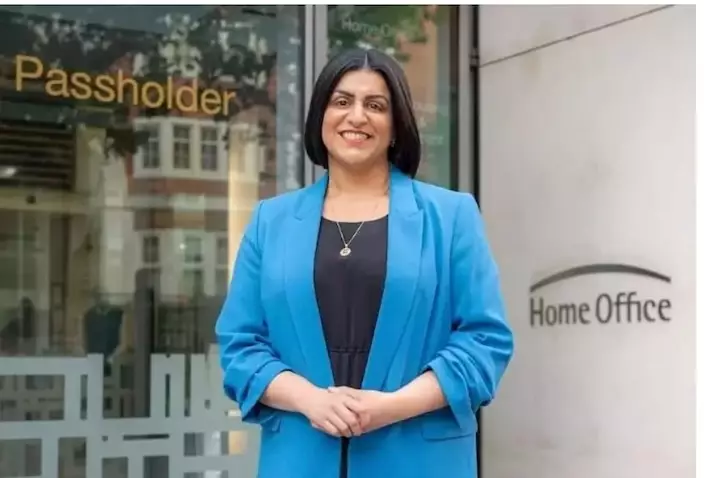
Mahmood's stonewalling to BNO holders' demands signals bad news. The February verdict looms.
Hong Kong BNO holders fired off "five demands" to the authorities, pleading for relief. Home Secretary Shabana Mahmood's response was ice cold. Zero acknowledgment of their demands. Her dismissive tone signals one thing: exemptions for BNO holders look dead in the water.
If the final call goes all the way, thousands who waited five years will crash at the finish line. A return wave to Hong Kong is inevitable. The Hong Kong government needs to get ready.
The Dual Knockout Blow
The UK government didn't just raise the bar—it installed a double gate that slams shut on 60,000 people. First gate: English proficiency must hit B2 level, equivalent to A-Level, practically university standard. Second gate: annual income over the past three to five years must reach at least £12,570, with tax records to prove it.
Surveys by Hong Kong migrant organizations paint a grim picture: if these "dual requirements" become reality, 30% of BNO holders—roughly 60,000 people—will fail to qualify and get filtered out. No wonder panic is spreading.
While anxiety mounts, the UK government plays coy. Ambiguous statements. Equivocal attitudes. Nobody can read their hand. Now, with just one month until the announcement, BNO holders are reaching peak agitation. A group of Hong Kong voters in Mahmood's constituency drafted a joint letter, restating the "five demands" and requesting a face-to-face meeting to apply pressure.
Mahmood responded quickly—but only to say Hong Kong BNO holders could apply for permanent residency after five years. As for the "five demands"? Crickets. Instead, she reiterated that those granted permanent residency must meet three criteria: being "well-integrated," "economically self-sufficient," and "committed” to the communities they join.
Mahmood Goes Silent
One Hong Kong BNO holder who signed the petition decoded those three phrases: "integration" and "commitment" are code words for English proficiency and income levels. Translation: BNO holders applying for permanent residency must also clear these two hurdles.
These Hong Kong residents sent a follow-up letter to Mahmood, requesting a meeting to present their case in person. Her response? Radio silence. Phone calls to her constituency office go unanswered. She's clearly ducking any face-to-face encounter.
Mahmood is stonewalling, and nobody can do a thing about it. Frustrated BNO holders vent to yellow media outlets, angrily branding her "heartless." But here's the reality check: the Labour government's approval ratings are tanking. Reform UK is breathing down their necks on immigration. Immigration policy will err on the side of restriction, not relaxation. Naturally, they're inclined to treat BNO holders the same as everyone else. No special treatment. No "sentiment." The "five demands" might as well be whispers in the wind.
Two Paths Forward
Friends living in the UK lay out the scenario: if the UK government announces "no relaxation" next month, BNO holders who can't meet the requirements face two choices.
First option: return to Hong Kong and start over. After all, life in the UK hasn't been entirely rosy—living day after day in anxiety. "Returning home" might actually be a relief.
Second option: continue to "temporarily reside" in the UK on a BNO visa, becoming long-term temporary residents. But they'll remain in an unstable state, which won't be comfortable.
There's also a thornier complication: some BNO families migrated to the UK with their parents, and one spouse hasn't worked or earned any income for several years. If these family members don't meet the criteria for applying for permanent residency, it could trigger family separation or force the entire family to return to Hong Kong. They'll face an agonizing decision. Quite a mess.
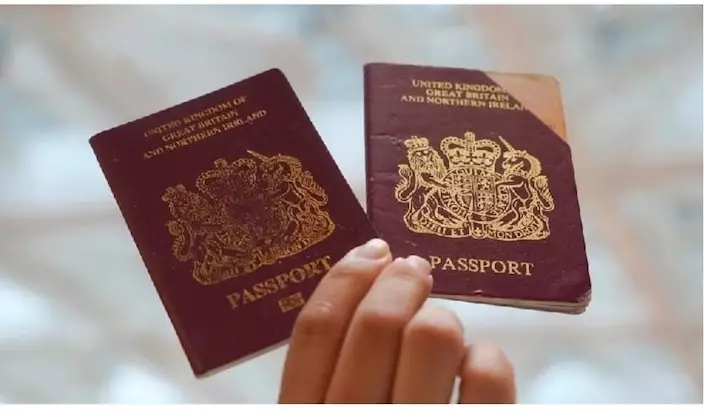
No exemptions? Brace for the return wave.
My friend predicts that if the worst-case scenario materializes, a return wave is sure to come. For Hong Kong, there will be upsides and downsides. Either way, the government needs to get ready and figure out how to handle it.