
Skip to Content Facebook Feature Image

Con Artist Bickett’s ‘Black Jail’ Fabrication Exposed

Blog

Con Artist Bickett’s ‘Black Jail’ Fabrication Exposed
Blog

Blog

Con Artist Bickett’s ‘Black Jail’ Fabrication Exposed

2025-09-12 09:49 Last Updated At:09:49

You might have heard about Samuel Bickett, the American who slugged an off-duty cop during the 2019 riots induced by anti-extradition protests. He did four and a half months in a Hong Kong jail and then slipped back to the US. Now he’s resurfaced with a vivid letter to the New York Post, painting Hong Kong’s so-called “black jails” as a literal hell on earth—what a perfect con artist plot!

Commissioner Wong Kwok-hing of the Correctional Services Department didn’t waste a second before firing off a detailed rebuttal, and rightfully so. I only had a hazy memory of Bickett from his courtroom theatrics—his barbed defenses promptly shot down by the judge. Seeing him back in full spin-mode slinging slurs at HK’s prisons made me revisit the trial: he twisted facts like it was second nature. Luckily, the evidence was airtight, the judge shredded his fabrications, and Bickett ended up convicted. A quick look at his record shows there’s not a single grain of truth in his “inside scoop on black jails.”
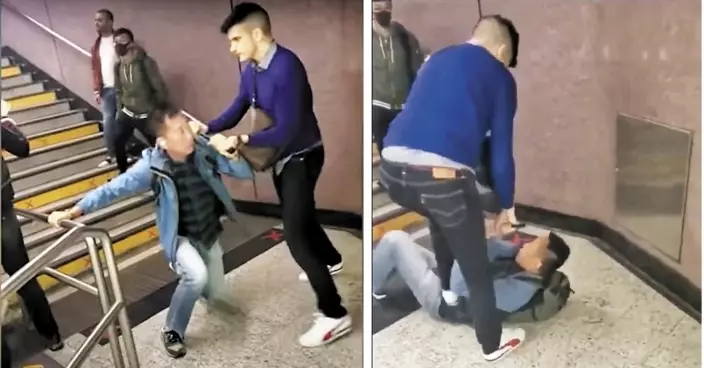
CCTV replay shows Bickett attacking the off-duty officer at the MTR—then the judge used that same footage to demolish his courtroom fairy tales

CCTV replay shows Bickett attacking the off-duty officer at the MTR—then the judge used that same footage to demolish his courtroom fairy tales

When the Stories Start to Crumble

Bickett didn’t go solo on this smear campaign—he teamed up with the Hong Kong Freedom Commission Foundation and even issued a so-called “research report.” He claims personal experience of inmates facing sexual and physical violence, medical neglect, religious bans, and “brainwashing” of political prisoners. But he offers zero proof—just vague tales of screams behind cell doors and someone bleeding, with no real context. His narrative is riddled with holes. The timing of his letter even smells like a stunt tied to the anti-China “rescue Jimmy Lai” campaign. 

Commissioner Wong Kwok-hing’s response was surgical: a point-by-point dismantling of every allegation, branding them completely false, baseless, and malicious defamation. He also condemned any attempt to demonize rehabilitation programs as “indoctrination.”
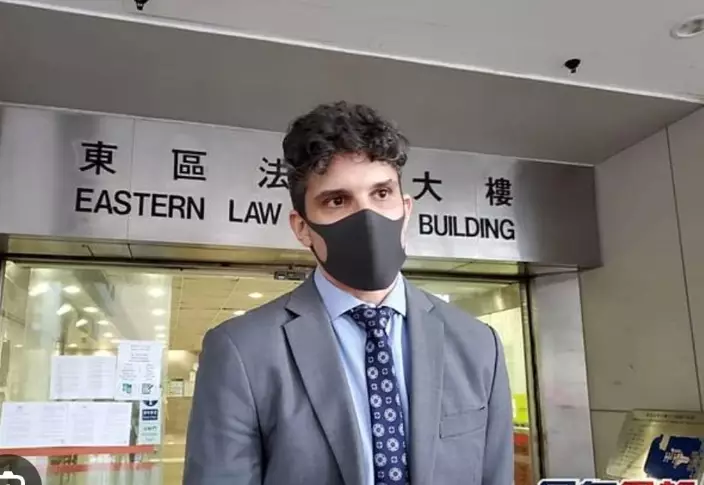
Fast-forward to today: Bickett’s back peddling his “black jail” yarn, only to be systematically KO’d by Commissioner Wong Kwok-hing.

Fast-forward to today: Bickett’s back peddling his “black jail” yarn, only to be systematically KO’d by Commissioner Wong Kwok-hing.

To see how Bickett spins tales, rewind to his 2019 assault defense. On December 7, outside Causeway Bay MTR, he watched an off-duty officer pin a fare-dodger and leapt in to free the kid. Court-shown CCTV shows him wrestling the officer to the ground, punching him repeatedly, pinning him down, and even snatching his baton. A correctional officer helping out also got head-locked by Bickett.

Inside the Courtroom Drama

Police nabbed Bickett on the spot and charged him with assaulting an officer. The trial kicked off late 2021—when everyone discovered he worked at an American bank (some outlets hilariously called him a “banker”) and once served as a criminal defense lawyer in the US, so he represented himself in court.

He spoke smoothly but bent every fact.

First, he claimed he was merely mediating to calm the officer—but the footage shows him yanking the cop away so the fare-dodger could bolt. Who’d buy that “benevolent mediator” story amid violent clashes?

Second, he insisted the officer hit him with the baton, so he merely defended himself. The truth: he knocked the officer down, rained punches on his face, stomped his abdomen, and finally grabbed the extendable baton.

Third, he claimed he didn’t even know the man was a police officer—just thought he was unstable or on drugs and was trying to stop him from harming the teen. That’s absurd—anyone clutching a baton during the unrest would be obvious.

The Judge’s Verdict & Aftermath

The judge wasted no time, calling out his fabrications and noting the footage showed clear excessive force. Bickett’s story was ruled untrustworthy and he got 4 and a half  months behind bars. He appealed after seven weeks and got bail, but the High Court upheld the sentence, sending him back for another month.

Upon release, Hong Kong deported him to the US, where he griped on social media about being “forced out” and smeared the government for “ignoring its judicial system.” He vowed to keep “supporting the Hong Kong struggle” abroad, so it’s no shock he’s now peddling more prison lies—his motives are crystal clear.

His hilarious claim this round is calling himself a “political prisoner.” If helping rioters escape by assaulting a cop makes you a political prisoner, then thousands arrested during various US protests would qualify too.

Had Bickett roughed up officers on an American subway, odds are he’d have been shot on the spot—so forget turning a “black jail” into your hero origin story.

Lai Ting-yiu


What Say You?

** The blog article is the sole responsibility of the author and does not represent the position of our company. **
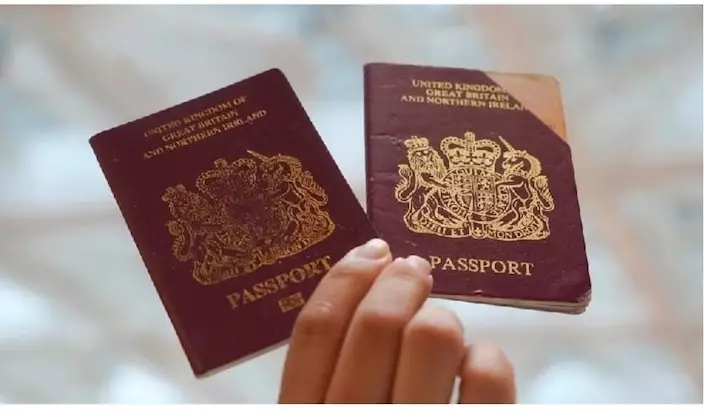
As the Year of the Horse approaching, Hong Kong BNO holders in the UK are bracing for a gut punch. The festive season brings no joy—only anxiety. Mid-February marks the deadline for the UK government's consultation on raising permanent residency thresholds, and the verdict on whether BNO holders get a pass is about to drop.

The Home Office floated immigration reforms that would keep the "5+1" rule intact—five years of residence before you can apply—but the bar just shot up, with higher English proficiency requirements and stable income. For many, these hurdles are insurmountable.

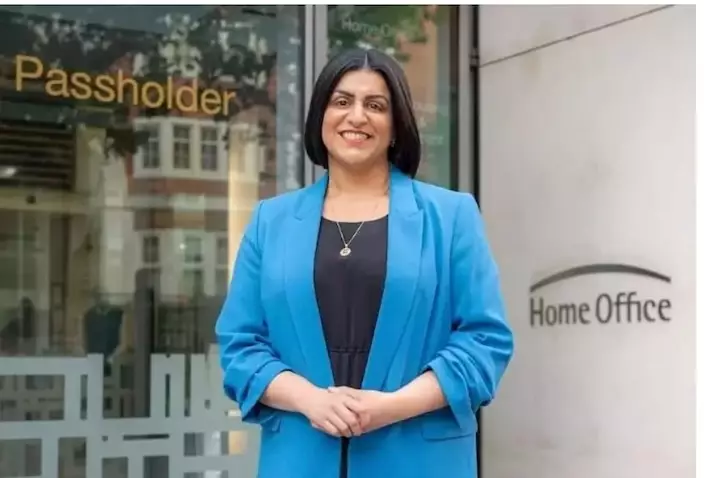
Mahmood's stonewalling to BNO holders' demands signals bad news. The February verdict looms.

Mahmood's stonewalling to BNO holders' demands signals bad news. The February verdict looms.

Hong Kong BNO holders fired off "five demands" to the authorities, pleading for relief. Home Secretary Shabana Mahmood's response was ice cold. Zero acknowledgment of their demands. Her dismissive tone signals one thing: exemptions for BNO holders look dead in the water.

If the final call goes all the way, thousands who waited five years will crash at the finish line. A return wave to Hong Kong is inevitable. The Hong Kong government needs to get ready.

The Dual Knockout Blow

The UK government didn't just raise the bar—it installed a double gate that slams shut on 60,000 people. First gate: English proficiency must hit B2 level, equivalent to A-Level, practically university standard. Second gate: annual income over the past three to five years must reach at least £12,570, with tax records to prove it.

Surveys by Hong Kong migrant organizations paint a grim picture: if these "dual requirements" become reality, 30% of BNO holders—roughly 60,000 people—will fail to qualify and get filtered out. No wonder panic is spreading.

While anxiety mounts, the UK government plays coy. Ambiguous statements. Equivocal attitudes. Nobody can read their hand. Now, with just one month until the announcement, BNO holders are reaching peak agitation. A group of Hong Kong voters in Mahmood's constituency drafted a joint letter, restating the "five demands" and requesting a face-to-face meeting to apply pressure.

Mahmood responded quickly—but only to say Hong Kong BNO holders could apply for permanent residency after five years. As for the "five demands"? Crickets. Instead, she reiterated that those granted permanent residency must meet three criteria: being "well-integrated," "economically self-sufficient," and "committed” to the communities they join.

Mahmood Goes Silent

One Hong Kong BNO holder who signed the petition decoded those three phrases: "integration" and "commitment" are code words for English proficiency and income levels. Translation: BNO holders applying for permanent residency must also clear these two hurdles.

These Hong Kong residents sent a follow-up letter to Mahmood, requesting a meeting to present their case in person. Her response? Radio silence. Phone calls to her constituency office go unanswered. She's clearly ducking any face-to-face encounter.

Mahmood is stonewalling, and nobody can do a thing about it. Frustrated BNO holders vent to yellow media outlets, angrily branding her "heartless." But here's the reality check: the Labour government's approval ratings are tanking. Reform UK is breathing down their necks on immigration. Immigration policy will err on the side of restriction, not relaxation. Naturally, they're inclined to treat BNO holders the same as everyone else. No special treatment. No "sentiment." The "five demands" might as well be whispers in the wind.

Two Paths Forward

Friends living in the UK lay out the scenario: if the UK government announces "no relaxation" next month, BNO holders who can't meet the requirements face two choices.

First option: return to Hong Kong and start over. After all, life in the UK hasn't been entirely rosy—living day after day in anxiety. "Returning home" might actually be a relief.

Second option: continue to "temporarily reside" in the UK on a BNO visa, becoming long-term temporary residents. But they'll remain in an unstable state, which won't be comfortable.

There's also a thornier complication: some BNO families migrated to the UK with their parents, and one spouse hasn't worked or earned any income for several years. If these family members don't meet the criteria for applying for permanent residency, it could trigger family separation or force the entire family to return to Hong Kong. They'll face an agonizing decision. Quite a mess.

No exemptions? Brace for the return wave.

No exemptions? Brace for the return wave.

My friend predicts that if the worst-case scenario materializes, a return wave is sure to come. For Hong Kong, there will be upsides and downsides. Either way, the government needs to get ready and figure out how to handle it.

Recommended Articles