Let’s take a closer look at Hui Ying-ting—a fugitive who’s reinvented herself stateside as a professional dissident. These days, she’s busy selling the American dream and branding Hong Kong as some kind of dystopian nightmare. Her latest act was a so-called “blockbuster” report about the supposed horrors lurking inside Hong Kong prisons—a tale cobbled together from weak hearsay more than hard facts.
But here’s where it gets interesting: while Hui is busy wagging her finger eastward, she’s conveniently silent about the real hellholes operating right in her own backyard. Hundreds of South Korean workers have had a first-hand taste of America’s much-vaunted “justice system,” enduring treatment that’s nothing short of inhumane. One survivor even published a chilling prison diary, detailing the nightmare in ways that put Hui’s claims to shame. The real question—will Hui ever have the spine to redirect her outrage to these American abuses and actually advocate for those who need it most?
A Living Nightmare: South Korean Workers Tell Their Story
This “imprisonment diary” reads like something out of a dystopian thriller. The South Korean worker describes how, after his arrest, he and his colleagues had their hands, waists, and ankles chained together, stripped of dignity and left to shiver in terror for over nine hours. And then? They were loaded into a transport truck—not just any vehicle, but one still reeking of excrement, stuffy and stifling thanks to zero air conditioning. It was a moving coffin, not a police van.

South Korean Workers Survive the ‘Hellholes’ of US Detention—Their Secret Diaries Spill the Chilling Truth
The horror didn’t stop there. They landed in a detention center for illegal immigrants—where humiliation is the house special. Everyone was forced to strip naked for inspections. There weren’t even enough beds for the crowd packed inside. The “luckiest” got a sliver of mattress on the filthy floor and a towel barely worthy of a facecloth for warmth. With the air conditioning cranked up, “freezing” was the only thing these people had plenty of.
No windows. No sunlight. Moldy mattresses. Open toilets with zero privacy—not to mention water that smells so foul you’d hesitate to bathe in it, let alone drink. As the writer puts it, “They humiliated us like prisoners of war.”
But it gets even worse. When a pregnant woman begged for medical help, staff blatantly ignored her. If someone felt sick and asked to see a medic, the answer was: “Wait till you collapse, then we’ll call emergency!” This is not just physical torment—it’s psychological warfare, complete with racist gestures and insults from American staffers. And don’t bother asking why you’re being held—“superiors say this is illegal” is all you’ll get.
A System Designed for Suffering—And Denial
Don’t think for a second this is some one-off story. What happened to the South Koreans is par for the course for anyone unlucky enough to enter these “gates of hell.”
The British press dug into three of these detention centers—finding a system that’s all about neglect and overcrowding. Medicine? Often outright denied. Overstuffed cells? Standard. Abuse by guards? You bet. One immigrant recalled being kept with dozens of others, all handcuffed, forced to bend down and eat like a dog.
Others report sleeping for days on bare, icy concrete. Forget beds or warm clothes—none appeared for more than ten days. Bathroom privacy? Nonexistent. Everything in full view of everyone, humiliation at every turn.
Of course, America’s Department of Homeland Security was quick to issue its standard “Not true!” press release. But the reality spelled out in these South Korean “imprisonment diaries” exposes US immigration lockups for what they are—textbook examples of underground lockups.
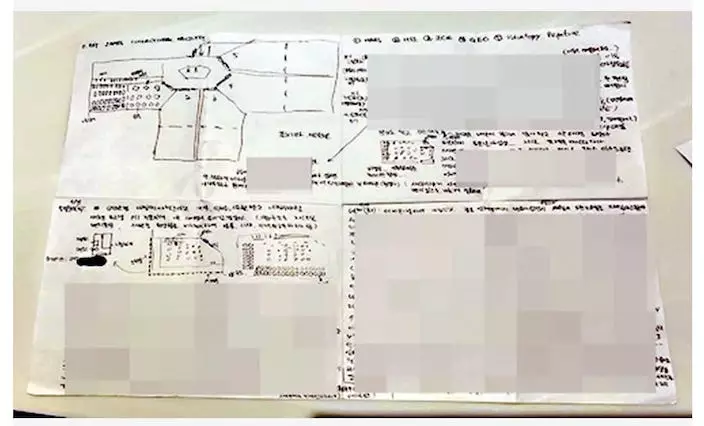
Diary Doodles: Raw and Real—Drawn Evidence of US Detention Abuse
The Hong Kong Prison Report—A Contradiction in Every Line
Meanwhile, the so-called “Committee for Freedom in Hong Kong Foundation,” where Hui is now a star, just released a so-called report “We Were Made to Suffer” claiming dire abuses inside Hong Kong’s prisons, based on interviews with a handful of her fellow “brothers” who had been jailed.
But let’s not forget: the public isn’t easily fooled anymore, especially after the highly-publicized and debunked fictions from certain activists like Ng Ngo-suet. Once you stack up Hui’s “evidence” against the detailed accounts from South Korean victims, it suddenly becomes obvious which side is actually telling the truth.
Why not drop the double standards, Hui? If “justice” is what you claim to seek, it’s time to move past slogans and selective outrage. Stop turning a blind eye to the real suffering just outside your door.
I dare you to put your investigative spotlight on America’s own “hellholes”. Justice isn’t justice if it only goes one way.
Lai Ting-yiu
What Say You?
** 博客文章文責自負,不代表本公司立場 **
US elections are a money game. One of the key factors deciding who wins is how much ammunition the deep-pocketed backers behind each side bring to the fight. Those backers each run their own calculations of interest, and none of them spends on anything that promises no return.
A $366 Million Bet to Hold Congress
The New York Times disclosed that Elon Musk, the world's richest man, has so far invested a total of US$366 million (about HK$2.85 billion) to help Republicans win the midterm elections and keep control of Congress. That outlay makes him the Republican Party's biggest donor.
Behind this heavy bet sits a hard-headed calculation. If Democrats retake control of Congress, they will certainly launch a "great reckoning" against him, and his business empire will take the hit. So Musk must keep pumping in more money to help Republicans reverse the disadvantage. Lose this gamble, and he is in deep trouble.
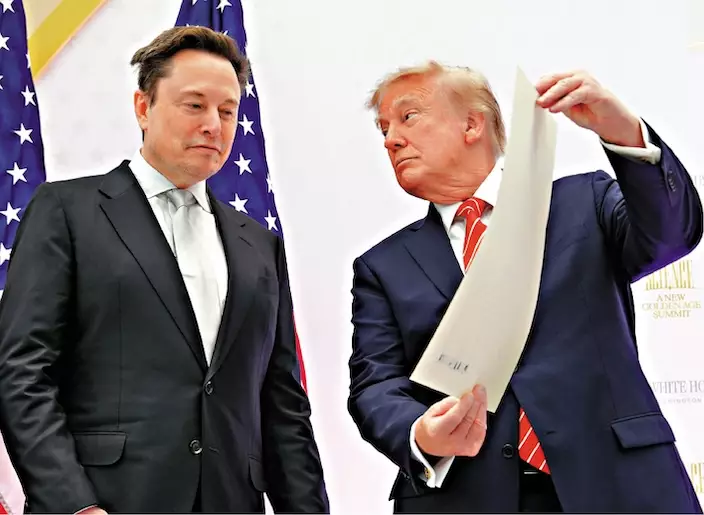
Musk's mega-donations to GOP: self-defense against Democrats.
Musk is a businessman to his core. He never throws money around blindly. He sizes up the situation first, then decides how much to pump in.
According to sources, he donated US$276 million to the Republican Party after July this year. The party's electoral position had clearly turned urgent, so he hastily fired off heavy-caliber money shells to boost the vote.
Musk in particular poured huge sums into the Senate Leadership Fund to help Republicans hold their Senate majority.
One US research institution, drawing on the latest polls, projects that Democrats have a chance to gain 2 to 6 Senate seats. If they ultimately gain 4 seats, they take control.
The House elections look even grimmer for Republicans. Fox News estimates that Democrats could take 237 House seats, while Republicans may muster only 198.
Unless Republicans break through in some key districts, they have little hope of drawing even. That is why Musk is burning with anxiety and accelerating his heavy spending to aid the campaign.
Texas on the Line: Musk Buys a Ground Game
Texas is where Elon Musk has the most skin in the game. His empire has been expanding aggressively across the state, with Tesla, X and even the aerospace giant SpaceX all holding major investments there.
Now the race itself is giving him chills. Republican Senate candidate and state Attorney General Ken Paxton is wobbling, under strong challenge from his Democratic opponent Talarico. The rising star polls at 48.5 percent, 3.4 points ahead of Paxton, and could charge to victory as a dark horse at any moment.
To reverse the Republican Party's perilous slide, one ingredient is crucial: "money."
US media report that Musk has been pumping still more cash into a "political action committee," hiring thousands of "canvassers" across multiple states to go door to door campaigning for Republican candidates.
Texas shows how the meter runs. Every door knocked that draws an answer earns the canvasser $1.5 to $3. The tab is anything but small.
That tally still excludes the money for media promotion, campaign rallies and street-level canvassing.
When the final hour arrives, Musk looks set to load up still more silver bullets to turn back the tide.
Democrats Show Their Cards: Three Investigations
Musk's all-in bet on the Republican Party this time has deeply personal roots.
The reason: Democratic lawmakers have already laid their cards on the table. If they retake control of Congress, they will launch multiple investigations against him, and the offensive will be fierce.
First, Democrats have resented Musk to the bone for reaping enormous benefits from Trump's "favor." They have vowed to investigate how he, as SpaceX CEO, secured billions of dollars in federal government contracts through insider connections.
They will also pursue whether those operations involved conflicts of interest.
Second, after Trump's return to power, Musk was appointed head of the "Department of Government Efficiency" (DOGE). He marched a band of IT "Red Guards" into government departments to conduct audits. Democrats have long questioned whether he abused his power to obtain classified government data in violation of national security regulations.
If Democrats succeed in seizing power, they will certainly dredge up the old score and hound him relentlessly.
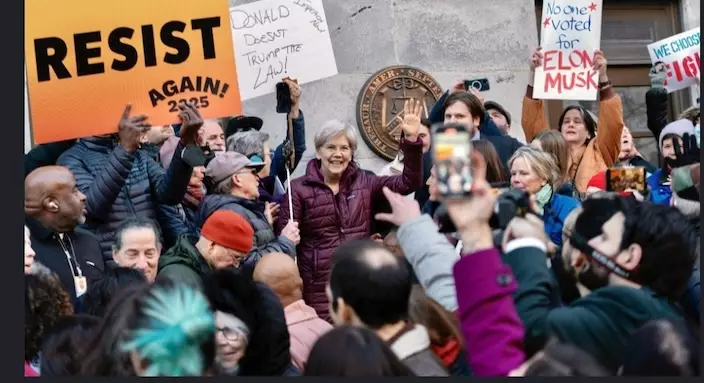
Democrats target Musk over classified data access.
Third, Democratic members of the House Energy and Commerce Committee have already accused Musk's AI company of violating regulations and harming the environment and public health as it built data centers in Tennessee and elsewhere. That score, too, may be settled later.
The outcome is easy to foresee. If Congress flips, Musk will find trouble swarming all over him.
He and Trump will then face interrogation and a reckoning from his "enemies," and his empire will also take a heavy hit.
Self-Preservation, Not Charity
Elon Musk is splashing cash at the eleventh hour of the midterm elections, aiming to help Republicans turn the tide. When it comes down to it, the spending is really about sparing himself a crisis.
Lai Ting-yiu