Elon Musk saw this coming. Right before Trump took office again, he clashed hard with the "MAGA crowd" over whether to tighten H-1B visas for tech workers, openly saying America desperately needs these experts. Musk feared Trump would overdo it and slam the door shut, so he sounded the alarm early.
Sadly, that warning proved true. Just last Sunday, the U.S. government announced a staggering jump in H-1B visa fees—from a baseline of $1,700 to a whopping $100,000 (about HK$780,000). It’s essentially a stealth ban designed to scare off foreign tech talent. While this only applies to new visas, foreign tech workers already in the U.S. are rattled, worried Trump's crackdown could sweep them away at any time.
A scholar friend of mine who’s lived in the States for years told me this shutdown could actually benefit Mainland China and Hong Kong by absorbing tech talent—and that Chief Executive John Lee should strike while the iron’s hot.
Why the U.S. Needs Foreign Tech Talent
Musk was dead set against limiting H-1B visas because the U.S. just doesn’t have enough homegrown tech talent. Big tech firms lean heavily on these "foreign reinforcements" — it’s vital to their business and growth. His Indian-American partner, Vivek Ramaswamy, pointed out that America has long celebrated mediocrity over excellence, which is why the country now depends so much on foreign tech workers. A heavy clampdown on these visas would be “mutually assured destruction” with serious fallout.
The loud, aggressive "MAGA camp", however, pummeled Musk and others’ views and pushed Trump toward this harsh decision. The end result? The government slammed the H-1B visa fees through, effectively shutting the door on foreign tech talent.
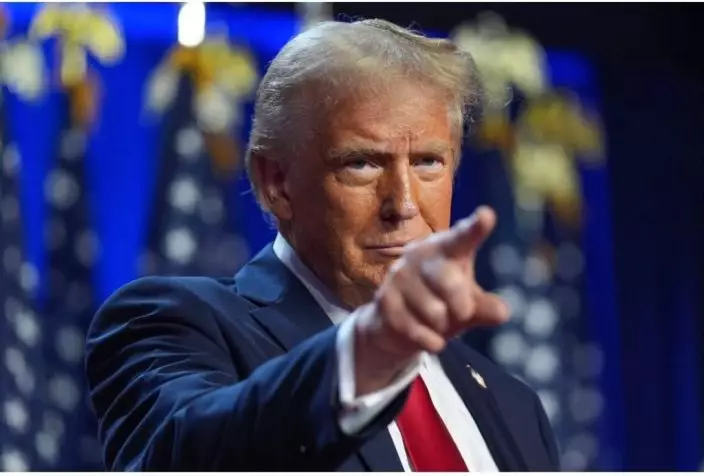
Trump’s visa hike scares off tech talent, stalling U.S. innovation.
Panic and Chaos Hit Tech Firms
The administration’s vague, last-minute change—announced early Monday—threw U.S. tech companies into turmoil. Firms pleaded with foreign staff to stay put, and those abroad raced home before the cutoff. Some even abandoned flights in mid-air, creating a “Dunkirk”–style exodus.
Such chaos left U.S. authorities scrambling to clarify that the fee hike only applies to new visas, doesn’t affect current visa holders, and is a one-time fee, not annual, hoping to ease the panic. But for many tech workers already in the U.S., trust has been shaken—they’re unsure when or if more changes could come and are already making backup plans.
Innovation Takes a Hit
Even if current workers are safe, this huge fee hike will definitely scare off foreign talents thinking of coming to the U.S., hitting tech firms hard.
A venture capitalist partner said this will weaken America’s ability to attract world-class talent, limiting innovation and economic growth. Industry insiders warn some companies might outsource jobs abroad, further diminishing the U.S.’s status as a global tech leader.
This new U.S. policy doesn’t just hit tech workers—it also shakes the confidence of Mainland and Hong Kong students thinking about studying in America. A recent Canadian education survey showed the U.S. has fallen to third place as the most attractive study destination for foreign students, behind the UK first and Canada second. When it comes to openness, safety, and welcoming attitudes, the U.S. dropped to sixth place, dead last in the ranking.
Clearly America’s appeal to international students is fading fast. The new visa fees only add to doubts about future job prospects, meaning fewer students will pick the U.S. anymore.

John Lee’s chance: Hong Kong’s moment to snatch top talent.
Hong Kong Stands to Gain
Trump seems unfazed by these downsides and looks set to keep pushing ahead recklessly. My scholar friend argues this is a huge win for Mainland China and Hong Kong, which are hungry for tech talent. Some who can’t stomach going to the U.S. anymore might head there instead, and unsettled tech workers already in the States could decide to come home. Chief Executive John Lee announced in his policy address a series of measures to attract foreign talent, and my friend thinks this is the perfect moment for Hong Kong to compete—and win.
Like I said before, Hong Kong’s entering a golden era and keeps getting better. With America shooting itself in the foot, now’s the perfect time for Hong Kong to steal the spotlight and attract top talent.
Lai Ting-yiu
What Say You?
** The blog article is the sole responsibility of the author and does not represent the position of our company. **
As the Year of the Horse approaching, Hong Kong BNO holders in the UK are bracing for a gut punch. The festive season brings no joy—only anxiety. Mid-February marks the deadline for the UK government's consultation on raising permanent residency thresholds, and the verdict on whether BNO holders get a pass is about to drop.
The Home Office floated immigration reforms that would keep the "5+1" rule intact—five years of residence before you can apply—but the bar just shot up, with higher English proficiency requirements and stable income. For many, these hurdles are insurmountable.

Mahmood's stonewalling to BNO holders' demands signals bad news. The February verdict looms.
Hong Kong BNO holders fired off "five demands" to the authorities, pleading for relief. Home Secretary Shabana Mahmood's response was ice cold. Zero acknowledgment of their demands. Her dismissive tone signals one thing: exemptions for BNO holders look dead in the water.
If the final call goes all the way, thousands who waited five years will crash at the finish line. A return wave to Hong Kong is inevitable. The Hong Kong government needs to get ready.
The Dual Knockout Blow
The UK government didn't just raise the bar—it installed a double gate that slams shut on 60,000 people. First gate: English proficiency must hit B2 level, equivalent to A-Level, practically university standard. Second gate: annual income over the past three to five years must reach at least £12,570, with tax records to prove it.
Surveys by Hong Kong migrant organizations paint a grim picture: if these "dual requirements" become reality, 30% of BNO holders—roughly 60,000 people—will fail to qualify and get filtered out. No wonder panic is spreading.
While anxiety mounts, the UK government plays coy. Ambiguous statements. Equivocal attitudes. Nobody can read their hand. Now, with just one month until the announcement, BNO holders are reaching peak agitation. A group of Hong Kong voters in Mahmood's constituency drafted a joint letter, restating the "five demands" and requesting a face-to-face meeting to apply pressure.
Mahmood responded quickly—but only to say Hong Kong BNO holders could apply for permanent residency after five years. As for the "five demands"? Crickets. Instead, she reiterated that those granted permanent residency must meet three criteria: being "well-integrated," "economically self-sufficient," and "committed” to the communities they join.
Mahmood Goes Silent
One Hong Kong BNO holder who signed the petition decoded those three phrases: "integration" and "commitment" are code words for English proficiency and income levels. Translation: BNO holders applying for permanent residency must also clear these two hurdles.
These Hong Kong residents sent a follow-up letter to Mahmood, requesting a meeting to present their case in person. Her response? Radio silence. Phone calls to her constituency office go unanswered. She's clearly ducking any face-to-face encounter.
Mahmood is stonewalling, and nobody can do a thing about it. Frustrated BNO holders vent to yellow media outlets, angrily branding her "heartless." But here's the reality check: the Labour government's approval ratings are tanking. Reform UK is breathing down their necks on immigration. Immigration policy will err on the side of restriction, not relaxation. Naturally, they're inclined to treat BNO holders the same as everyone else. No special treatment. No "sentiment." The "five demands" might as well be whispers in the wind.
Two Paths Forward
Friends living in the UK lay out the scenario: if the UK government announces "no relaxation" next month, BNO holders who can't meet the requirements face two choices.
First option: return to Hong Kong and start over. After all, life in the UK hasn't been entirely rosy—living day after day in anxiety. "Returning home" might actually be a relief.
Second option: continue to "temporarily reside" in the UK on a BNO visa, becoming long-term temporary residents. But they'll remain in an unstable state, which won't be comfortable.
There's also a thornier complication: some BNO families migrated to the UK with their parents, and one spouse hasn't worked or earned any income for several years. If these family members don't meet the criteria for applying for permanent residency, it could trigger family separation or force the entire family to return to Hong Kong. They'll face an agonizing decision. Quite a mess.
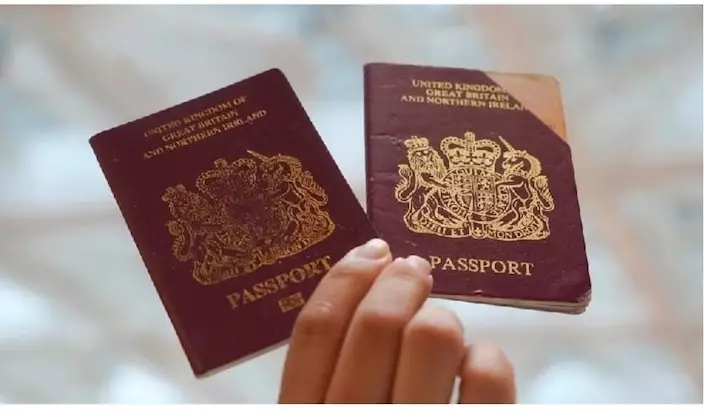
No exemptions? Brace for the return wave.
My friend predicts that if the worst-case scenario materializes, a return wave is sure to come. For Hong Kong, there will be upsides and downsides. Either way, the government needs to get ready and figure out how to handle it.