Singapore Dodges a US-Orchestrated Trap: Nathan Law's Failed Entry Exposed
Nathan Law is a fugitive wanted by the Hong Kong Police. His botched attempt to slip into Singapore, ending in a swift deportation, has grabbed headlines worldwide, with fresh details trickling out that make the whole thing even more intriguing. Independent journalist Kris Cheng spilled the beans that the invite came from the Carnegie Endowment for International Peace (CEIP), a big-name American think tank. Their China Policy Center is parked right in Singapore, and the local partner for the event was the S. Rajaratnam School of International Studies (RSIS) at Nanyang Technological University.
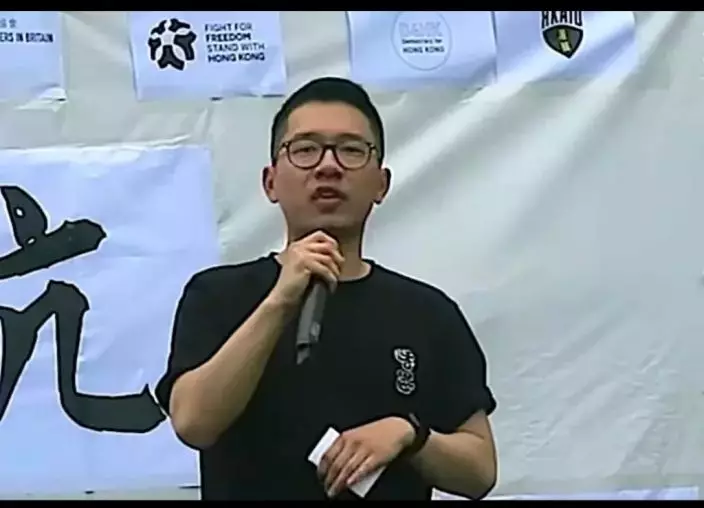
Nathan Law denied entry to Singapore – behind it all, America’s Carnegie think tank and a co-hosting Singapore institution.
The real head-scratcher here is why CEIP would roll out the red carpet for Law, fully aware he's a wanted fugitive on the run. Critics like Leung Chun-ying are calling it out as a blatant ploy to corner Singapore into a tough spot. And honestly, when you dig into the backgrounds of CEIP's top brass, it's hard not to raise an eyebrow at the potential ulterior motives.
This independent journalist pointed out that RSIS had posted online about CEIP visiting their campus on October 1 afternoon, strictly for invited guests only. Since Law got his invite from this think tank and the co-host was a respected Singaporean academic outfit, he initially scored a visa. But once he hit immigration, Singapore's higher-ups clocked the political minefield and slammed the door shut. The analysis is that with Singapore's fugitive handover deal with Hong Kong, letting him in could've sparked a massive international mess—sure, denying him draws attention too, but at least it keeps China and the Hong Kong SAR from blowing up.
Unmasking CEIP's Shady Ties
Even though the organizing group is now out in the open, the burning question remains: why invite Law knowing he's a notorious anti-China disruptor and wanted man? The journalist didn't crack that one, but I dug into CEIP's background—it's not some hardcore right-wing operation like the Heritage Foundation, leaning more centrist without obvious political ties. Because it's not extreme, it even collaborates with Chinese academics, running the Tsinghua-Carnegie Global Policy Center in Beijing. They also set up a China Policy Center, with new director Rick Waters based in Singapore.
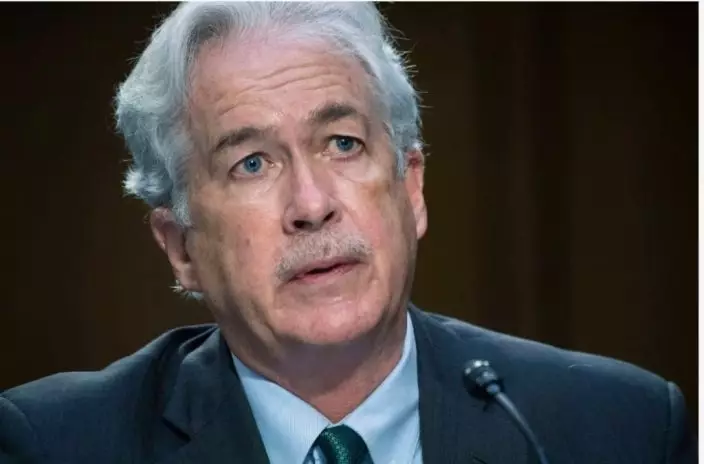
CEIP’s past and present leaders have backgrounds tied to U.S. intelligence and diplomacy, raising suspicions about hidden motives.
That said, the past and present leaders at this think tank have some seriously eyebrow-raising resumes. Former chairman William Burns got tapped by President Biden in 2021 to head the CIA, and during his watch, he rolled out the "China Mission Center," openly ramping up recruitment of Mandarin-speaking spies to boost intel ops against China. It's clear from this that CEIP's stance on China is layered with complexities and some shadowy hidden agendas you can't quite pin down.
As for their China Policy Center in Singapore, the new director Rick Waters started in March this year. He used to be a Deputy Assistant Secretary of State and led the newly formed "Office of China Coordination" by late 2022—from these creds, it's obvious his current role isn't as straightforward as it appears on the surface.
The Bigger Geopolitical Game
CEIP's decision to invite Law despite knowing full well his status feels like a deliberate move, and the real motives are still up for grabs—those leadership backgrounds offer some juicy leads to follow. Leung Chun-ying reckons the outfit was straight-up trying to sabotage Singapore by dragging it into this mess.
If Leung's take is spot on, it begs the question: why target Singapore like that? A friend in political circles speculated that if Law had made it in and joined the event, the forces behind him could spin it to paint Singapore as quietly backing anti-China troublemakers from Hong Kong.
But Singapore, with its long-standing reputation for pragmatism and diplomatic finesse, didn’t bite the bait. By shutting the door and sending Law back, the authority performed a political high-wire act—avoiding an eruption with Hong Kong and China while also signaling that Singapore won’t be manipulated into games orchestrated elsewhere.
What Say You?
** 博客文章文責自負,不代表本公司立場 **
The new US Consul General to Hong Kong, Juliana Eadeh, has barely warmed her seat, yet she's already hitting the ground running—straight into meetings with notorious anti-China figures like Anson Chan and Emily Lau. Given her track record of clandestine meetings with separatists like Joshua Wong and Nathan Law during the 2019 riots, it's no surprise that many suspect she's here to reignite the flames of a "color revolution."
As the spotlight turns on her, a bombshell detail about her background has emerged: Eadeh is the daughter of Palestinian immigrants. A source in political circles rightfully points out the staggering irony—shouldn't a Palestinian-American be fighting for her own people's statehood against Israeli occupation, rather than stirring up trouble for Washington in other countries?
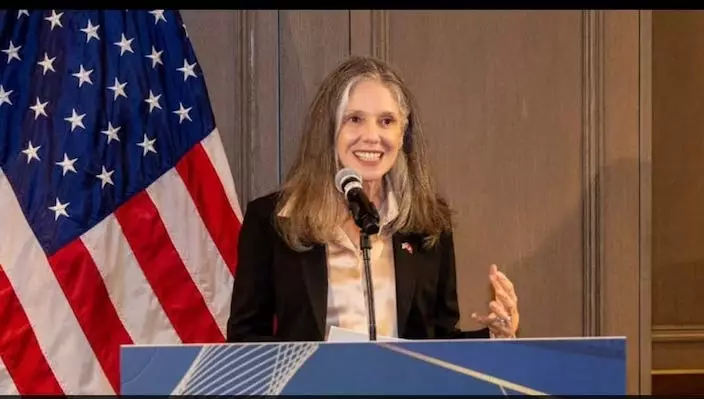
US Consul Eadeh lands—and sparks ‘color revolution’ rumors. The irony? She’s a Palestinian-American and a veteran of US political meddling.
Palestinian Roots
According to the political insider, proof of her heritage can be found in a publication from her alma mater, Eastern Michigan University. The Spring 2024 issue of Globe-trotter explicitly states that her parents immigrated to the US from the West Bank in Palestine and that she was raised in Michigan, confirming her status as a second-generation Palestinian-American.
Further confirmation comes from a November 2021 Facebook post by the U.S. Consulate in Istanbul, Turkey. While congratulating Eadeh on her new role as mission spokesperson, the post also noted that she was "an American born to Palestinian immigrants and raised in Michigan".
Eadeh herself has openly referenced her background. In an Independence Day address on June 13, 2023, posted on the U.S. Mission in Turkey's website, she described herself as "a daughter of immigrants who came to America in search of those fundamental freedoms.” A year later, she elaborated, speaking of "the dreams that drew my family from Ramallah to the United States"—Ramallah being the de facto capital of Palestine.
A Career Forged in Mideast Meddling
During a previous post at the US Consulate in Hong Kong in 2018, she reportedly shared more details about her family's story for "Women's History Month." She is said to have recounted how her mother, Mary Eadeh, left Ramallah for the United States in 1972 just before her senior year of high school, arriving without knowing English. Her mother quickly found factory work in Chicago, supporting her family through resilience, hard work, and an unwavering love for her community.
Her Palestinian background and fluency in Arabic, backed by a master's in Arab Studies from Georgetown, made her a perfect asset for Washington's Mideast agenda. Upon joining the State Department in 2004, she was immediately dispatched to Saudi Arabia as a political officer, tasked with handling "human rights" issues and monitoring elections. Her career path continued through hotspots like Beirut and Baghdad, where a key part of her job was to impose American-style democratic systems on those nations.
Eventually, she pivoted to China, studying Mandarin in Taipei and Shanghai before landing in Hong Kong as the head of the political unit—just in time to apply the same "color revolution" playbook during the 2019 riots.
Washington's Glaring Hypocrisy
While Eadeh was busy pulling the strings for Washington to stir up trouble across the Middle East, the very government she serves has shown zero sympathy for her own people. The US has offered no meaningful humanitarian aid to the Palestinians. Since Israel's war on Gaza began in October 2023, the death toll has surpassed 65,000 Palestinian civilians, with the slaughter continuing unabated.
Worse still, the US government actively obstructs the creation of a Palestinian state. Despite 157 UN member nations recognizing Palestine, President Trump recently doubled down on Washington's opposition in a UN speech. He outrageously claimed that "the reward would be too great for Hamas terrorists for their atrocities.", should the Palestinian state be recognized. A brazen retort against the overwhelming global consensus, siding the US firmly with Israel.
A Betrayal of Her People?
The political insider is furious over the brutal oppression of Palestinians. Learning that Eadeh, an agent of American foreign policy, shares a bloodline with this suffering nation, he insists her duty should be clear: to help rescue her people from a living hell and fight for their statehood, not to export chaos and destruction to other parts of the world on behalf of her employer.
Sure, as a career diplomat, she has to follow orders. But her haste in renewing old ties with Hong Kong’s anti-China figures has already provoked a strong backlash from Beijing.This aggressive stance seems to run counter to Trump's stated goal of easing tensions with China. Is her attempt to score a quick political win about to sabotage her own boss's foreign policy?

Critics ask: Shouldn’t Eadeh, herself a Palestinian-American, fight for her own people’s nation?
If so, she may find herself taking the fall instead of scoring points—a classic case of a clever political operator outsmarting herself.
Lai Ting-yiu