The UK government has been shaking things up for Hong Kong BNO holders living there. Apart from the usual 10 + 1 years before applying for permanent residency (ILR – Indefinite Leave to Remain), the Reform UK party even proposed to abolish the “right of permanent residence”.

UK Home Secretary Mahmood’s BNO hand just got tougher. The “Squid Game” for Hong Kong BNO holders is on. At least the “5+1” stay rule survives… for now.
While there’s a hint that BNO holders might keep the current "5+1" rule, Home Secretary Shabana Mahmood warns tougher hurdles are coming. If you’re seen as not contributing enough economically or socially, you’re probably out. A friend who’s living in the UK says the devil’s really in the details—which haven’t been made clear yet. But it’s clear that some BNO holders won’t make the cut. And those who supported riots, the so-called “siblings,” especially if they have criminal records from Hong Kong, face an uphill battle.
The Labour Party's public support has been tanking, in part because Reform UK is winning with a sharp anti-immigration stance. So, Home Secretary Mahmood is trying to score points with voters by promising stricter rules on permanent residency. She’s basically saying: even if you waited 10 years, you might still get kicked out if you don’t bring value or contribute to the UK economy and society.
Six Conditions to Make the Cut
So, how does the UK decide if you’re valuable enough? Mahmood lays down six conditions: You must have a job and income in the UK, pay National Insurance, don’t claim benefits, show intermediate English skills, clean police record, volunteer or donate to charity.
This means anyone lazy, low-tax-paying, welfare-dependent, or breaking the law gets shown the door during ILR screening.
The Real-Life ‘Squid Game’ for BNO Holders
This is basically a real-life Squid Game for BNO holders: pass these tests and you stay; fail and you’re sent packing. The uncertainty weighs heavily, and the Devil is in the details.
Take the “having a job and income in the UK” rule, for instance. The government hasn’t said what income you actually need or whether “social contribution” counts at all. If they go by the book and are rigid about it, low-income, low-tax-paying Hong Kong people are basically screwed—labeled as “not contributing enough” and kicked out. The UK government once floated a points-based system that scores salary, qualifications, and job type to decide who qualifies for permanent residency. If they bring that in full force, a lot of Hong Kong BNO holders could be out of luck.
And what about the English bar? Will it, then, be raised from B1 to B2? If yes, some might fall short.
Most BNO holders have spotless police records, but those protest supporters—the “siblings” caught up in the 2019 Black Riots—are in real trouble. Any arrest or conviction from that period could easily sink their permanent residency chances. A friend in the UK told me that “good character” is the golden ticket for ILR approval, and a criminal record from Hong Kong even of political reasons would make things seriously grim. Some of these folks might try to switch tracks and seek refugee asylum, but the system’s clogged, with long delays and tough rejections becoming the norm.
Playing It Safe to Keep Dreams Alive
If “siblings” commit crimes after arriving in the UK, they immediately fail the no-criminal-record condition and lose ILR eligibility. They know this, which explains why many have been careful during recent protests—to avoid arrests that would crush their hopes of staying for good.
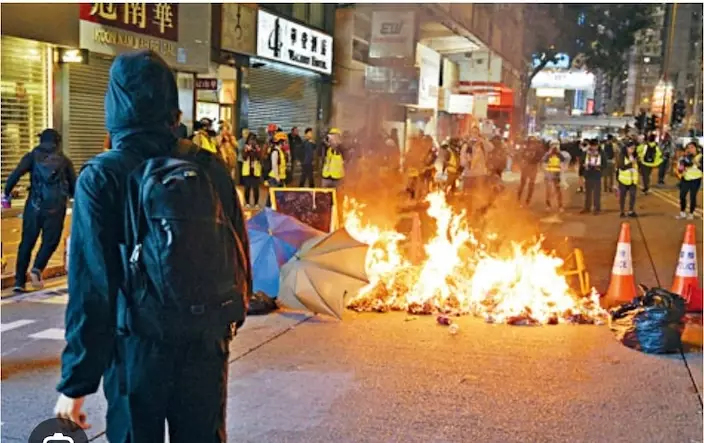
Clean record or bust. Protest supporters with 2019 political files risk getting booted.
On the bright side, the UK government hinted BNO holders might be excluded from the new “10+1” rule, keeping the current “5+1” residency requirement. Ukranians reportedly get the same treatment. No official confirmation yet, but silence indicates it might be true.
Still, Labour’s political battle with Reform UK means more “Devils” might sneak into the requirements of ILR application, tightening the screws to reduce the number of successful applicants and win back voter support. So even if five years remain the standard, getting permanent residency will get much harder.
The Bitter Endgame
Those filtered out will feel like they were so close to the finish line, only to be kicked off mid-journey. Naturally, that’s a bitter pill for anyone dreaming of a new life in the UK.
Home Secretary Mahmood just dropped the UK’s BNO hand: tougher permanent residency rules ahead. The devil’s still in the details, and the UK’s Hong Kong BNO holders are now in a real “Squid Game.” At least the “5+1” rule isn’t changing… yet.
One ILR prerequisite: a clean criminal record. Protest supporters with HK political files from 2019 face a high chance of being booted out.
Lai Ting-yiu
What Say You?
** The blog article is the sole responsibility of the author and does not represent the position of our company. **
Today, December 7, marks the second election since the Legislative Council finally got back on track. Today, I can’t shake the memory of how a "deformed democracy" ravaged this chamber for years. It was a malignancy—a tumor growing from within—that trapped us in endless chaos and nearly destroyed Hong Kong. This nightmare remains burned into my mind.
Let’s look at the receipts from those insane years. Three absurd realities prove how a tidal wave of radicalism washed away a functioning Council. First, post-"Occupy Central," a crop of "political stars" rode a wave of extremism to besiege LegCo, degrading election quality for years. Second, during the "Black Violence" era, District Councils devolved into a "destroyers' paradise" of unprecedented disorder. Third, to appease radical voters, Pan-democrats hijacked the House Committee election for six months, paralyzing governance. The Council became an endangered structure on the verge of collapse, dragging government operations down with it. Without the Central Government stepping in to restore order, Hong Kong was finished. To stop history from repeating, everyone needs to vote on December 7.
The truth is, this "deformed democracy" was rotting the soil of Hong Kong politics long before "Occupy Central." The British government deliberately planted "election landmines," allowing politicians using unorthodox methods to rise. They realized the game: be radical, be outrageous, be uncouth, and you get votes. Figures like Wong Yuk-man, Albert Chan, and "Long Hair" Leung Kwok-hung seized power this way. Once that door opened, the Council’s normal operations were destroyed, turning the chamber into a mud-wrestling pit.
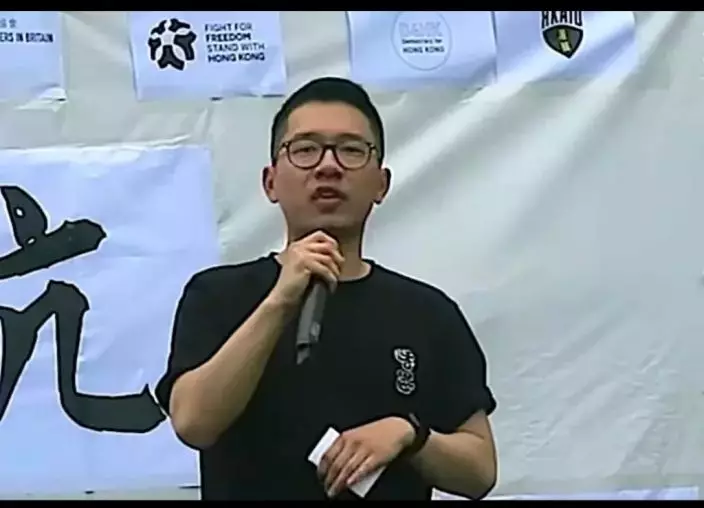
That was just the prelude. The subversion peaked with the 6th Legislative Council election following the 2014 "Occupy Central" movement. Driven by a passion for "rebellion," masses of young people blindly voted for fresh faces who built their brands on radicalism, ignoring their complete lack of ability or track record. The result? First-time winners included "Localist" figures dripping with "Hong Kong Independence" sentiment like Baggio Leung and Yau Wai-ching, alongside "Occupy" student leader Nathan Law.
Oath-Taking Circus: Post-"Occupy" radicals Baggio Leung and Yau Wai-ching stormed the chamber advocating independence, turning solemn oaths into a disgraceful farce.
The "Open House" of Radical Chaos
Worse still, opportunists within the Pan-democrat camp saw this worked and jumped into the fray. The prime examples were the notoriously "uncouth and aggressive" Ted Hui and the self-proclaimed radical environmentalist Eddie Chu.
When Baggio Leung, Yau Wai-ching, and Nathan Law stormed the Council, political insiders told me the candidacy door had been flung too wide. It became an "unguarded open house"—easy to enter, hard to clear out—guaranteeing chaos. Fortunately, their greed for victory blinded them to the risks. They played games with their inaugural oaths, effectively playing themselves into a corner and getting disqualified (DQ).
Even after they were ousted, the "miracle" of their election accelerated the degradation of our politics. Fanatical voters continued to back incompetent politicians just to vent rebellious angst. Even younger members of the traditional Pan-democrats started acting out to cater to this new taste. Ted Hui is the textbook example: violently snatching a female civil servant's phone and throwing foul-smelling filth in the Chamber. It became a competition of who could be the most radical, obstructing bills and making livelihood administration nearly impossible.
By 2019, when the anti-extradition bill unrest broke out, the Council became a disaster zone. Then came the second absurdity. During the November District Council elections, held amidst turmoil, radical candidates swarmed to grab seats. At the same time, "black-clad people" physically attacked Establishment opponents with beatings, arson, and intimidation. They won the majority, reducing the District Councils to a "destroyers' paradise." Long-serving community councilors were wiped out, marking an unprecedented and unbearable degradation of our institutions.
Filth in the Chamber: "Uncouth" politician Ted Hui proved his disruptive intent by literally throwing foul-smelling rot during a Council meeting.
Paralyzing the System From Within
Inside LegCo, Pan-democrats brought the street riots into the Chamber, competing to perform "radical shows." The most absurd spectacle was Civic Party member Dennis Kwok holding the House Committee Chairman election hostage. He "played games" for over half a year. Sixteen meetings passed without electing a chairman, blocking massive amounts of government bills. Forced by the situation, even moderate Pan-democrats joined the madness, turning the Chamber into a real-life version of "One Flew Over the Cuckoo's Nest."
Recently, some claim the reformed Legislative Council has lost its monitoring function. This is 100% a fallacy. The Council back then was thoroughly wrecked; normal operations were paralyzed. What monitoring was there? Government administration was dragged down, pushing us to the brink of "mutual destruction" (laam caau).
Thankfully, the Central Government stepped in at the critical moment to pull the Council back on the right track. If "deformed democracy" had continued, Hong Kong would have derailed and fallen off a cliff, destroyed in a single day.
To prevent this painful history from repeating, everyone must vote enthusiastically on December 7. Support the Legislative Council moving forward on the correct track.
Lai Ting-yiu