The newly minted US Consul General to Hong Kong, Julie Eadeh, stirred up a political hornet’s nest when she met with political adversary figure Anson Chan right after taking office. The Ministry of Foreign Affairs’ Hong Kong Commissioner Cui Jianchun quickly summoned Eadeh for a strict representation, laying down "four don’ts," one of which was “don’t meet people you shouldn’t meet.”

Private files show US consuls in Hong Kong repeatedly made efforts to recruit Anson Chan as a political pawn to boost pro-American influence.
Political insiders say this was a warning shot. Historically, US consuls openly courted anti-government activists like Chan, trying to recruit them as political pawns. Chan wasn’t just anyone—former US Consuls General Gregory May and Stephen Young both had close ties with her. One insider revealed May actually once tried to recruit another senior official but got flatly rejected—getting a “lemon” as they call it—showing that Chan was more than willing.
Digging into private files of media mogul Jimmy Lai exposed in 2014 , political insiders found evidence of tight hooks between US consuls general and Anson Chan. One email from Gregory May, US Consul General in Hong Kong between 2005 and 2008, reportedly mentioned that he had recently heard from Stephen Young about dining in Hong Kong with Martin Lee and Anson Chan and expressed envy of the occasion and fondness for the outstanding team and past frequent dinners.
The reality behind this email is twofold. During May’s years, he regularly met with Chan, Martin Lee, and Jimmy Lai to discuss political affairs. By then, Chan had left government and was shifting toward the pan-democracy camp, aiming to lead them at one point and even planning to run in the 2007 Chief Executive election. When she realized her chances were bleak, she pivoted to win a 2008 Legislative Council by-election. May clearly saw her as Hong Kong’s potential “Aung San Suu Kyi” and pushed hard to recruit her to strengthen the pro-US faction.
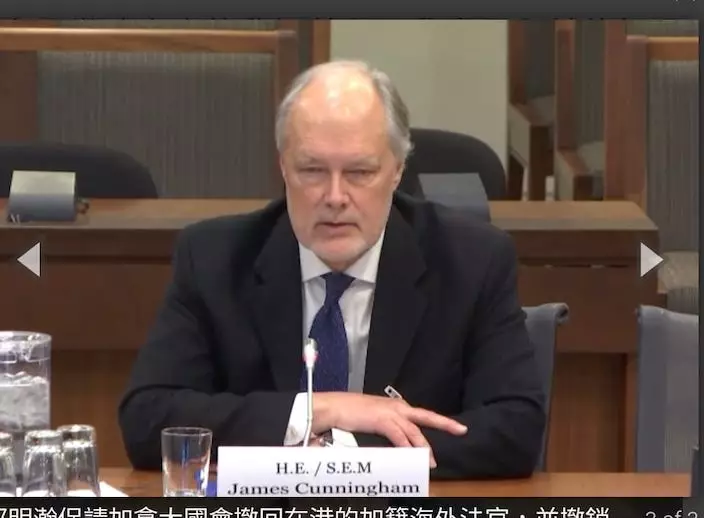
During Gregory May’s term, he regularly dined with Anson Chan, Martin Lee, and Jimmy Lai, later helping set up secret Washington backchannels. He also tried to recruit another senior official but was firmly rejected.
By March 2014, emails show former Consul General Stephen Young was still tight with Anson Chan, Martin Lee, and Jimmy Lai, regularly meeting for “political banquets.” When Young left in 2013, the Umbrella Movement was about to explode. May’s relationship with Chan extended to 2019, helping her secure secret channels to meet then US Vice President Mike Pence and coaching her before her trip.
Political insiders also shared another story: May once tried to “hunt” other senior officials by befriending one to see if he could be turned into a pawn. But that official’s views were totally opposite, and he gave May a “lemon”—a firm rejection—forcing May to back off.
Back to Eadeh’s recent meeting with Anson Chan, this long-running pattern of US consuls casually dining and conferring with anti-government figures to recruit pawns shows how distorted Hong Kong’s political system is. Cui Jianchun’s firm warning to Eadeh to “not meet those who should not be met” is an effort to restore normal political boundaries and have her stick to what’s proper.
Lai Ting-yiu
What Say You?
** 博客文章文責自負,不代表本公司立場 **
The UK government has been shaking things up for Hong Kong BNO holders living there. Apart from the usual 10 + 1 years before applying for permanent residency (ILR – Indefinite Leave to Remain), the Reform UK party even proposed to abolish the “right of permanent residence”.
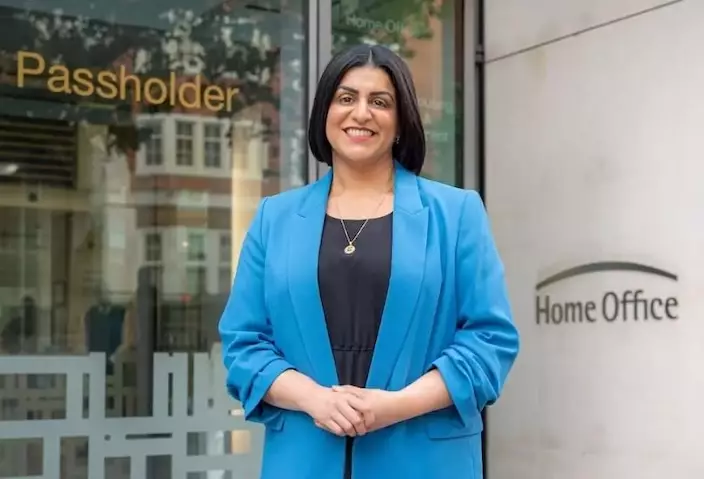
UK Home Secretary Mahmood’s BNO hand just got tougher. The “Squid Game” for Hong Kong BNO holders is on. At least the “5+1” stay rule survives… for now.
While there’s a hint that BNO holders might keep the current "5+1" rule, Home Secretary Shabana Mahmood warns tougher hurdles are coming. If you’re seen as not contributing enough economically or socially, you’re probably out. A friend who’s living in the UK says the devil’s really in the details—which haven’t been made clear yet. But it’s clear that some BNO holders won’t make the cut. And those who supported riots, the so-called “siblings,” especially if they have criminal records from Hong Kong, face an uphill battle.
The Labour Party's public support has been tanking, in part because Reform UK is winning with a sharp anti-immigration stance. So, Home Secretary Mahmood is trying to score points with voters by promising stricter rules on permanent residency. She’s basically saying: even if you waited 10 years, you might still get kicked out if you don’t bring value or contribute to the UK economy and society.
Six Conditions to Make the Cut
So, how does the UK decide if you’re valuable enough? Mahmood lays down six conditions: You must have a job and income in the UK, pay National Insurance, don’t claim benefits, show intermediate English skills, clean police record, volunteer or donate to charity.
This means anyone lazy, low-tax-paying, welfare-dependent, or breaking the law gets shown the door during ILR screening.
The Real-Life ‘Squid Game’ for BNO Holders
This is basically a real-life Squid Game for BNO holders: pass these tests and you stay; fail and you’re sent packing. The uncertainty weighs heavily, and the Devil is in the details.
Take the “having a job and income in the UK” rule, for instance. The government hasn’t said what income you actually need or whether “social contribution” counts at all. If they go by the book and are rigid about it, low-income, low-tax-paying Hong Kong people are basically screwed—labeled as “not contributing enough” and kicked out. The UK government once floated a points-based system that scores salary, qualifications, and job type to decide who qualifies for permanent residency. If they bring that in full force, a lot of Hong Kong BNO holders could be out of luck.
And what about the English bar? Will it, then, be raised from B1 to B2? If yes, some might fall short.
Most BNO holders have spotless police records, but those protest supporters—the “siblings” caught up in the 2019 Black Riots—are in real trouble. Any arrest or conviction from that period could easily sink their permanent residency chances. A friend in the UK told me that “good character” is the golden ticket for ILR approval, and a criminal record from Hong Kong even of political reasons would make things seriously grim. Some of these folks might try to switch tracks and seek refugee asylum, but the system’s clogged, with long delays and tough rejections becoming the norm.
Playing It Safe to Keep Dreams Alive
If “siblings” commit crimes after arriving in the UK, they immediately fail the no-criminal-record condition and lose ILR eligibility. They know this, which explains why many have been careful during recent protests—to avoid arrests that would crush their hopes of staying for good.
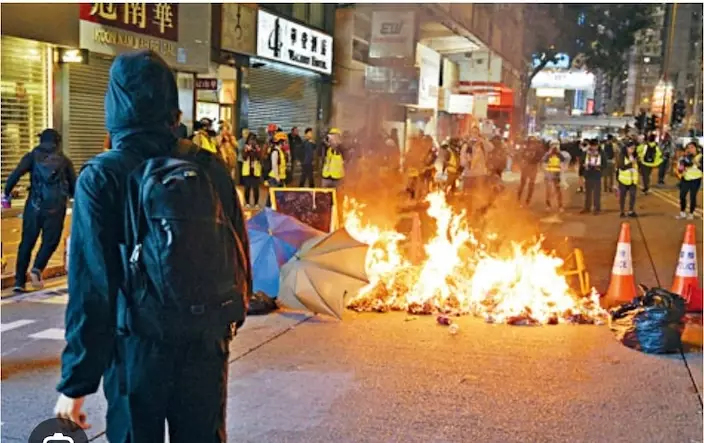
Clean record or bust. Protest supporters with 2019 political files risk getting booted.
On the bright side, the UK government hinted BNO holders might be excluded from the new “10+1” rule, keeping the current “5+1” residency requirement. Ukranians reportedly get the same treatment. No official confirmation yet, but silence indicates it might be true.
Still, Labour’s political battle with Reform UK means more “Devils” might sneak into the requirements of ILR application, tightening the screws to reduce the number of successful applicants and win back voter support. So even if five years remain the standard, getting permanent residency will get much harder.
The Bitter Endgame
Those filtered out will feel like they were so close to the finish line, only to be kicked off mid-journey. Naturally, that’s a bitter pill for anyone dreaming of a new life in the UK.
Home Secretary Mahmood just dropped the UK’s BNO hand: tougher permanent residency rules ahead. The devil’s still in the details, and the UK’s Hong Kong BNO holders are now in a real “Squid Game.” At least the “5+1” rule isn’t changing… yet.
One ILR prerequisite: a clean criminal record. Protest supporters with HK political files from 2019 face a high chance of being booted out.
Lai Ting-yiu