The Chief Executive urges everyone to tell positive stories about Hong Kong, and it’s not hard to do. For example, the city’s IPO ranking as “world number one” is well-known and widely reported by foreign media. Recently, a global ranking where Hong Kong shines brilliantly again has emerged, but few have noticed it—this deserves more spotlight.
Gallup’s latest “2025 Global Safety Report” just published, and Hong Kong is shining bright at number six, way ahead of the UK and the US. China steals the spotlight even more, ranking third globally, beating out many Western countries.
Personal Safety: More Than Just a Feeling

Gallup’s “2025 Global Safety Report” makes it clear: Hong Kong is a shining example of public safety and solid law enforcement, outclassing the UK and US by a wide margin.
This survey tapped into the feelings of 145,000 people from 144 countries, asking them if they felt safe walking alone at night. Hong Kong scored a solid 91%, neck-and-neck with Norway, while China hit even higher at 94%. Japan, Hong Kong people’s favorite tourist destination, is ranked 24 behind Hong Kong. Meanwhile, the US is stuck at 61st with only 58% of women feeling safe on the streets. The UK trails at 42nd.

Chinese Mainland’s high safety ranking proves that its law and order are superior than the western countries.
Hong Kong’s high ranking is impressive compared to Western countries plagued by rising street crime. The UK comes in at 42nd, with frequent street theft and violent attacks leading to low conviction rates—hardly the kind of environment that breeds safety confidence. In the US, some cities have become so dangerous they’re labeled “crime hotspots.” It’s no surprise that less than 60% of women feel safe walking alone.
The Reality Gap
This survey also comes up with a “Law and Order Index” that combines theft and robbery rates, population ratios, and trust in policing. Tajikistan and Singapore lead, with China in the fourth place. Hong Kong and Taiwan are tied at 18th, while the UK and US lag at 46th, alongside India. These results sharply contradict political voices and foreign media that try to smear Hong Kong’s legal system.
Independent Data Supports the Narrative
It’s not just Gallup. The global database Numbeo’s “2025 World’s Safest Countries Ranking” has Taiwan at fourth, Hong Kong seventh, and China fifteenth. The US and UK are way further down at 89th and 87th, respectively. This ranking is often used by travelers to gauge security risks, putting Western destinations under the microscope.
Quick Police Action Makes a Difference
These top safety rankings for Hong Kong reflect years of hard work by law enforcement agencies. Police here crack street crime cases swiftly, unlike in the UK, where some theft rings take over a year to solve.
The sense of security today sharply contrasts with the one we experienced in 2019 when black-clad rioters roamed freely, spreading fear and stripping away any notion of safety on the streets. The current strong feeling of safety among nighttime pedestrians is a welcome turnaround—and one we hope lasts.
Lai Ting-yiu
What Say You?
** 博客文章文責自負,不代表本公司立場 **
You'd think Donald Trump is a genius, always looking for ways to give the US an edge. But the reality is, many of his policies—both at home and abroad—have ended up being a massive boost for China. That's why he's earned the nickname "川建國" (Chuan Jianguo), or "Trump Builds China." And now, it seems Hong Kong is also cashing in on his moves, making "川建港" (Chuan Jiangang), or "Trump Builds Hong Kong," just as fitting.
His latest stunt? A crude crackdown on foreign students that has sent shockwaves through US universities. Fall enrollment has plummeted, with the number of Chinese students dropping by 12%. This has choked off a vital revenue stream for many institutions, forcing them to slash salaries and staff just to stay afloat.
Meanwhile, Hong Kong is doing the exact opposite. By throwing its doors wide open, it's attracting students from the mainland and beyond who are now thinking twice about the US. This isn't just a win for the universities' bank accounts; it's a shot in the arm for the entire economy. So, yes, we really have "Chuan Jiangang" to thank for this unexpected windfall.
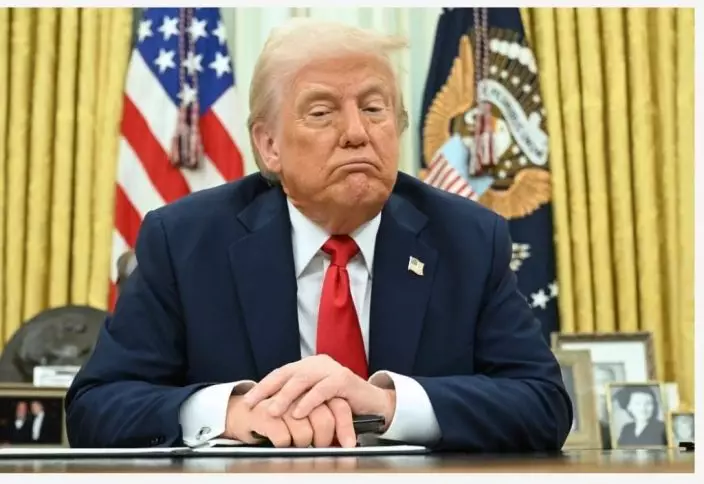
Thanks, Trump: As the US slams its doors, mainland students are flocking to Hong Kong.
A Campaign of Control
Right after taking office, Trump launched an iron-fisted campaign to whip everyone into line, from the government and military to intelligence agencies and the judiciary. Universities quickly became a prime target.
After a drawn-out battle to bring Harvard to heel, he issued a memorandum last week called the "Compact for Academic Excellence in Higher Education" to nine top universities, including MIT.
The deal? Follow the government's "ideological guidelines" to control student thought and cap foreign undergraduate enrollment at 15%. In return, universities get to keep their federal funding and research grants—a blatant case of using cash to buy compliance.
Even before this 15% cap, US media reported that Trump was already using every trick in the book to keep foreign students out. We're talking delayed visas, restricted visa numbers, and intense scrutiny of applicants. Add to that the government's move to expel students who participated in protests, and it's no surprise that many who had their sights set on the US are now looking elsewhere.
The Numbers Don't Lie
The latest data from the U.S. International Trade Administration (ITA) paints a grim picture. August is usually the peak season for foreign students arriving in the US, but this year, only 313,000 entered on visas—a staggering 19% drop from last year. Asian students, who have long been the majority, saw the steepest decline of 24%, falling to just 191,000. Within that group, the number of Indian students plummeted by 44%, and Chinese students were down 12%.
For many American universities, international students are a financial lifeline. This sharp decline in enrollment has hit them hard and fast, plunging them into a financial crisis. Reuters spoke to 10 universities, and every single one reported a drop in foreign students, with one seeing a 19% decrease. With tuition income drying up, some schools have been forced to make drastic cuts just to survive.
Take DePaul University in Chicago, a private institution that saw 755 fewer foreign students this year, a 30% reduction. Facing a deficit, it had to slash spending, cut executive pay, lay off staff, and freeze hiring. It's a story playing out across the country. At least 35 institutions have had to lower their budgets, and the University of Southern California has cut 630 positions. It's a scene of widespread misery.
America's Loss, Hong Kong's Gain
Trump has his own twisted logic for this "expulsion" policy. He thinks that by reducing the number of foreign students, he's creating more spaces for America's own "excellent students," completely ignoring the economic fallout.
The truth is, foreign students are big business. It's predicted that the 30% to 40% drop in international students this fall will result in a $7 billion economic loss and 60,000 fewer jobs. And that doesn't even touch on the decline in foreign graduate students, which will cripple research in many fields and ultimately weaken America's economic strength.
While US universities are left high and dry by Trump, Hong Kong is reaping the rewards. In recent years, the Hong Kong government has gone in the opposite direction, boosting the proportion of non-local students in government-funded universities to 40% in the 2024-25 academic year, with 26,600 students currently enrolled. Next year, that figure will rise to 50%, opening the floodgates.
Friends in the education sector tell me that some mainland students, spooked by Trump's harsh policies, have scrapped their plans to study in the US and are coming to Hong Kong instead. As a result, applications from non-local students are surging at all universities. HKUST and PolyU each received over 20,000 applications, and even a private institution like Hang Seng University saw over 10,000. Once the university town in the Northern Metropolis is complete, the number of non-local students is set to skyrocket.
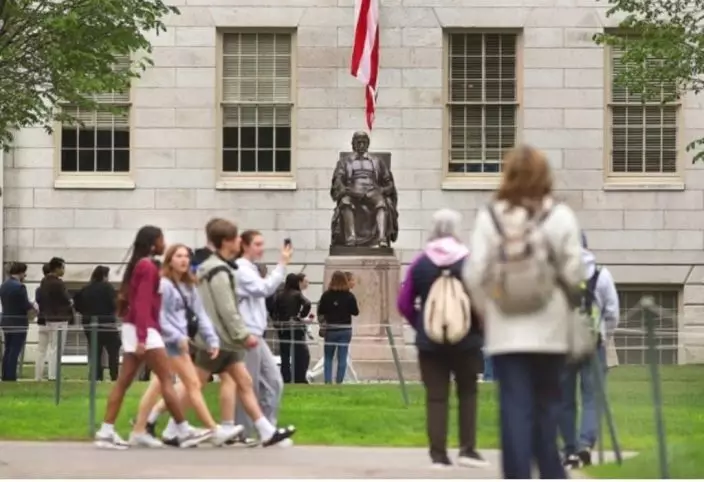
The Trump Effect: US universities face financial ruin as foreign students flee his crude "expulsion" tactics.
A Bright Future for Hong Kong
The more the US tightens its grip, the more Hong Kong's education industry thrives, and the economic benefits are already clear. A UBS report out today predicts that between 2029 and 2030, the number of non-local university students will hit 140,000. To tackle the housing shortage, the government is encouraging hotels to convert into student dorms, which is great news for hotel operators. The sustained demand for private rentals will also give the property market a healthy boost.
While US universities are being wrecked by Trump, shrouded in gloom, Hong Kong's institutions are looking at a bright future. For that, we really have to say a big thank you to "Chuan Jiangang."
Lai Ting-yiu