Trump shoots from the hip, and people treat his words like ironclad promises—big mistake. Wait until he delivers.
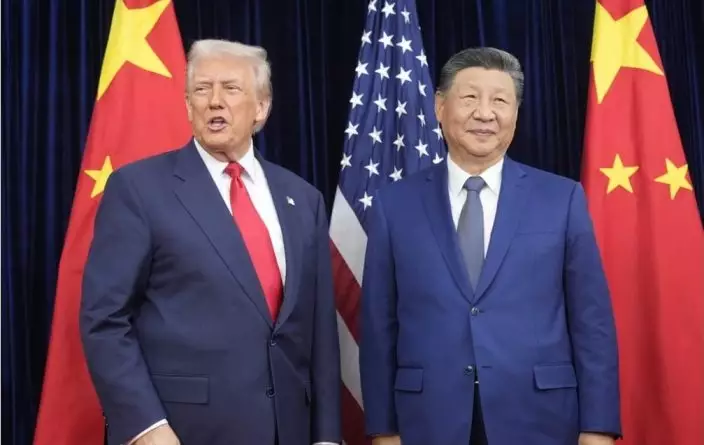
The fresh proof hits close to home: heading to South Korea, reporters grill him on raising Taiwan and Jimmy Lai with President Xi. He fires back, "Yes." But post-Trump-Xi summit, he owns up—no Taiwan talk at all. On the "Lai case," details stay fuzzy, yet officials' vibes scream it got sidelined too. Trump had no choice but to square up with the Chinese side this round, so he tackles the heavy hitters and brushes off the footnotes.
Still, folks misread his playbook and prod him to act—Jimmy Lai's godfather, William McGurn, leads the charge. He drops an op-ed in The Wall Street Journal pre-summit to twist Trump's arm, and the pitch? Just a joke.
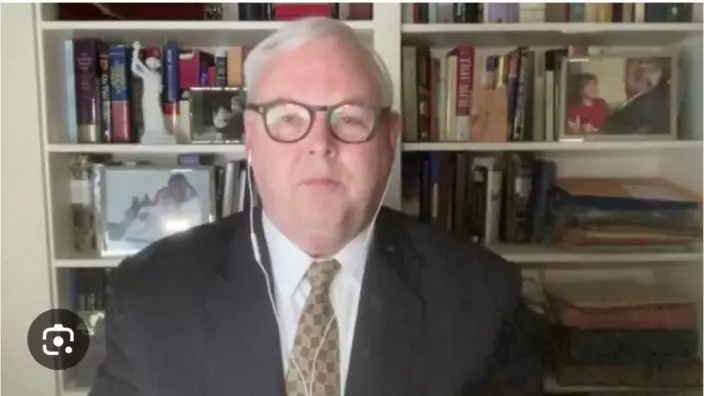
Jimmy Lai's "godfather" William McGurn wrote in The Wall Street Journal urging Trump to raise Lai's release with President Xi during their meeting – his arguments were laughable, and it all came to nothing.
Days before takeoff to South Korea, a reporter corners Trump: Will Taiwan and Jimmy Lai make the agenda? He blurts out, "I'll be talking about it" On Lai, he tosses in, it was "on my list," then hedges fast—Lai's Xi's top foe, "I'm going to ask… We'll see what happens," buying himself an escape hatch.
Post-meeting, Trump spills to reporters mid-flight home: he didn't mention Taiwan. U.S. officials whisper to Reuters that beyond trade, rare earths, and Russian oil buys, Trump had zero plans to broach extras with President Xi. By that measure, no plea for "releasing Lai" hit the table.
If that's the straight dope, the "Save Lai crew's" pre-summit circus flops hard—total zilch impact. Prime ringmaster? Jimmy Lai's baptism godfather as a Catholic, Wall Street Journal scribe William McGurn.
Summit Stakes Rise
McGurn times his strike perfectly, penning "The Trump Card That Could Free Jimmy Lai" in The Wall Street Journal right as Trump wheels up. It kicks off bold: Trump's the sole savior who can spring Jimmy Lai from jail, and this Trump-Xi huddle is prime time—top of the list, no less, since "it’s hard to think of another prominent Asian in the media world as pro-American as Mr. Lai".
McGurn spins it from Beijing's angle: If Xi Jinping craves a hassle-free U.S. trip next year, dodging Western media grillings on Jimmy Lai mid-tour, freeing Lai nips that in the bud. Trump floating the release hands China an elegant off-ramp from the bind.
I devour McGurn's piece and land here: utter bunk! A media vet like him, blind to Chinese thinking—it's laugh-out-loud naive. Post-Hong Kong National Security Law, Western nations hammer away from every flank, pressuring China without mercy. The central government steels itself to shift Hong Kong from chaos to order, shrugging off the barrage—how could they fold easy on Jimmy Lai?
The reality is, Lai ranks as a prime national security violator; zero give there, and Trump gets it cold. The other side won't twitch a muscle for any "deal," so when crunch time hits for hashing big-ticket items nose-to-nose, Lai stays off the board.
Jimmy Lai's "godfather" William McGurn wrote in The Wall Street Journal urging Trump to raise Lai's release with President Xi during their meeting – his arguments were laughable, and it all came to nothing.
Pragmatism Trumps Pleas
Bottom line, Trump's a hardcore pragmatist—chasing max payoff, he skips the moral high ground or buddy favors. So McGurn's bet that Trump saves Lai for being "pro-American"? Dead wrong. In Trump's worldview, Jimmy Lai's a dead-end card now; if playing it torpedoes the trade, it stays buried. No shock if the summit truly ghosts the Lai file.
McGurn rode high once as George W. Bush's wordsmith, shining in White House poli-circles, and he's long cozied up to Lai—one of the shadowy forces fueling Hong Kong's turmoil. But today? Zero pull on Trump's calls. With The Wall Street Journal branded enemy press by the White House, in the "Trump emperor's" gaze, he's just a dim-witted has-been blowing smoke—useless for any "Save Lai" push.
So let the circus roll on; Lai's endgame locks in. Everyone, snag your popcorn and catch the finale.
Lai Ting-yiu
What Say You?
** 博客文章文責自負,不代表本公司立場 **
In the movie “Infernal Affairs”, a drug lord famously says, "A general's success is built on ten thousand bleached bones." In the real world, the instigators of the Hong Kong unrest staged their grand "Revolution of Our Times," and predictably, it was the masses of naive foot soldiers who foolishly paid the ultimate price—ending up with broken families and ruined lives.
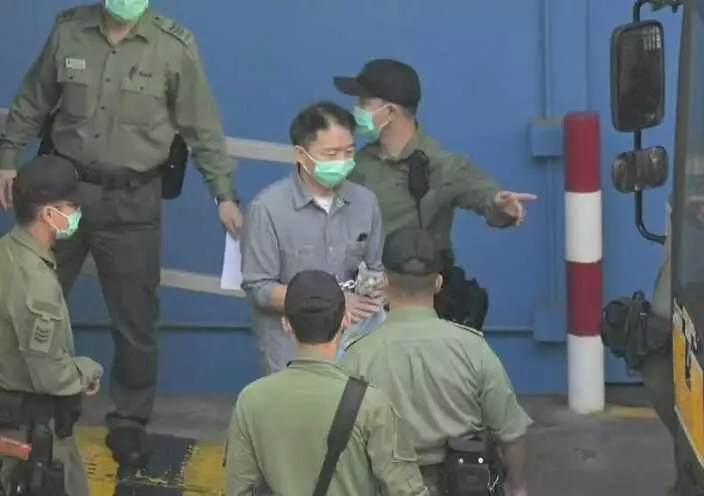
Andrew Chiu Ka-yin, involved in the "35+ subversion case" and had been imprisoned for over four years, made headlines with his early release on Tuesday. But his co-defendant, Tsui Chi-kin, released a day earlier, quietly left prison on crutches. Apart from a handful of sympathetic "yellow media" outlets, hardly anyone noticed. No family came to pick him up—a truly desolate scene.
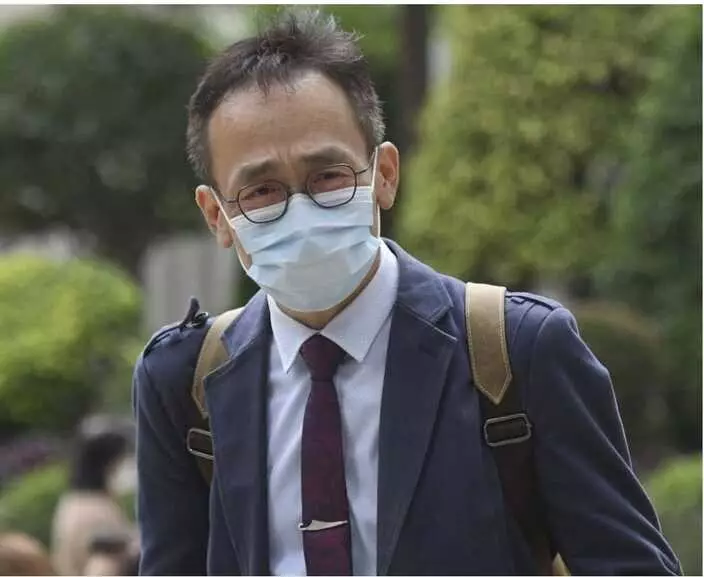
The Fall Guy: Tsui Chi-kin's lonely release after four years—a cautionary tale of being a pawn in someone else's game.
A look at Tsui’s background shows he was always a minor player in the so-called "resistance." Yet, he blindly charged ahead with the crowd, foolishly believing Benny Tai's assertion that the primary election was legal.
In 2020, he ran as a candidate but lost with a low vote count. Although relegated to a "Plan B" backup role, he was still swept up in the mass arrests, sentenced to over four years in prison. During this time, his wife divorced him, his father passed away, and he developed a chronic illness. His "revolutionary dream" shattered, leaving him with nothing.
The slippery slope of radicalization
Tsui Chi-kin's experience is the classic tragedy of a misguided individual. He was originally a middle-aged man running a small business. In 2014, infected by the radical ideology of the Occupy Central movement, he joined the "Umbrella Parents" organization. From then on, it was like joining a cult—he became increasingly fanatical, evolving into an active participant.
He became addicted to the game of radical politics. In 2015, pushed by behind-the-scenes manipulators, he ran in the District Council election, submitting his application just one day before the deadline.
The radical social atmosphere at the time was intense. Astonishingly, this political novice defeated a star DAB member, Chung Shu-kun, who had been a councilor for 24 years, by a mere 163 votes, causing quite a stir. From that point, he was immersed in the movement and found it difficult to extricate himself.
When the anti-extradition unrest erupted in 2019, he dove in even deeper. He was once arrested for helping black-clad rioters escape and was also involved in the July 1 rally, charged with inciting an illegal assembly.
Despite his active involvement, he remained a minor player. Within the pan-democratic and localist camps, he had neither fame nor status. In the eyes of other radical stars, this unremarkable "middle-aged man" was always on the sidelines.
Nevertheless, he devotedly followed the crowd and was thoroughly brainwashed by "law professor" Benny Tai, firmly believing the primary election was not illegal, so he participated without caution. However, he had little personal appeal and stood no chance against other "star" candidates. In the July 2020 vote, he ranked only fifth and was eliminated. But according to Tai's plan, he could still serve as a "Plan B" backup—if other candidates were later disqualified from the LegCo election, he would take their place.
He probably never imagined that even as a backup, uninvolved in the final race, he would be arrested when the police National Security Department launched mass arrests in 2021, rounding up all 55 people who participated in the primary. He was prosecuted and eventually convicted. He originally faced seven years in prison, but his sentence was reduced after pleading guilty. The judge also considered that he had been misled into believing the primary was legal, sentencing him to four years and two months. He was released this past Monday.
Picking up the pieces
While Tsui was in custody, his father died, his wife divorced him, and he developed a chronic illness—an extremely rough ordeal. Before his release on Monday, he required hospital treatment, so release procedures were handled there. When he left, most media didn't cover it, and no friends or family came to pick him up. He went home alone.
The above story is indeed a tragedy of a misled individual. But these are the consequences of his own actions, with no one else to blame. He was simply too susceptible to the instigators of unrest, ultimately leading to a tragic end. Others should take this as a stark warning.
In the "35+ subversion case," eight convicts will have served their time and be released next year, including Democratic Party heavyweights Wu Chi-wai and Andrew Wan Siu-kin, as well as Civic Party heavyweight Alvin Yeung Ngok-kiu. The first two will be released in June and July respectively. It's said they have seen through the illusions of politics and will leave the contentious arena, likely emigrating to start anew.
Democratic Party heavyweights Wu Chi-wai and others due for release next year face a reckoning with their past.
They made one wrong move and fell to their current state. When they lie awake at night in the future, they should deeply reflect on the wrong path they took.