The national security fugitives have made a name for themselves as serial agitators—men who shout “charge!” from afar while hiding safely under foreign protection. From thousands of miles away, they peddle calls for protest votes or boycotts, trying to sabotage Hong Kong’s Legislative Council election. The outcome? A few gullible locals, blindly amplifying these posts, now find themselves in serious legal trouble.
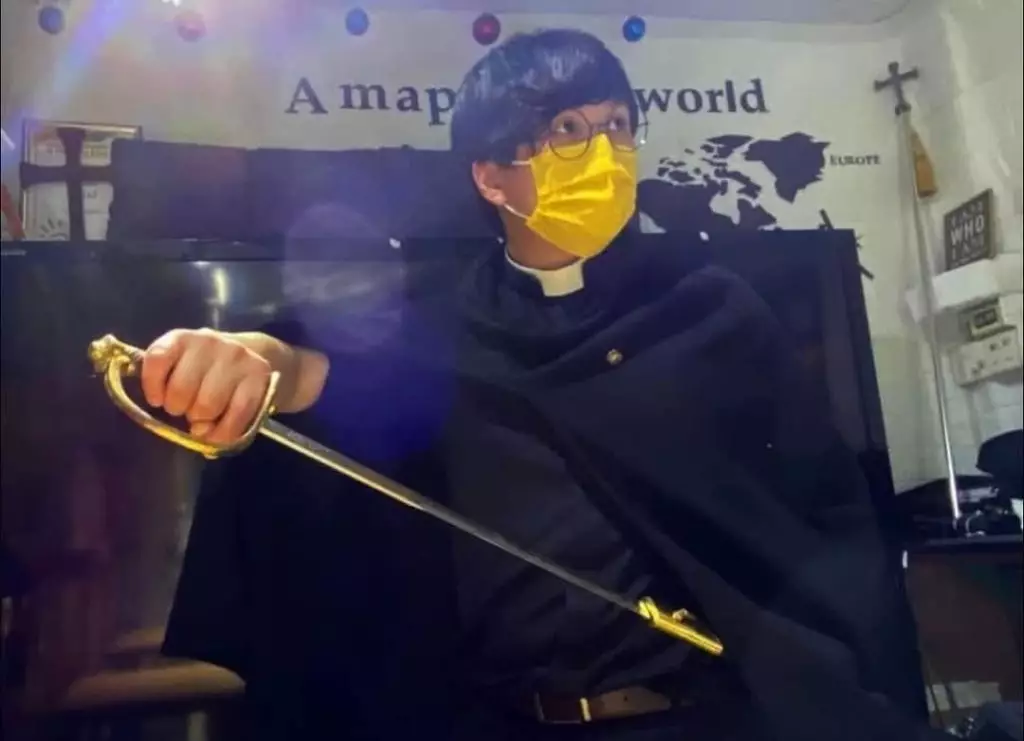
Fugitive Alan Keung called online for blank ballots and boycotts. A few naïve users reposted his incitement and were swiftly arrested by the ICAC—proof that “Blood Bun Demons” tell others to charge while staying safe themselves.
A Long Record of Deceit
Investigators from the Independent Commission Against Corruption ( ICAC ) arrested three locals who reshared social media posts inciting people not to vote or to cast invalid ballots—acts that breach Hong Kong’s Elections (Corrupt and Illegal Conduct) Ordinance. The Commission emphasised its zero-tolerance stance on digital incitement. Sources revealed that the reposted content originated from fugitive Alan Keung, who on October 15, under the name of the illegal group “Hong Kong Parliament,” called for an election boycott while launching wild smears at the poll.
Keung’s infamy stretches back to the 2019 unrest. Masquerading as a “pastor,” he incited violence before fleeing to Taiwan to set up a “Hong Kong independence” outfit—so extreme that even Taiwan deported him. He then resurfaced in Canada, still plotting under the same “Hong Kong Parliament” banner. The police’s National Security Department later placed him on its wanted list. Today, he continues his illegal advocacy from abroad, ensnaring naïve sharers who face arrest in his stead. As the local saying goes: “The clever talk, the foolish act.”
It’s not just Keung. Another fugitive, Ted Hui Chi-fung, who absconded to Australia, is repeating the same ploy. Earlier, he called publicly for blank ballots and voter abstention. Hong Kong’s Secretary for Security Chris Tang promptly condemned him, warning that circulating such posts may breach electoral law and even the Hong Kong National Security Law if foreign collusion is involved.
This isn’t the first time Hong Kong people have paid dearly for parroting fugitives’ rhetoric. Four years ago, after similar boycott calls by Hui and activist Sunny Cheung, four locals rashly reshared their posts—and all were convicted. The legal risks are not theoretical; they are proven and severe.

In Australia, Ted Hui continues running the same malicious game. Four years ago, Hong Kong citizens who reshared his boycott posts were prosecuted and convicted.
Masters of Manipulation
Experts say these fugitives thrive by selling chaos to their foreign backers. Instability in Hong Kong becomes their currency; the more they provoke, the more “useful” they appear to overseas patrons. But when their local followers get arrested, imprisoned, or fined, those same fugitives wash their hands clean. That hypocrisy—profiting off others’ suffering—is why they’ve earned the name: “Blood Bun Demons.”
In the end, figures like Hui and Keung aren’t crusaders—they’re schemers. Their motives are self-serving, their methods deceitful, and their record plain. Anyone helping to spread their manipulation only harms both themselves and Hong Kong. On December 7, the city deserves unity, not division—so encourage your family and friends to vote together for Hong Kong’s future.
What Say You?
** 博客文章文責自負,不代表本公司立場 **
Remember when the US and the UK tried to force-feed their brand of “Western democracy” to Hong Kong? A small band of followers took the bait, stirring up chaos for a so-called democratic utopia and sparking a historic upheaval. Their scheme ultimately failed, and thankfully, Hong Kong kept a political system that actually fits its needs.
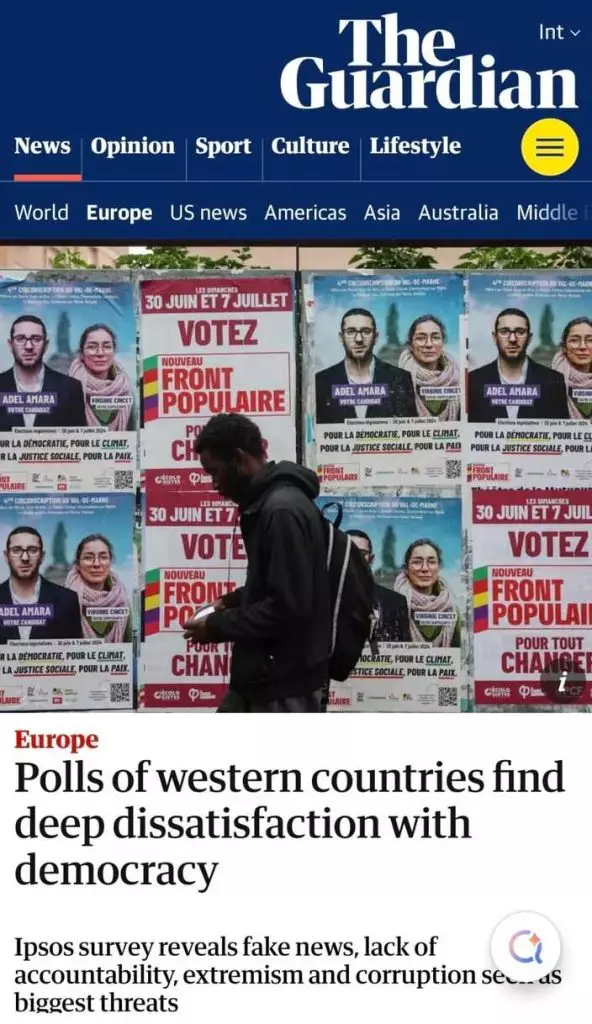
Democracy on Life Support. A damning Ipsos poll shows citizens in the US, UK, and France have lost hope on their system—and expect it to get worse.
Meanwhile, the democratic systems in the West—particularly the US, UK, and France—have devolved into chaos, leaving their citizens miserable. The proof is in the numbers: a recent Ipsos poll of 10,000 people across nine Western nations found that in eight of them, over half the population is disappointed with 'democracy.' They're tired of electoral games that deliver only disorder, division, and corruption, all while tanking their economies and livelihoods.
A friend of mine read the survey and put it bluntly: it’s a good thing the US and UK’s plot to export their system to Hong Kong failed. Otherwise, we’d be facing the same chaos that now defines their own countries.
While most headlines on the US-China rivalry fixate on economics, tech, and military might, some scholars rightly argue the real battle is ideological. The contest is between two systems of governance. So after decades of so-called 'democracy,' what’s the verdict from the people living in it? Are they satisfied? The answer is a resounding no.
A Damning Verdict from a Western Poll
The Guardian reported on the Ipsos findings, and the numbers are damning. In eight Western countries, satisfaction with democracy has cratered to below 50%. In the supposed flagships of democracy—the United States, France, and the United Kingdom—satisfaction is below 30%. In the US, it's a pathetic 20%.
Even Ipsos's own senior director, Gideon Skinner, admitted the results show 'widespread disappointment' with democracy's performance and a growing pessimism about its future. The distrust runs deepest in the Netherlands and France, where faith in their democratic institutions has collapsed.
Let’s break down the grim data. Satisfaction sits at just 19% in France, 20% in the US, 26% in the UK, and 27% in Spain. That means in each of these nations, a staggering 70% or more of the population is completely disillusioned with their political system—a clear and decisive majority.
The future looks even worse, according to those surveyed. A crushing 86% of the French believe things will decline, a sentiment shared by 75% in Britain and nearly 70% in the US. The consensus is clear: tomorrow will not be better.
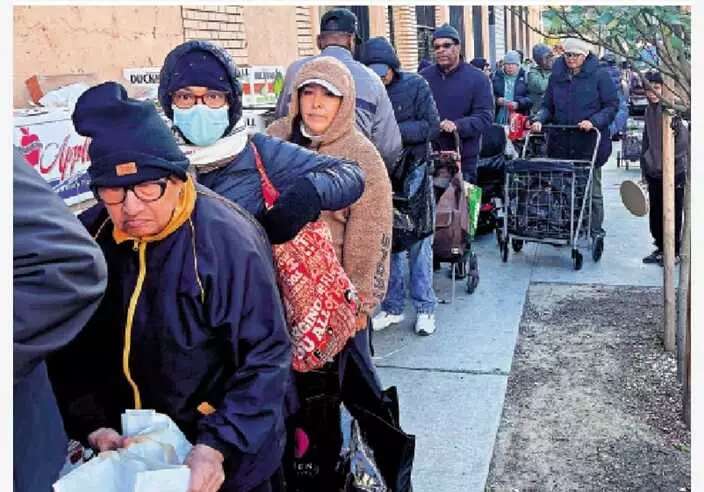
American Democracy: Government shutdowns, food lines , and public misery. This is the system they wanted to export?
From Dysfunction to Public Disgust
What’s driving this pessimism? They point to a system that breeds unaccountable politicians, extremism, corruption, and a pandemic of fake news—all of which are getting worse, not better.
Unsurprisingly, almost no one feels their government actually represents them. The call for 'major reform' isn’t just a whisper; it's a roar from people desperate to escape a deadlocked system that serves only itself.
My friend wasn't surprised by this democratic fatigue. You just have to look at the state of the 'three great democracies'—the US, UK, and France—to understand why people have had enough.
Look at the United States. Since Donald Trump's rise, the political arena has become a theater of vengeance. Both sides weaponize their power to crush opponents, prioritizing self-interest over the public good. It's no wonder ordinary Americans are disgusted with what their 'democracy' has become.
The 'End of History' Has Ended
France is just as bad, paralyzed by partisan warfare. Prime ministerial appointments are deadlocked. Budgets are blocked. The government can't function, and the economy stagnates while political fights spill onto the streets. For citizens who just want to live their lives, this system is a failure. Disappointment isn't just likely; it's guaranteed.
And then there’s Britain. The Labour Party’s election win solved nothing. The economy is a wreck, the government is fractured by infighting, and Prime Minister Keir Starmer is already facing a leadership challenge. This political chaos only deepens the economic pain, trapping citizens in a dark tunnel with no end in sight. Satisfaction? Impossible.
Remember Francis Fukuyama's 'End of History' thesis from the 1990s? After the Soviet Union fell, he declared Western liberal democracy the final, ultimate model for all humanity. It was the supposed triumph that would dominate the world forever.
He couldn't have imagined that just a few decades later, his celebrated model would become a dysfunctional mess, despised by the very people it claimed to serve.
Given the public mood in the West, the winner of the China-US system contest is becoming obvious. What do the zealots who pushed for a 'revolution' in Hong Kong have to say now? Whatever their excuses, my friend and I are clear on one thing: Hong Kong was right to reject the failed model of Western democracy. It was a fortunate escape.