
Skip to Content Facebook Feature Image

Learn Chinese, You Might Just Go to Space: How Blockades Made China's Space Programme Stronger

Blog

Learn Chinese, You Might Just Go to Space: How Blockades Made China's Space Programme Stronger
Blog

Blog

Learn Chinese, You Might Just Go to Space: How Blockades Made China's Space Programme Stronger

2026-11-26 10:05

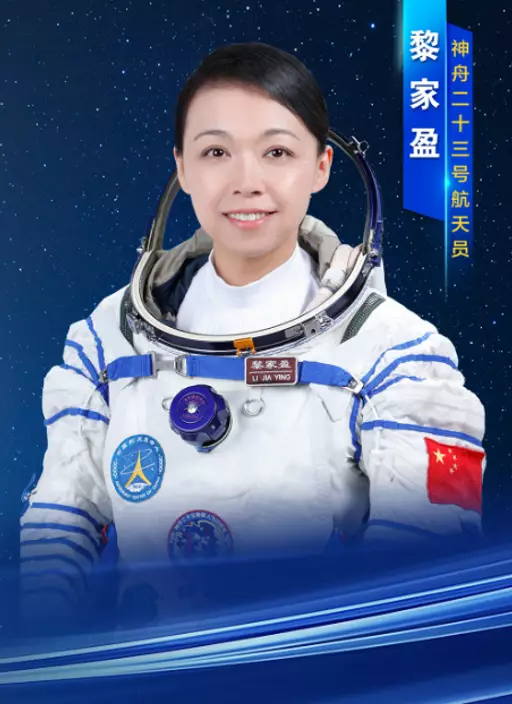
On May 24, 2026, the Shenzhou-23 crewed spacecraft lifted off into orbit, carrying a name that filled Hong Kong with particular pride: payload specialist Lai Ka-ying, the first astronaut from Hong Kong to enter the Tiangong space station. During her stay aboard, she also helped assemble and operate Hong Kong's first scientific payload on the station, the "Tianyun Camera."
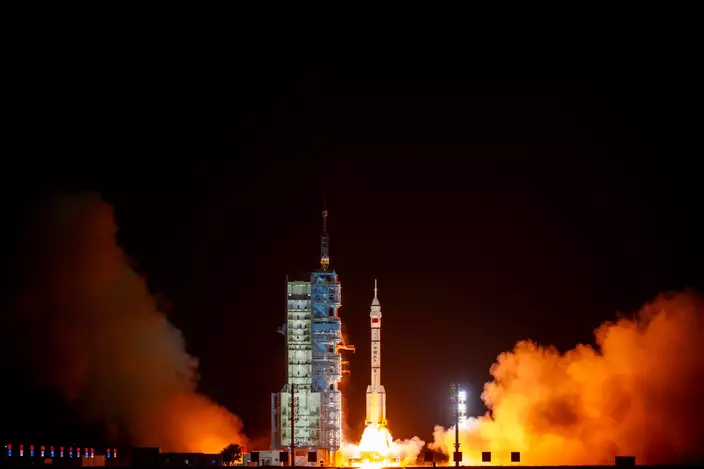
On May 24, 2026, a Long March 2F carrier rocket carrying the Shenzhou-23 crewed spacecraft blasts off from Jiuquan. (Photo/People's Daily Online)
On May 24, 2026, a Long March 2F carrier rocket carrying the Shenzhou-23 crewed spacecraft blasts off from Jiuquan. (Photo/People's Daily Online)

Payload specialist Lai Ka-ying is the first astronaut from Hong Kong to enter the Tiangong space station. (Photo/CCTV News)
Payload specialist Lai Ka-ying is the first astronaut from Hong Kong to enter the Tiangong space station. (Photo/CCTV News)

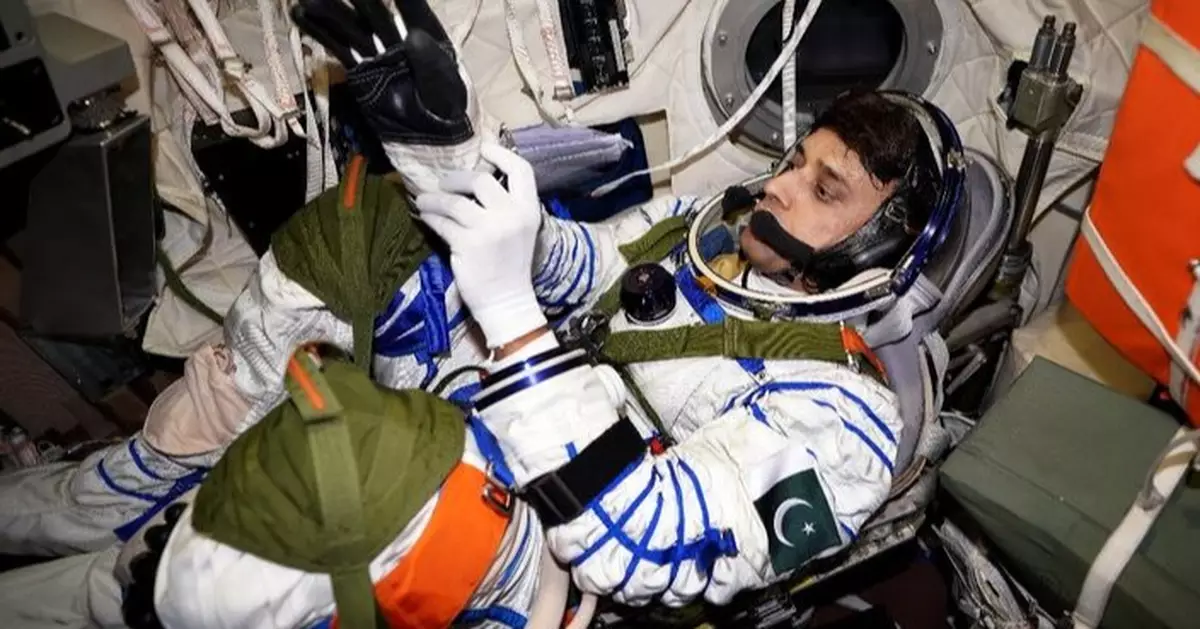
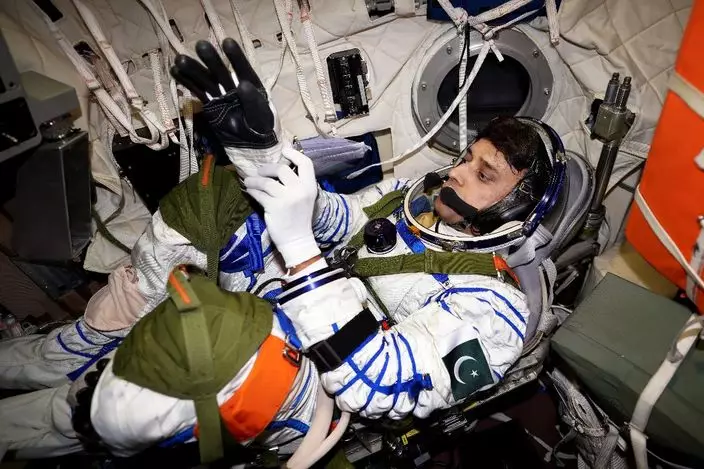
Meanwhile, at Beijing Aerospace City, Pakistani Air Force pilot Muhammad Zeeshan Ali was pushing through rounds of rigorous selection and gruelling training—from intensive Mandarin lessons to high-G centrifuge simulations—until his dream finally became reality. On November 24, his name was officially unveiled on the Shenzhou-24 crew roster; the following day, he launched aboard the spacecraft toward Tiangong, becoming the first foreign astronaut to enter China's space station. With a Hong Kong specialist already aboard and a Pakistani pilot carrying the baton into orbit, different paths are converging on the same destination—a vivid embodiment of "Chinamaxxing" in space exploration.

More Images
On May 24, 2026, a Long March 2F carrier rocket carrying the Shenzhou-23 crewed spacecraft blasts off from Jiuquan. (Photo/People's Daily Online)

On May 24, 2026, a Long March 2F carrier rocket carrying the Shenzhou-23 crewed spacecraft blasts off from Jiuquan. (Photo/People's Daily Online)

Payload specialist Lai Ka-ying is the first astronaut from Hong Kong to enter the Tiangong space station. (Photo/CCTV News)

Payload specialist Lai Ka-ying is the first astronaut from Hong Kong to enter the Tiangong space station. (Photo/CCTV News)

Pakistani Air Force pilot Muhammad Zeeshan Ali becomes the first foreign astronaut to enter China's space station. (Photo/China Youth Daily)
Pakistani Air Force pilot Muhammad Zeeshan Ali becomes the first foreign astronaut to enter China's space station. (Photo/China Youth Daily)

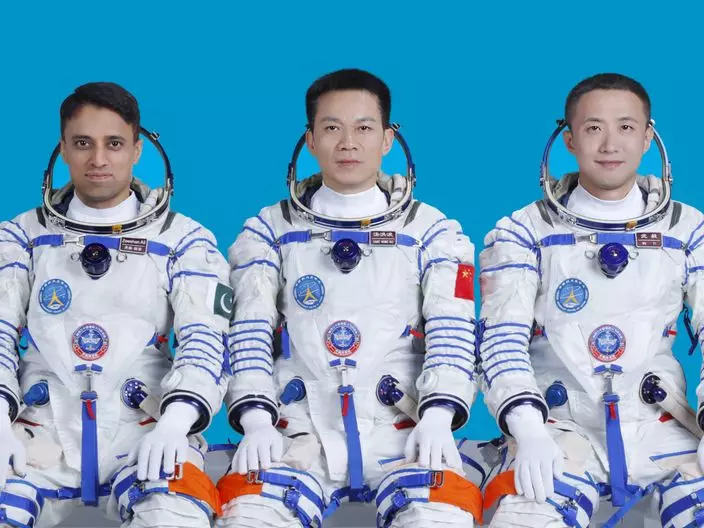
The Shenzhou-24 astronaut crew comprises Tang Hongbo (centre), Wu Yi (right), and Pakistani astronaut Muhammad Zeeshan Ali (left). (Photo/Xinhua)
The Shenzhou-24 astronaut crew comprises Tang Hongbo (centre), Wu Yi (right), and Pakistani astronaut Muhammad Zeeshan Ali (left). (Photo/Xinhua)

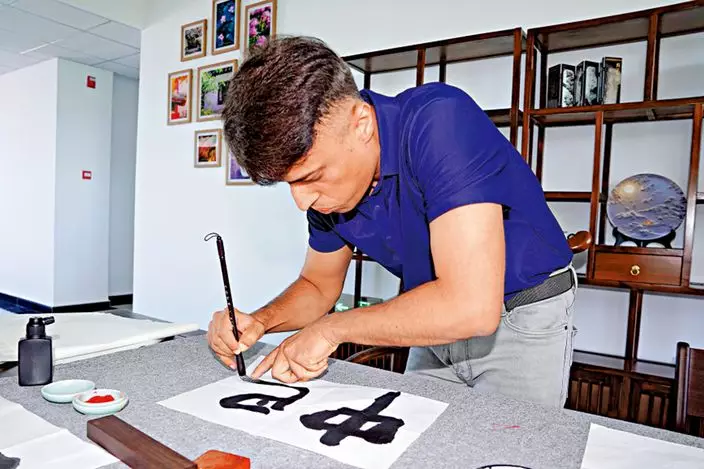
Ali maintained an intensive Chinese study schedule before and during his training in Beijing. (Photo/China News Service)
Ali maintained an intensive Chinese study schedule before and during his training in Beijing. (Photo/China News Service)

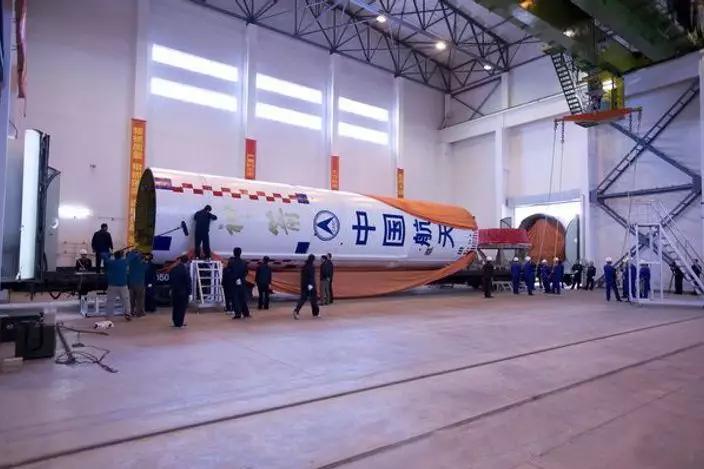
A Long March 2F carrier rocket arrives at the Jiuquan Satellite Launch Centre. (Photo/China National Space Administration)
A Long March 2F carrier rocket arrives at the Jiuquan Satellite Launch Centre. (Photo/China National Space Administration)

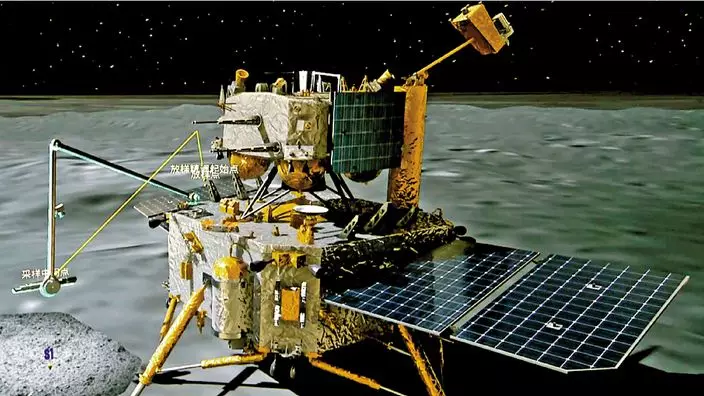
Chang'e-6 successfully completes intelligent rapid sampling on the far side of the Moon. (Photo/Ta Kung Wen Wei Net)

Chang'e-6 successfully completes intelligent rapid sampling on the far side of the Moon. (Photo/Ta Kung Wen Wei Net)

Pakistani Air Force pilot Muhammad Zeeshan Ali becomes the first foreign astronaut to enter China's space station. (Photo/China Youth Daily)

Pakistani Air Force pilot Muhammad Zeeshan Ali becomes the first foreign astronaut to enter China's space station. (Photo/China Youth Daily)

Tiangong's Expanding Circle of Global Partners

At a press conference held at the Jiuquan Satellite Launch Centre on November 24, 2026, the Shenzhou-24 flight crew made their official debut: mission commander Tang Hongbo, astronaut Wu Yi, and Pakistani payload specialist Muhammad Zeeshan Ali. The mission marks the first joint flight by Chinese and foreign astronauts in the history of China's crewed space programme, as Tiangong welcomes its first international visitor. Launching early on the morning of November 25, Ali will spend roughly a week in orbit conducting experiments before returning to Earth aboard Shenzhou-23.

The Shenzhou-24 astronaut crew comprises Tang Hongbo (centre), Wu Yi (right), and Pakistani astronaut Muhammad Zeeshan Ali (left). (Photo/Xinhua)

The Shenzhou-24 astronaut crew comprises Tang Hongbo (centre), Wu Yi (right), and Pakistani astronaut Muhammad Zeeshan Ali (left). (Photo/Xinhua)

The journey was hard-earned. Ali and his fellow Air Force pilot Khurram Daud emerged from a pool of roughly 20 candidates before undergoing intensive training in Beijing on spacecraft systems, microgravity adaptation, and Mandarin—essential given that Tiangong's operating interfaces, cabin signage, and ground control voice commands are all in Chinese. For this mission, ground teams prepared bilingual operation manuals in both Chinese and English, alongside customised halal space rations tailored to the foreign astronaut's dietary requirements.

Ali maintained an intensive Chinese study schedule before and during his training in Beijing. (Photo/China News Service)

Ali maintained an intensive Chinese study schedule before and during his training in Beijing. (Photo/China News Service)

The milestone sparked nationwide celebration across Pakistan. On November 24, Pakistan's Dawn newspaper quoted Ali as saying, "Thank you very much to the Chinese government for helping us realise our dream of flying into space," under a headline noting that he "carries the hopes of 250 million people." Pakistan's Minister for Planning, Development and Special Initiatives Ahsan Iqbal wrote on X that "this is a matter of pride for me personally and for the entire Pakistani nation," while Minister for Information and Broadcasting Attaullah Tarar said the astronaut's imminent arrival in space "fills the whole nation with excitement and pride."

International fascination with China's space achievements has been building for years. Back in October 2022, European Space Agency astronaut Samantha Cristoforetti shared photos of Beijing taken from the International Space Station, captioning them with a classical line from Wang Xizhi's Preface to the Poems Collected from the Orchid Pavilion. The post drew praise from China's Foreign Ministry spokesperson and prompted netizens to joke that her Mandarin was already "good enough to apply for a spot on China's space station." In 2024, China's Chang'e-6 lunar probe carried international payloads from France, Italy, Sweden, and Pakistan to the far side of the Moon. From hitching a ride on Chinese probes to learning Mandarin to board Tiangong, space-themed Chinamaxxing continues to reach new heights.

The More Blockaded, the Stronger

Ironically, the growing international enthusiasm surrounding Tiangong today is rooted in years of external exclusion. In 2011, the US Congress passed the "Wolf Amendment," barring NASA from any bilateral space cooperation with China, while China was effectively shut out of the International Space Station programme. Yet rather than stalling China's ambitions, those barriers catalysed a wave of independent breakthroughs: the global BeiDou satellite navigation system was completed and opened to the world; the Tiangong space station was built and entered continuous crewed operation; Tianwen-1 achieved orbiting, landing, and roving on Mars in a single mission; and Chang'e-6 returned the world's first samples from the far side of the Moon.

Former NASA Administrator Charles Bolden once stated bluntly: "If the purpose [of the amendment] was to slow down or stop China's space program, it simply hasn't done that." Analysts at the Washington-based Center for Strategic and International Studies likewise acknowledged that exclusion from US-led missions "did not discourage the Chinese; on the contrary, it pushed China to formulate and carry out its own space program." Sanctions ultimately forged a self-reliant aerospace ecosystem—one whose reliability has been proven under real-world pressure.

Proven Capability: Real-World Resilience Over Speculation

On November 5, 2025, after the Shenzhou-20 spacecraft sustained suspected micrometeoroid or space debris impact damage that left hairline cracks in a viewport, China's crewed space agency immediately activated a 16-day emergency launch protocol. A Long March 2F rocket and the Shenzhou-22 spacecraft were rapidly prepared for liftoff, completing the first emergency launch in the history of China's crewed space programme on November 25 and docking with the station just three and a half hours later to deliver vital supplies. The Shenzhou-21 crew subsequently remained in orbit for more than 200 days, setting a new national endurance record for a single crewed mission.

A Long March 2F carrier rocket arrives at the Jiuquan Satellite Launch Centre. (Photo/China National Space Administration)

A Long March 2F carrier rocket arrives at the Jiuquan Satellite Launch Centre. (Photo/China National Space Administration)

In deep-space exploration, Chang'e-6 has already returned 1,935.3 grams of lunar samples from the Moon's far side. While Chang'e-7—originally slated for August 2026 to hunt for water ice at the lunar south pole—has had its launch window shifted to 2027 in adherence to a strict "safety-first, zero-error" principle, its mission design featuring a hopping probe to explore permanently shadowed craters remains a world first. Meanwhile, Tianwen-2 is already underway on a nearly decade-long asteroid sample-return expedition.

Chang'e-6 successfully completes intelligent rapid sampling on the far side of the Moon. (Photo/Ta Kung Wen Wei Net)

Chang'e-6 successfully completes intelligent rapid sampling on the far side of the Moon. (Photo/Ta Kung Wen Wei Net)

Space Capability Is Also Space Security

As the Shenzhou-20 viewport incident underscores, outer space is far from a tranquil sanctuary—orbital debris hazards and competition over frequency and orbital resources have become pressing security realities. China's ability to execute a crewed emergency launch within twenty days rests on an independent tracking, telemetry, and command (TT&C) network, a rapid-response architecture, and a complete industrial supply chain. This is precisely what underpins "space security" within the holistic approach to national security: safeguarding development through security capabilities, reinforcing security through technological advancement, and advancing both in tandem.


Chinamaxxing

** 博客文章文責自負,不代表本公司立場 **
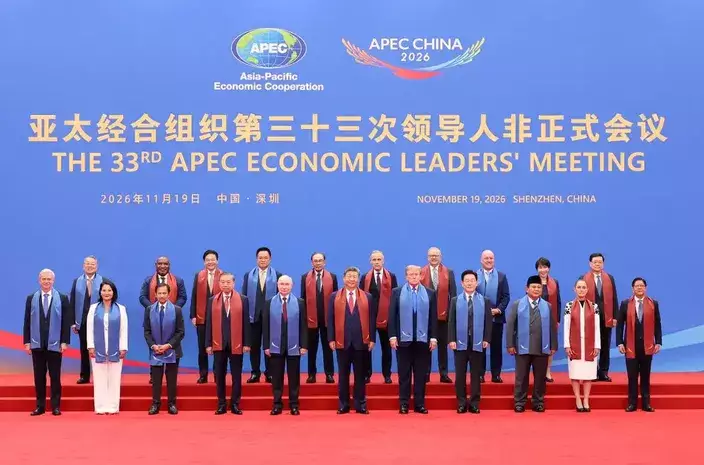
When the 33rd APEC Economic Leaders' Meeting convened in Shenzhen on November 19, the traditional "family photo" quickly went viral across social media. Draped around the necks of leaders and delegates from the participating economies were striking scarves in vibrant red or deep blue. Named Tongxin Hejin ("One Heart, Woven Together"), the piece symbolises unity of purpose and shared prosperity.

The red and blue scarves worn by leaders and representatives during the group photo became the visual focal point of the summit. (Photo/Xinhua)

The red and blue scarves worn by leaders and representatives during the group photo became the visual focal point of the summit. (Photo/Xinhua)

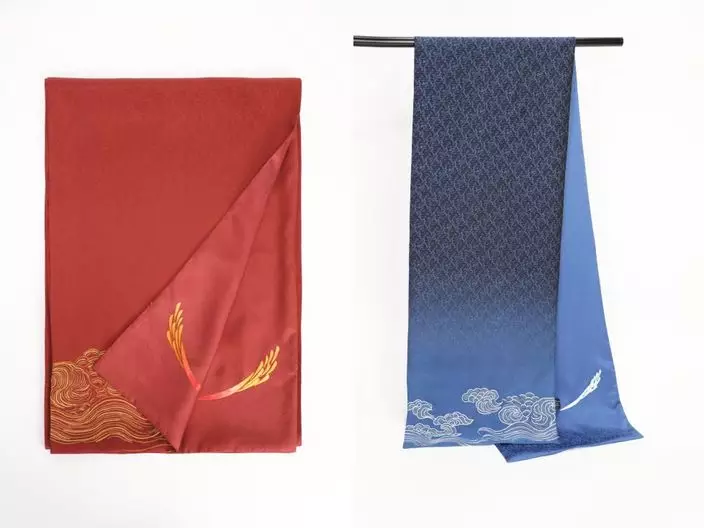
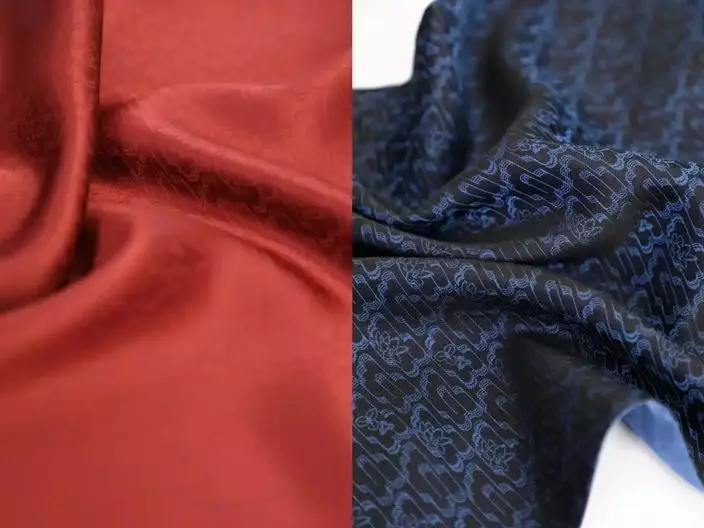
Measuring 180 centimetres long by 32 centimetres wide and woven from 100% mulberry silk, the scarves remarkably bring together four distinct intangible cultural heritage (ICH) crafts: Xiangyunsha (gambiered Canton gauze), Song brocade, Cantonese embroidery, and Suzhou embroidery. The red edition pairs Guangdong's signature Xiangyunsha with Cantonese embroidery, while the blue edition combines Song brocade with Suzhou embroidery.

The APEC "family photo" scarves, "Tongxin Hejin": the red edition pairs Xiangyunsha with Cantonese embroidery, while the blue pairs Song brocade with Suzhou embroidery. (Photo/Shangguan News)

The APEC "family photo" scarves, "Tongxin Hejin": the red edition pairs Xiangyunsha with Cantonese embroidery, while the blue pairs Song brocade with Suzhou embroidery. (Photo/Shangguan News)

Before stepping onto the stage, leaders were seen helping one another adjust their scarves—a moment in which the warmth of the "APEC family" was genuinely palpable. Behind these textiles lies the latest chapter in how China's living heritage is stepping onto the world stage.

Leaders help one another adjust their scarves in the lounge prior to the group photo. (Screenshot/Xinhua)

Leaders help one another adjust their scarves in the lounge prior to the group photo. (Screenshot/Xinhua)

The Weight of "Soft Gold"

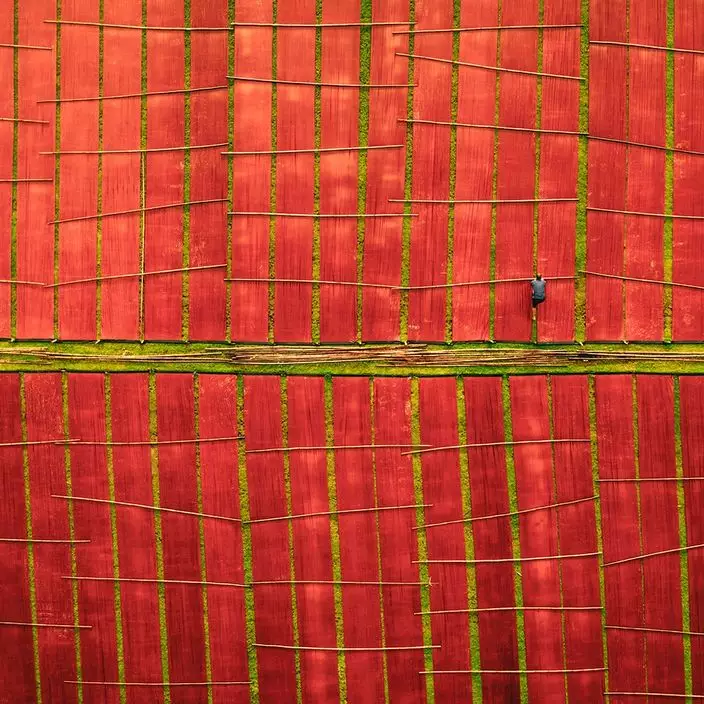
Consider first the red Xiangyunsha. Unique to the Lingnan region, this storied textile starts with a mulberry silk base, which is dyed a rich brownish-red using the juice of the gambier plant and then coated with iron-rich river mud to turn its surface a lustrous, deep black. Crafting it requires "three soaks, nine boils, and eighteen sun-dryings"—over thirty indispensable steps entirely at the mercy of the weather. Even master artisans take half a year to produce a single bolt. Because of its painstaking process and rarity, Xiangyunsha is revered as "soft gold" and was inscribed on China's national intangible cultural heritage list in 2008. This summit also marked the debut of Shunde Xiangyunsha as an official APEC state gift fabric—"following the 2014 Beijing APEC, which thrust Song brocade into the spotlight, this millennium-old gambiered silk has once again taken centre stage globally."

At a drying yard in Shunde, Xiangyunsha is crafted through the traditional process of "three soaks, nine boils, and eighteen sun-dryings." (Photo/Contemporary China)

At a drying yard in Shunde, Xiangyunsha is crafted through the traditional process of "three soaks, nine boils, and eighteen sun-dryings." (Photo/Contemporary China)

The stature of a state gift was matched by an extraordinary feat of craftsmanship and logistics: to meet the summit deadline, artisans used over 5,000 metres of raw silk fabric to yield just 50 finished scarves, compressing a typical 180-day production cycle into 62 days.

Song Brocade, an "Old Acquaintance"

The primary fabric of the blue scarf is Song brocade. Originating in Suzhou, this intricate weave is hailed as the "crown of silks" and was inscribed in 2009 on UNESCO's Representative List of the Intangible Cultural Heritage of Humanity as part of "Sericulture and silk craftsmanship of China." Wu Jianhua, whose workshop supplied the fabric, was also the textile creator behind the celebrated "New Chinese-style attire" worn at the 2014 Beijing APEC—where his team stood out among 768 contenders nationwide and sparked a revival in Song brocade. From the 2014 attire to Tongxin Hejin, the same heritage craft has graced the APEC stage twice. As Wu noted, using the Greater Bay Area as a window allows artisans to "demonstrate the responsibility of a major nation through cultural confidence."

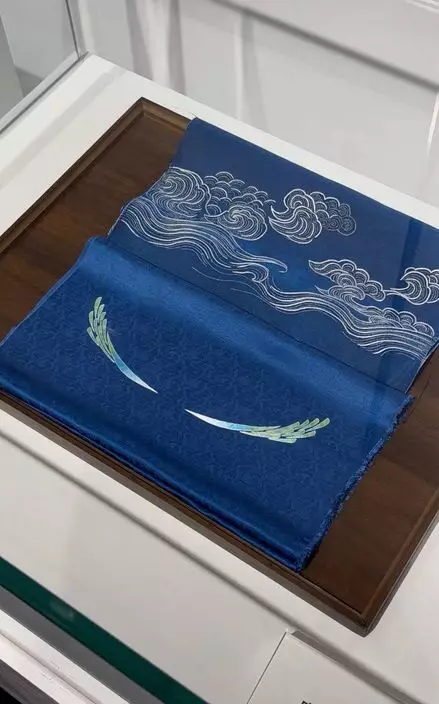
Auspicious cloud and ocean wave motifs woven into the blue scarf. (Photo/Yangtse Evening Post)

Auspicious cloud and ocean wave motifs woven into the blue scarf. (Photo/Yangtse Evening Post)

Every Stitch and Thread Tells a Story

The embroidery gracing the scarves carries equal pedigree: both Suzhou and Cantonese embroidery were among the very first batch of crafts named to China's national ICH list in 2006. Thoughtful design weaves rich storytelling into the fabric—the base motifs blend Lingnan kapok (known as the "hero flower") with Shenzhen's city flower, bougainvillea, while auspicious clouds and rolling waves evoke the historic routes of the Maritime Silk Road. Running through both ends of each scarf are 21 strands of natural wild silk, carrying a clear message: the 21 APEC member economies are tightly bound together. Coarser and less prone to shrinkage, these wild silk threads also serve as a structural anchor to maintain the fabric's dimensional stability—uniting symbolism with practical engineering.

Kapok, bougainvillea, and auspicious clouds intricately woven into "Tongxin Hejin." (Photo/Xinhua)

Kapok, bougainvillea, and auspicious clouds intricately woven into "Tongxin Hejin." (Photo/Xinhua)

From State Gift to Global Stage

The greatest pitfall for traditional heritage going global is remaining locked behind museum glass. The brilliance of this year's APEC showcase lay in making heritage hands-on and tangible: inside the media cultural experience zone, Chinese and international journalists were invited to feel the crisp texture of Xiangyunsha firsthand, with several foreign reporters taking home Xiangyunsha fabric keepsakes as souvenirs. A single scarf wove the lustre of "soft gold," the memory of the Maritime Silk Road, and the unity of 21 economies around the shoulders of world leaders—giving the "Chinamaxxing" of traditional heritage its finest showcase yet.

A Cultural Security Signal Woven in Silk

Interlaced within those 21 silk threads is more than exquisite artistry—it is a quiet statement on resilience. Cultural security forms a vital pillar of the holistic approach to national security: for a heritage craft to become a state gift admired worldwide, its artisanal roots must first be preserved and its cultural voice firmly anchored. From handwoven warmth that industrial looms can never replicate to the renewed convergence of millennium-old Xiangyunsha and Suzhou Song brocade on the international stage, China is blending preservation with innovation to turn cultural agency into confidence for opening up. Security and openness are never at odds: only by safeguarding one's own cultural tapestry can a nation weave a shared future with the world.

Recommended Articles