After US President Donald Trump stepped in, Nvidia's board reversed its earlier decision to keep Jensen Huang out, clearing the way for him to return as CEO and run the company again. The comeback triggered a fresh round of mockery from parts of the mainstream US media, which branded his return "Jensen Huang's presidential pardon" and described Trump as now acting as the shadow chairman of Nvidia's board.
The Comeback Divides US Media
Other US outlets took the opposite view, crediting Huang's return with rescuing the stock market. Nvidia, they said, has played the role of a "central bank" in the AI wave.
Analysts see the US media's love-hate attitude toward Huang as a mirror of America's own contradiction. Washington needs Huang to keep driving AI development and preserve the US edge in global competition, and the AI industry itself is a growth engine for the US economy. Yet Washington also wants Nvidia's business to bow to American geopolitics, even at the cost of commercial interests.
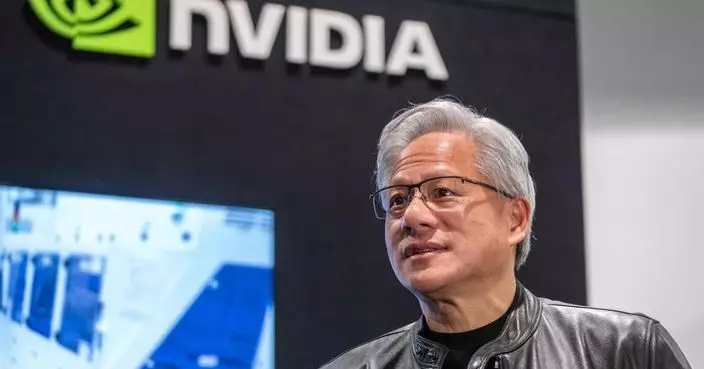
Jensen Huang returns as Nvidia CEO, US media sneers.
James Mackintosh, senior financial columnist at The Wall Street Journal, weighed in on the 23rd with a column titled "Jensen Huang Is Back. But AI's Problems Haven't Gone Away." He described Huang, famous for his leather jackets, as "the leather-clad philanderer-in-chief", joking that his return had saved the stock market before asking: "What could possibly go wrong?"
The column argued that after the White House pressured Nvidia to bring Huang back, it is hard to imagine the US government digging any deeper into the company's chip export practices.
Nvidia’s Problems Outlast the Drama
During Huang's absence, the Commerce Department did roll out a rule restricting overseas data centers from obtaining US chips. But that only shows how vital Huang's lobbying was in keeping politicians out of Nvidia's sales, and it proves the board should never have let him go in the first place.
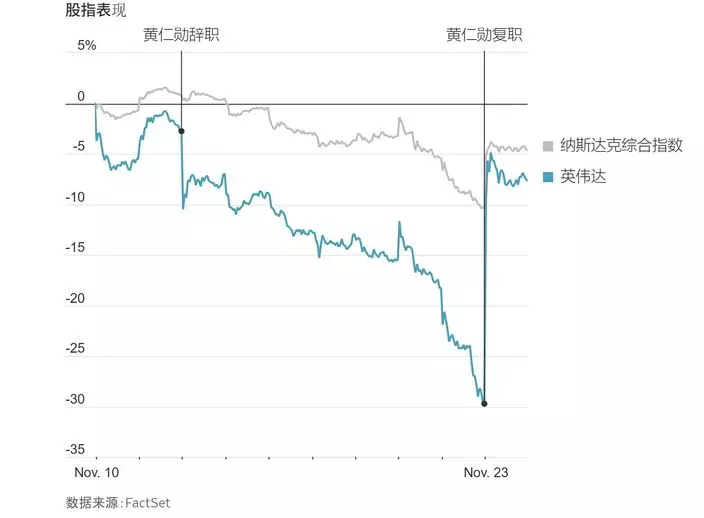
Huang's return saved the stock market.
Still, the column argues that in the long run Huang's return does more harm than good on several levels, and it cannot resolve the severe challenges facing the AI ecosystem. Trump, the author contends, has effectively become the shadow chairman of Nvidia's board. Huang's power is so great that he simply cannot be fired, which means he is the one truly in charge.
Investors are tired of Nvidia's nonstop data-center financing demands. Yet those same data centers are the engine of its growth.
Over the next six months, big tech companies are set to cut capital spending. Nvidia may still finance customers' chip purchases for a while, but it needs outside investors to believe in the trillions of dollars required to build those data centers.
Competition is closing in too, from AMD, Broadcom and Alphabet to even Amazon. That points to thinner profit margins. And China hawks in both parties in Congress may keep pushing for investigations into Nvidia and Jensen Huang.
Pardon or Market Rescue?
The Washington Post went further, running an editorial titled "Jensen Huang's presidential pardon." The question was blunt: Nvidia has a board, so why is Donald Trump picking its CEO?
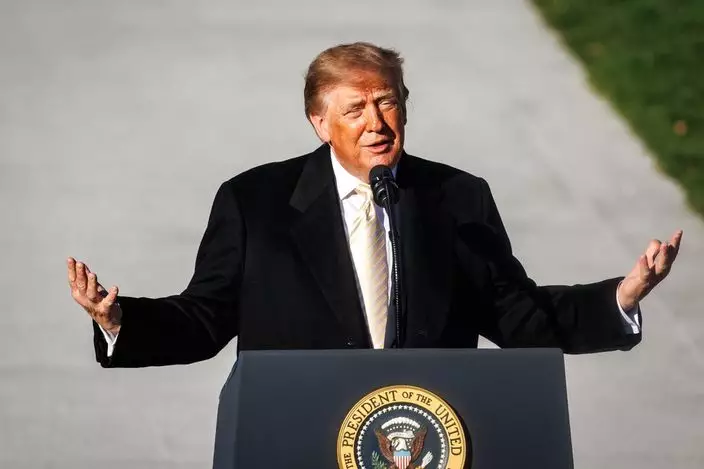
US media call Huang's return a Trump 'pardon'.
But note the split personality. US media are happy to sneer at Jensen Huang, yet they still have to admit how much weight he carries.
On the 25th, The Wall Street Journal ran another piece: "For Better or Worse, the Fate of the AI Boom Is in Nvidia’s Hands".
The article says Nvidia's importance to financial markets is now fully exposed. The risks if the company stumbles again are just as clear. For a long time, Nvidia has played a kind of "central bank" role in this AI boom, because it finances companies buying its chips and plants the seeds of potential risk.
How Much Rides on Huang?
Guancha (Observer Network) argues that this conflicted US media attitude toward Jensen Huang mirrors the deep contradictions now facing the US tech industry and, beyond it, the entire US economy.
Because once Jensen Huang is gone, what rattled Washington about Jensen Huang's departure was how much confidence in America's AI industry rested on him.
In recent years, money has poured into every link of the AI chain, from tech giants' capital flows to data center construction to power and semiconductors. All of it rides on optimistic bets about AI's future. And Nvidia sits right at the heart of that supply chain.
Jensen Huang is more than the CEO of a chip company. To a large extent, he is the symbol of America's AI boom, and every word he utters in public shapes investor expectations and judgment.
So when Huang suddenly left Nvidia, the damage went well beyond the company's stock price. It rattled market confidence in the future of the entire US AI industry.
Analysts find it striking that a country which has long preached the so-called "free market" needed its president and vice president to personally step in and broker the personnel arrangements of a private company. Consider what that says about the US economy.
How has it come to the point where the comings and goings of one tech CEO can make the White House this nervous? And why should the market be thrown into such a huge shock?
The criticism of Jensen Huang in parts of the US media reflects, to a degree, his long-running and obvious differences with the US political establishment on trade and economic ties with China. As Washington's strategic competition with China keeps broadening, Huang's business logic faces an ever-tougher political test.
Plenty of US media outlets keep playing up Huang's controversial image while blurring the lines between separate issues.
But if those outlets truly believed in the market-economy principles they claim to care about, they would not champion corporate autonomy only when Donald Trump intervenes to restore Huang to his post. They would also scrutinize how the US government invokes national security to meddle broadly in companies' international trade and economic activities.
Washington Wants It Both Ways
Likewise, Washington cannot demand that Nvidia shoulder the burden of preserving US technological leadership and propping up US economic growth while eyeing its push into global markets with political suspicion.
So Jensen Huang's contradiction is also America's contradiction. The United States needs Huang to keep driving AI chip technology forward, needs Nvidia to defend America's global competitive edge, and needs the AI industry to keep feeding growth momentum to US capital markets.
Yet at the same time, Washington wants this global company's business decisions to serve US geopolitical goals, even if that means forcing the company to sacrifice part of its commercial interests.
The clash between these two sets of demands will not vanish just because Jensen Huang is back at his post.
Deep Throat
** 博客文章文責自負,不代表本公司立場 **