
Skip to Content Facebook Feature Image

300 Billion Positioning Requests a Day, 30% Ahead of GPS: How China's Satellites Quietly Became the World's New Infrastructure

Blog

300 Billion Positioning Requests a Day, 30% Ahead of GPS: How China's Satellites Quietly Became the World's New Infrastructure
Blog

Blog

300 Billion Positioning Requests a Day, 30% Ahead of GPS: How China's Satellites Quietly Became the World's New Infrastructure

2026-11-28 10:35 Last Updated At:19:03

Even without a single bar of mobile signal, your phone can still place a call—not by magic, but via the direct-to-satellite calling feature built into Huawei's Mate series. Across Africa, anchored by the Horn of Africa, more than 30 countries have built BeiDou augmentation stations; several nations have adopted BeiDou as their primary navigation system, and some ports have phased out GPS altogether.

This represents the highest and farthest frontier of "Chinamaxxing": three "networks in the sky"—satellite reconnaissance, navigation, and communications—are emerging as foundational pillars for socio-economic life and national defence. Increasingly, observers around the world are realising that the central nodes of these networks bear China's name.

More Images
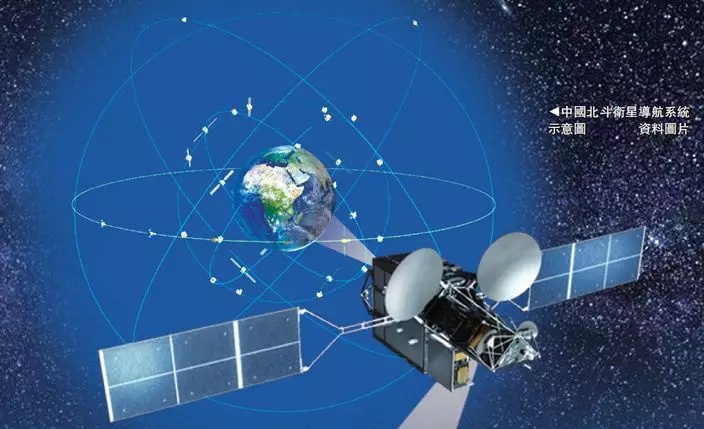
Schematic diagram of the BeiDou Navigation Satellite System. (File image)
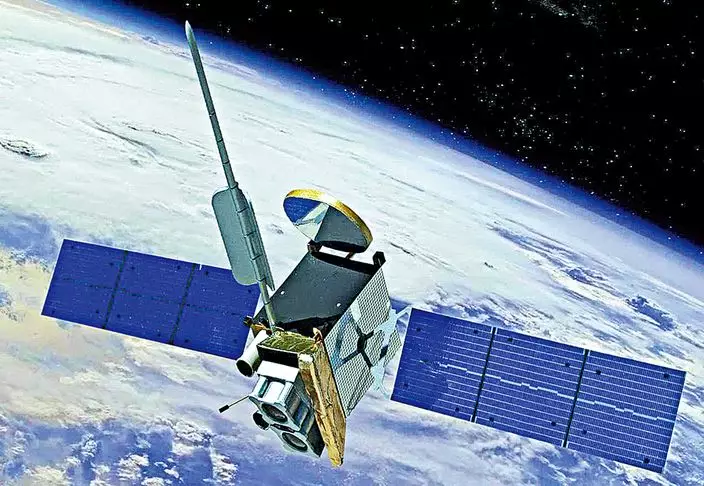
Schematic diagram of the BeiDou Navigation Satellite System. (File image)

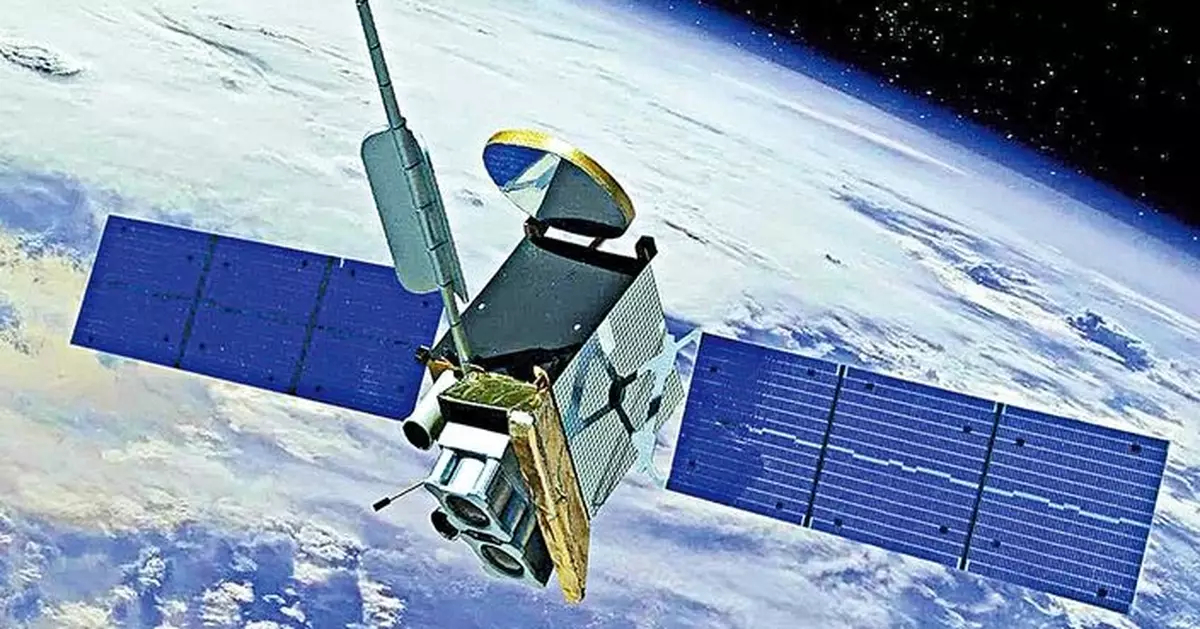
Schematic diagram of BeiDou satellites in orbit. (File image)
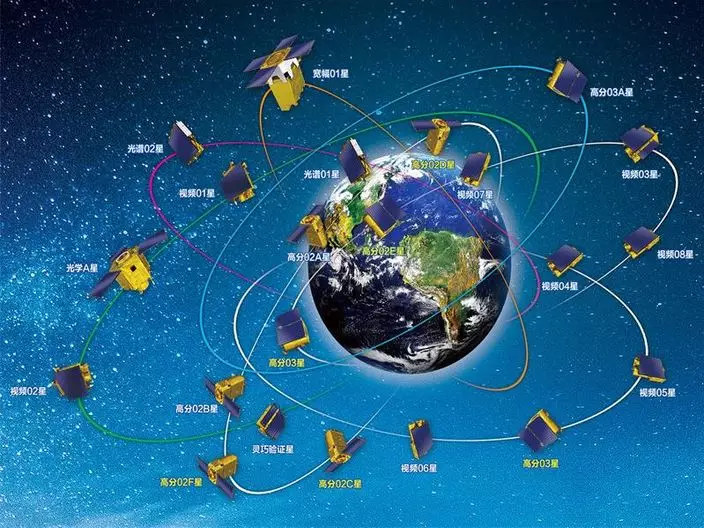
Schematic diagram of BeiDou satellites in orbit. (File image)

The "Jilin-1" commercial remote-sensing satellite constellation. (Image source: HuijiWiki)
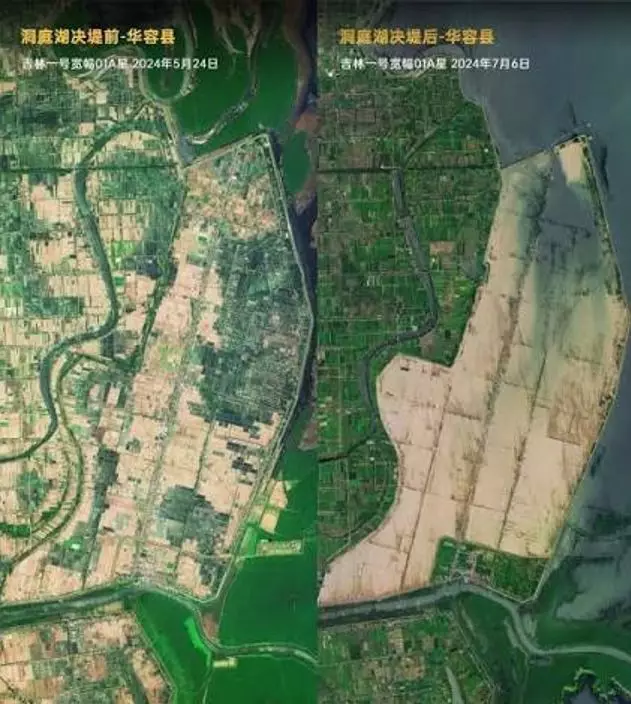
The "Jilin-1" commercial remote-sensing satellite constellation. (Image source: HuijiWiki)

Before-and-after satellite imagery from "Jilin-1" capturing the Dongting Lake dyke breach to support flood relief operations. (Image source: Guangming Online)
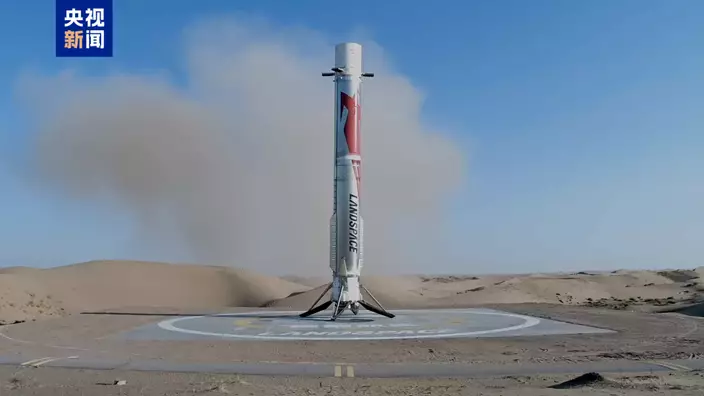
Before-and-after satellite imagery from "Jilin-1" capturing the Dongting Lake dyke breach to support flood relief operations. (Image source: Guangming Online)

LandSpace's Zhuque-3 rocket stands upright on its landing legs following a controlled vertical touchdown. (Image source: CCTV News)

LandSpace's Zhuque-3 rocket stands upright on its landing legs following a controlled vertical touchdown. (Image source: CCTV News)

BeiDou: The "Chinese Spacetime" Powering 1.4 Billion Smartphones

The numbers tell a compelling story. According to the 2026 China BeiDou Spatiotemporal Industry Development White Paper, by the end of 2025, nearly 1.4 billion smartphones in China—roughly 98% of the total—supported BeiDou positioning. More than 160 million wearable devices and over 100 million passenger vehicles were equipped with BeiDou navigation terminals. Globally, BeiDou services and related products have been exported to over 140 countries and regions, commanding a 58% market share across Belt and Road partner nations.

Schematic diagram of the BeiDou Navigation Satellite System. (File image)

Schematic diagram of the BeiDou Navigation Satellite System. (File image)

In 2025, the total output value of China's BeiDou spatiotemporal industry reached RMB 1.33 trillion. The 2026 China BeiDou Industry Development Index Report, released on November 17, 2026, further revealed that active BeiDou terminals in China (excluding consumer electronics) approached 42 million units—up roughly 27% year-on-year—with overall application penetration exceeding 90%. Alibaba's navigation app Amap now processes over 300 billion daily positioning requests via BeiDou, outpacing runner-up GPS by more than 30% to establish clear dominance over Chinese skies. Meanwhile, over 10 million users rely on BeiDou's short-message communication service, while power grid crews in Tacheng, Xinjiang, pair BeiDou positioning with drones to inspect high-voltage transmission lines.

Schematic diagram of BeiDou satellites in orbit. (File image)

Schematic diagram of BeiDou satellites in orbit. (File image)

Even more consequential is the underlying security: 100% of core components aboard BeiDou-3 satellites are domestically produced, and the system has been fully incorporated into the technical standards of 11 international organisations covering civil aviation, maritime transport, and mobile communications—placing this critical "spatiotemporal lifeline" firmly in China's own hands.

"Jilin-1": A Commercial Eye Overlooking the Globe from Orbit

Beyond navigation lies reconnaissance-grade remote sensing. Through 30 consecutive successful launches, Chang Guang Satellite Technology has deployed 161 satellites into orbit, creating the world's largest commercial remote-sensing constellation—Jilin-1. Data from mid-2026 shows the constellation can revisit any point on Earth 38 to 40 times a day, with a satellite passing over a target every 35 to 40 minutes on average. In emergencies, turnaround time from tasking to image delivery can be as fast as 15 minutes.

The "Jilin-1" commercial remote-sensing satellite constellation. (Image source: HuijiWiki)

The "Jilin-1" commercial remote-sensing satellite constellation. (Image source: HuijiWiki)

The applications of this "commercial eye" are remarkably down-to-earth: land surveying, crop yield forecasting, disaster early warning, and urban governance. In agriculture, it monitors fields to track crop growth, estimate harvests, and detect pests and diseases—acting as "eyes in the sky" for farmers. In disaster response, following a 7.0-magnitude earthquake in Baqing County, Nagqu, Tibet, earlier this month, six Jilin-1 satellites conducted eight relay imaging passes to help rescue teams rapidly assess landslides and structural damage. In urban management, environmental enforcement officers in Jingyuan, Gansu, use satellite imagery to spot illegal waste dumps, unauthorised sewage discharge, and construction dust. Even academia benefits, with imagery provided free of charge to university researchers in South Korea and elsewhere. From farmland to disaster zones, and from municipal governance to university labs, satellite imagery is becoming part of everyday life.

Before-and-after satellite imagery from "Jilin-1" capturing the Dongting Lake dyke breach to support flood relief operations. (Image source: Guangming Online)

Before-and-after satellite imagery from "Jilin-1" capturing the Dongting Lake dyke breach to support flood relief operations. (Image source: Guangming Online)

Meanwhile, in the global race for orbital slots and radio frequencies—governed by a "first-come, first-served" rule—China has filed applications with the International Telecommunication Union (ITU) for a combined 203,000 low-Earth-orbit (LEO) satellites, securing vital strategic real estate in space.

Communications Constellations and Reusable Rockets: Reaching the Cost Inflection Point

The third orbital network is satellite internet. China's three mega-constellations—Qianfan (planned at 15,000 satellites), China SatNet (13,000), and Honghu-3 (10,000)—entered intensive deployment in 2026, with more than 1,000 satellites scheduled to enter orbit within the year.

The true industry inflection point arrived on August 19 this year, when private launch firm LandSpace successfully executed a controlled land recovery using deployable landing legs on its Zhuque-3 Y2 rocket—following the Long March 10B's sea-based net recovery in July as another milestone in China's reusable launch capabilities. With the "liquid oxygen-methane propellant + stainless-steel airframe + vertical landing" architecture now proven in flight, industry analysts estimate launch costs will fall sharply from roughly RMB 60,000–80,000 per kilogram toward SpaceX's reusable benchmarks.

LandSpace's Zhuque-3 rocket stands upright on its landing legs following a controlled vertical touchdown. (Image source: CCTV News)

LandSpace's Zhuque-3 rocket stands upright on its landing legs following a controlled vertical touchdown. (Image source: CCTV News)

China's commercial space sector has expanded rapidly in tandem: market size reached RMB 2.83 trillion in 2025, up 21.7% year-on-year, with commercial missions accounting for 50 of China's 92 orbital launches that year—surpassing half of the national total for the first time in history. By 2026, the sector is projected to reach RMB 3.5 trillion.

From BeiDou navigation and remote-sensing constellations to satellite broadband, China is transforming outer space from an arena of great-power rivalry into essential public utilities powering modern society—navigation governs the efficiency of logistics and transport, remote sensing safeguards agricultural and disaster-response baselines, and satellite communications define the frontiers of information sovereignty. Together, they form a multi-dimensional architecture of national security: in peacetime, they underpin daily life for 1.4 billion people; in times of crisis, they serve as strategic insurance preventing critical chokepoints in defence and economic activity. With over 140 countries now utilising China's spatiotemporal services and BeiDou holding nearly a 60% share across Belt and Road markets, the moment a nation's satellites begin guiding ships around the world, that trust itself becomes soft power backed by unmistakable hard capability.


Chinamaxxing

** 博客文章文責自負,不代表本公司立場 **
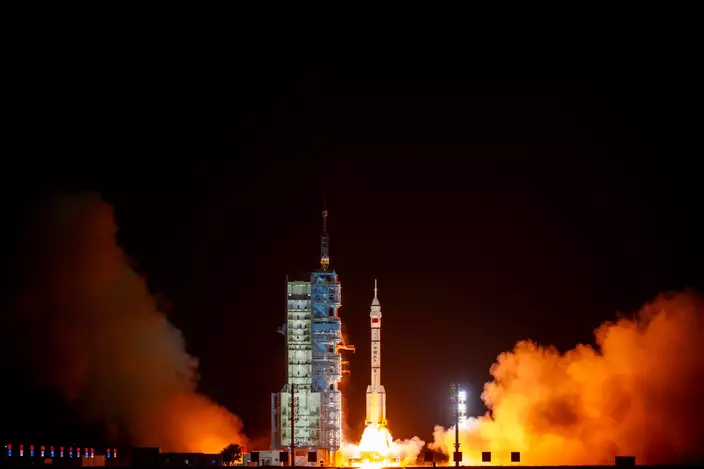
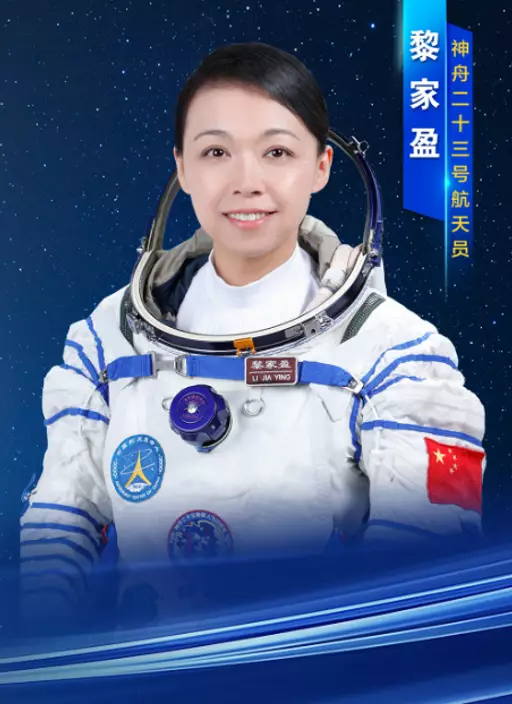
On May 24, 2026, the Shenzhou-23 crewed spacecraft lifted off into orbit, carrying a name that filled Hong Kong with particular pride: payload specialist Lai Ka-ying, the first astronaut from Hong Kong to enter the Tiangong space station. During her stay aboard, she also helped assemble and operate Hong Kong's first scientific payload on the station, the "Tianyun Camera."

On May 24, 2026, a Long March 2F carrier rocket carrying the Shenzhou-23 crewed spacecraft blasts off from Jiuquan. (Photo/People's Daily Online)

On May 24, 2026, a Long March 2F carrier rocket carrying the Shenzhou-23 crewed spacecraft blasts off from Jiuquan. (Photo/People's Daily Online)

Payload specialist Lai Ka-ying is the first astronaut from Hong Kong to enter the Tiangong space station. (Photo/CCTV News)

Payload specialist Lai Ka-ying is the first astronaut from Hong Kong to enter the Tiangong space station. (Photo/CCTV News)

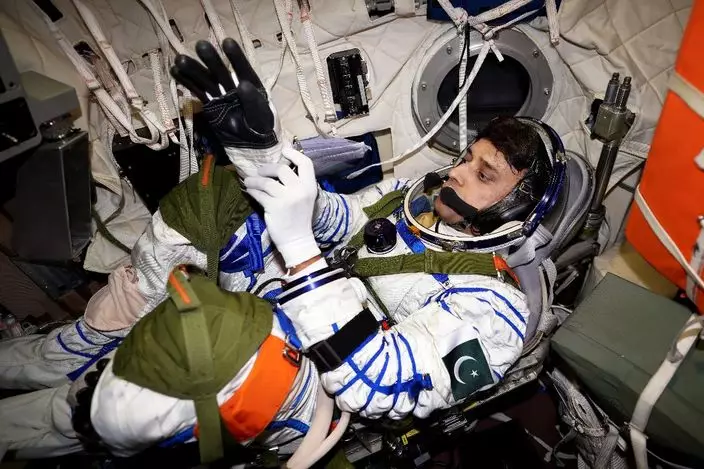
Meanwhile, at Beijing Aerospace City, Pakistani Air Force pilot Muhammad Zeeshan Ali was pushing through rounds of rigorous selection and gruelling training—from intensive Mandarin lessons to high-G centrifuge simulations—until his dream finally became reality. On November 24, his name was officially unveiled on the Shenzhou-24 crew roster; the following day, he launched aboard the spacecraft toward Tiangong, becoming the first foreign astronaut to enter China's space station. With a Hong Kong specialist already aboard and a Pakistani pilot carrying the baton into orbit, different paths are converging on the same destination—a vivid embodiment of "Chinamaxxing" in space exploration.

Pakistani Air Force pilot Muhammad Zeeshan Ali becomes the first foreign astronaut to enter China's space station. (Photo/China Youth Daily)

Pakistani Air Force pilot Muhammad Zeeshan Ali becomes the first foreign astronaut to enter China's space station. (Photo/China Youth Daily)

Tiangong's Expanding Circle of Global Partners

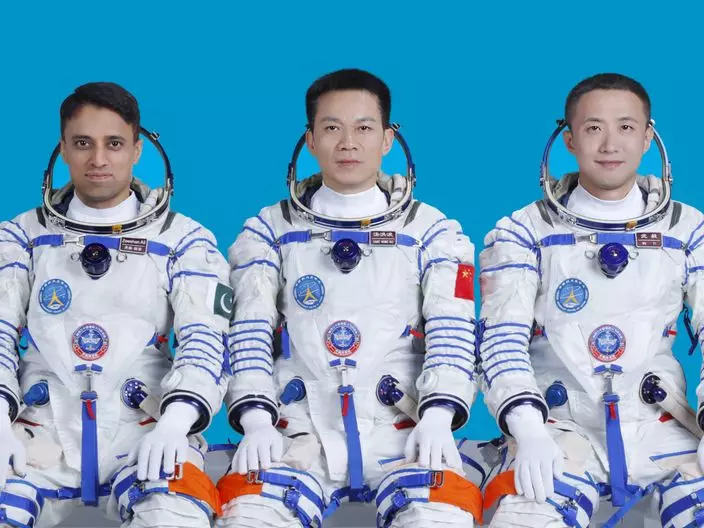
At a press conference held at the Jiuquan Satellite Launch Centre on November 24, 2026, the Shenzhou-24 flight crew made their official debut: mission commander Tang Hongbo, astronaut Wu Yi, and Pakistani payload specialist Muhammad Zeeshan Ali. The mission marks the first joint flight by Chinese and foreign astronauts in the history of China's crewed space programme, as Tiangong welcomes its first international visitor. Launching early on the morning of November 25, Ali will spend roughly a week in orbit conducting experiments before returning to Earth aboard Shenzhou-23.

The Shenzhou-24 astronaut crew comprises Tang Hongbo (centre), Wu Yi (right), and Pakistani astronaut Muhammad Zeeshan Ali (left). (Photo/Xinhua)

The Shenzhou-24 astronaut crew comprises Tang Hongbo (centre), Wu Yi (right), and Pakistani astronaut Muhammad Zeeshan Ali (left). (Photo/Xinhua)

The journey was hard-earned. Ali and his fellow Air Force pilot Khurram Daud emerged from a pool of roughly 20 candidates before undergoing intensive training in Beijing on spacecraft systems, microgravity adaptation, and Mandarin—essential given that Tiangong's operating interfaces, cabin signage, and ground control voice commands are all in Chinese. For this mission, ground teams prepared bilingual operation manuals in both Chinese and English, alongside customised halal space rations tailored to the foreign astronaut's dietary requirements.

Ali maintained an intensive Chinese study schedule before and during his training in Beijing. (Photo/China News Service)

Ali maintained an intensive Chinese study schedule before and during his training in Beijing. (Photo/China News Service)

The milestone sparked nationwide celebration across Pakistan. On November 24, Pakistan's Dawn newspaper quoted Ali as saying, "Thank you very much to the Chinese government for helping us realise our dream of flying into space," under a headline noting that he "carries the hopes of 250 million people." Pakistan's Minister for Planning, Development and Special Initiatives Ahsan Iqbal wrote on X that "this is a matter of pride for me personally and for the entire Pakistani nation," while Minister for Information and Broadcasting Attaullah Tarar said the astronaut's imminent arrival in space "fills the whole nation with excitement and pride."

International fascination with China's space achievements has been building for years. Back in October 2022, European Space Agency astronaut Samantha Cristoforetti shared photos of Beijing taken from the International Space Station, captioning them with a classical line from Wang Xizhi's Preface to the Poems Collected from the Orchid Pavilion. The post drew praise from China's Foreign Ministry spokesperson and prompted netizens to joke that her Mandarin was already "good enough to apply for a spot on China's space station." In 2024, China's Chang'e-6 lunar probe carried international payloads from France, Italy, Sweden, and Pakistan to the far side of the Moon. From hitching a ride on Chinese probes to learning Mandarin to board Tiangong, space-themed Chinamaxxing continues to reach new heights.

The More Blockaded, the Stronger

Ironically, the growing international enthusiasm surrounding Tiangong today is rooted in years of external exclusion. In 2011, the US Congress passed the "Wolf Amendment," barring NASA from any bilateral space cooperation with China, while China was effectively shut out of the International Space Station programme. Yet rather than stalling China's ambitions, those barriers catalysed a wave of independent breakthroughs: the global BeiDou satellite navigation system was completed and opened to the world; the Tiangong space station was built and entered continuous crewed operation; Tianwen-1 achieved orbiting, landing, and roving on Mars in a single mission; and Chang'e-6 returned the world's first samples from the far side of the Moon.

Former NASA Administrator Charles Bolden once stated bluntly: "If the purpose [of the amendment] was to slow down or stop China's space program, it simply hasn't done that." Analysts at the Washington-based Center for Strategic and International Studies likewise acknowledged that exclusion from US-led missions "did not discourage the Chinese; on the contrary, it pushed China to formulate and carry out its own space program." Sanctions ultimately forged a self-reliant aerospace ecosystem—one whose reliability has been proven under real-world pressure.

Proven Capability: Real-World Resilience Over Speculation

On November 5, 2025, after the Shenzhou-20 spacecraft sustained suspected micrometeoroid or space debris impact damage that left hairline cracks in a viewport, China's crewed space agency immediately activated a 16-day emergency launch protocol. A Long March 2F rocket and the Shenzhou-22 spacecraft were rapidly prepared for liftoff, completing the first emergency launch in the history of China's crewed space programme on November 25 and docking with the station just three and a half hours later to deliver vital supplies. The Shenzhou-21 crew subsequently remained in orbit for more than 200 days, setting a new national endurance record for a single crewed mission.

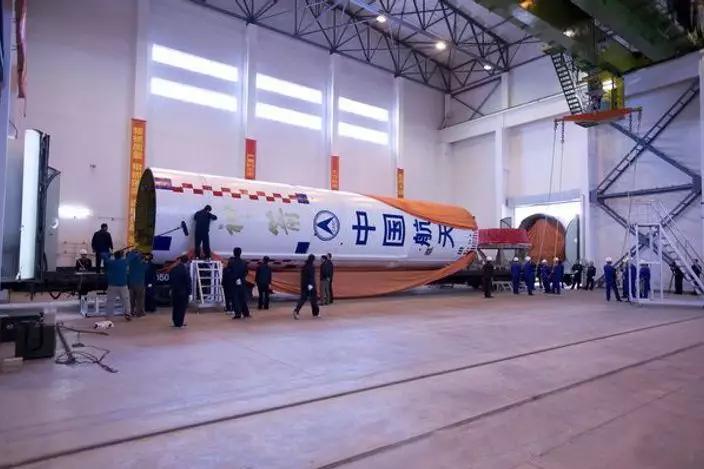
A Long March 2F carrier rocket arrives at the Jiuquan Satellite Launch Centre. (Photo/China National Space Administration)

A Long March 2F carrier rocket arrives at the Jiuquan Satellite Launch Centre. (Photo/China National Space Administration)

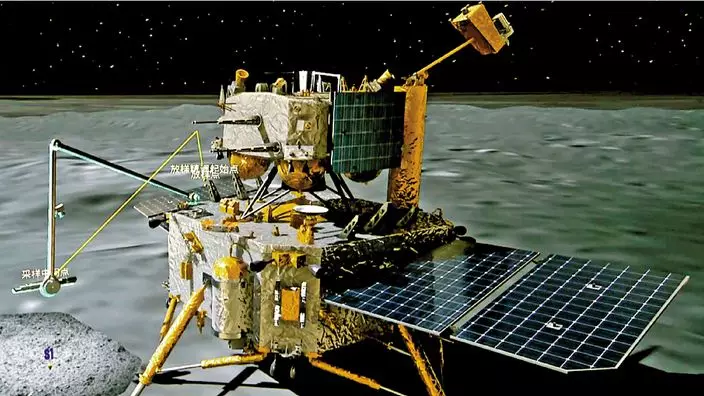
In deep-space exploration, Chang'e-6 has already returned 1,935.3 grams of lunar samples from the Moon's far side. While Chang'e-7—originally slated for August 2026 to hunt for water ice at the lunar south pole—has had its launch window shifted to 2027 in adherence to a strict "safety-first, zero-error" principle, its mission design featuring a hopping probe to explore permanently shadowed craters remains a world first. Meanwhile, Tianwen-2 is already underway on a nearly decade-long asteroid sample-return expedition.

Chang'e-6 successfully completes intelligent rapid sampling on the far side of the Moon. (Photo/Ta Kung Wen Wei Net)

Chang'e-6 successfully completes intelligent rapid sampling on the far side of the Moon. (Photo/Ta Kung Wen Wei Net)

Space Capability Is Also Space Security

As the Shenzhou-20 viewport incident underscores, outer space is far from a tranquil sanctuary—orbital debris hazards and competition over frequency and orbital resources have become pressing security realities. China's ability to execute a crewed emergency launch within twenty days rests on an independent tracking, telemetry, and command (TT&C) network, a rapid-response architecture, and a complete industrial supply chain. This is precisely what underpins "space security" within the holistic approach to national security: safeguarding development through security capabilities, reinforcing security through technological advancement, and advancing both in tandem.

Recommended Articles