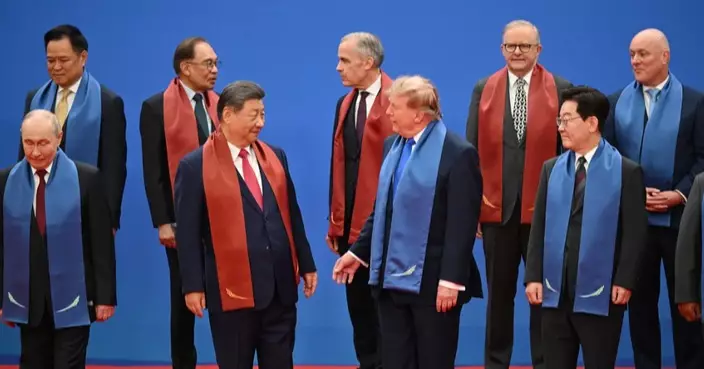

Even after returning to the United States, President Donald Trump couldn't stop talking about his meal in Shenzhen. At a dinner in Virginia on the evening of November 22, he showed guests photos from his trip and, when asked about his favourite Chinese dish, remarked: "I think I like Chinese food. You know, in Shenzhen I had great Chinese food—I don't know what it's called, but it was really delicious." He then added one memorable detail: "With the beautiful hat."
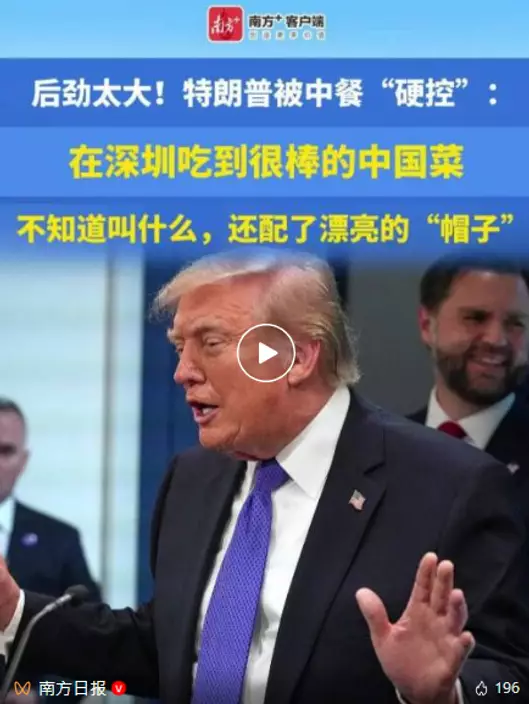
At a dinner in Virginia, Trump raves to guests about a delicious Chinese dish served "with a beautiful hat." (Photo/Nanfang Daily)
That offhand remark immediately sparked an internet-wide guessing game. Netizens combed through the evening's menu and analysed food plating designs, with some even joking that humble street-side Longjiang pork trotter rice might be the "mystery hat dish." According to Hong Kong media reports, the November 18 APEC welcome banquet opened with a cold platter titled "Pengcheng," followed by double-boiled fish maw soup with green olives, ginger-and-scallion stir-fried lobster, steamed grouper in superior soy sauce, a trio of Cantonese dim sum, and sweet red bean soup with aged tangerine peel and lotus seeds. On the wine list was a regional specialty: Guangdong lychee ice wine. Once the menu went public, online sales of the lychee ice wine surged more than 900-fold, with one storefront logging 5,000 orders in just two hours and forcing producers to rush out emergency restocks.
Click to Gallery
At a dinner in Virginia, Trump raves to guests about a delicious Chinese dish served "with a beautiful hat." (Photo/Nanfang Daily)
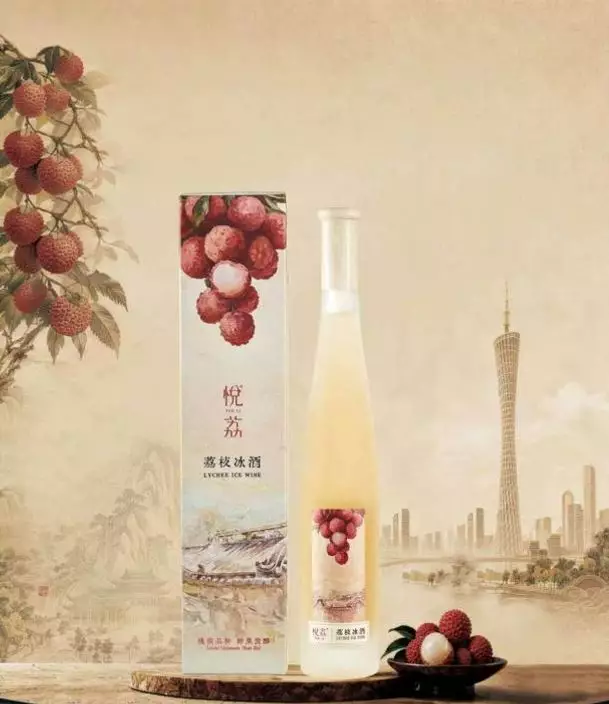
Online sales of Guangdong lychee ice wine saw explosive growth following the release of the banquet menu. (File photo)
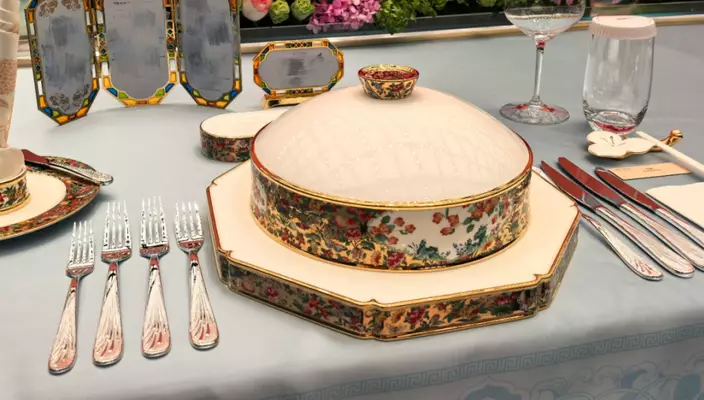
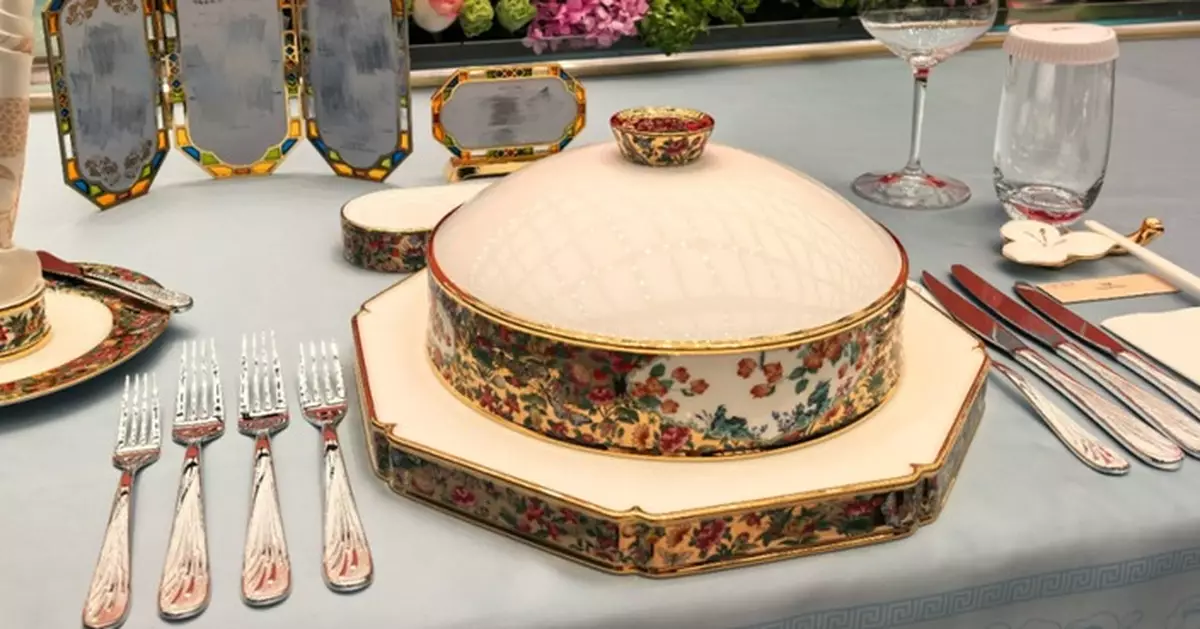
The ornate, hat-shaped porcelain cloche placed on the banquet table likely left a lasting visual impression on Trump. (Photo/Tencent)
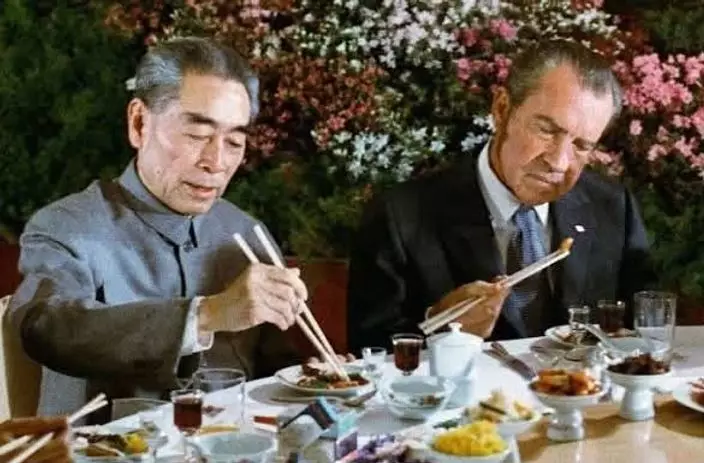
Premier Zhou Enlai and President Richard Nixon use chopsticks together at the Great Hall of the People state banquet on February 21, 1972. (Photo/People's Daily Online)
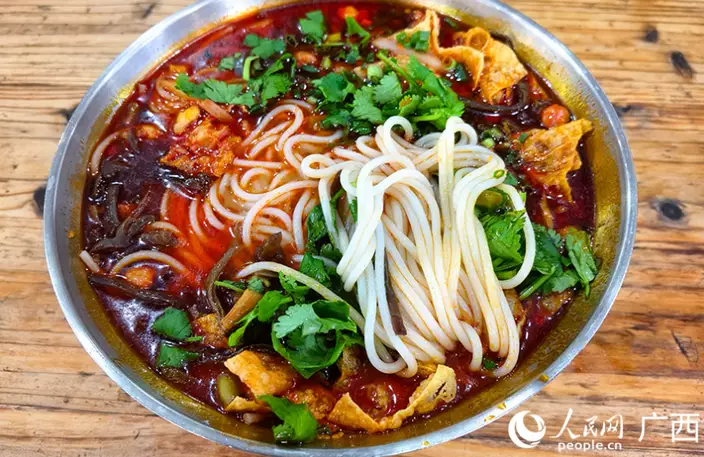
Liuzhou luosifen, a pungent rice noodle specialty that originated on the streets of Guangxi. (Photo/People's Daily Online)
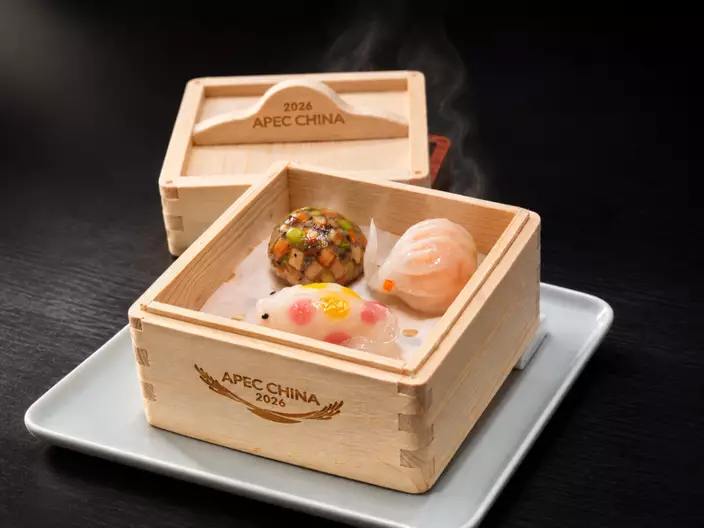
The Cantonese dim sum served at the APEC welcome banquet reflects flavours deeply familiar to Hong Kong diners. (Photo/Tencent)
Online sales of Guangdong lychee ice wine saw explosive growth following the release of the banquet menu. (File photo)
Wu Xiaoliang, a veteran food journalist at Guangdong TV who took part in designing the state banquet menu, offered the most plausible explanation: the dish that lingered in Trump's memory was almost certainly the pre-set "Pengcheng" welcome cold platter, crowned with a bespoke, hat-shaped porcelain cover. The platter paired savoury meats and crisp vegetables—including crispy-skin roast goose and gourd-shaped foie gras—showcasing classic Lingnan cold delicacies, while the "beautiful hat" was the locally crafted Guangdong porcelain cloche. Ultimately, though, the exact answer hardly matters: a vivid impression left by unforgettable flavour is the finest publicity any cuisine could ask for.
The ornate, hat-shaped porcelain cloche placed on the banquet table likely left a lasting visual impression on Trump. (Photo/Tencent)
Chopsticks Half a Century Ago
Intriguingly, this culinary moment echoes another historic dinner more than half a century ago. Ahead of his landmark February 1972 "ice-breaking" visit to China, US President Richard Nixon diligently practised using chopsticks. On the evening of February 21, Premier Zhou Enlai hosted a state banquet in the Great Hall of the People. According to records in the People's Daily Overseas Edition, the 59-table banquet featured a classic "four dishes and one soup" format—cold appetisers, velvet bamboo shoot soup, braised shark's fin with three julienned delicacies, prawns prepared two ways, straw mushrooms with mustard greens, and coconut-steamed chicken—accompanied by pastries including almond cream, pea flour cake, and crispy spring rolls. During the toast, Zhou struck a match and ignited the Moutai in his glass, sending blue flames dancing across the rim to the amazement of the entire hall.
A week later, on February 28, the historic Sino-US Shanghai Communiqué was issued. According to historians of the Chinese diaspora in North America, menus at Chinese restaurants across the US and Canada prior to 1972 had long been dominated by Cantonese-American staples such as chop suey, chow mein, and egg rolls. Televised footage of Nixon deftly wielding chopsticks at the state banquet ignited nationwide curiosity about authentic regional Chinese cooking—catapulting Peking duck, moo shu pork, and fiery Sichuan dishes into the mainstream. Business surged, menus diversified, and restaurants across North America rushed to advertise "Beijing Presidential Banquets," promising diners "the exact same meal President Nixon and Premier Zhou Enlai shared on television." One dinner had redrawn the culinary map of Chinese food overseas.
Premier Zhou Enlai and President Richard Nixon use chopsticks together at the Great Hall of the People state banquet on February 21, 1972. (Photo/People's Daily Online)
From the "Chop Suey Era" to the "Age of Authenticity"
Fifty-four years on, Chinese cuisine no longer needs presidential endorsements to draw a crowd. According to the World Federation of Chinese Catering Industry, there are now more than 600,000 Chinese restaurants worldwide. On France's prestigious LA LISTE ranking of the world's top 1,000 restaurants, 143 Chinese establishments made the cut—ranking second globally.
Even more telling is the evolution in flavour: overseas Chinese dining has shifted decisively from Westernised adaptations toward true regional authenticity, expanding well beyond familiar comfort dishes like yuxiang shredded pork and mapo tofu to encompass all Eight Great Culinary Traditions of China.
In this new wave, even Liuzhou luosifen—famous for its pungent, fermented bamboo shoot aroma—has conquered international palates. Exports of Liuzhou luosifen soared from RMB 833,000 in 2018 to RMB 87.27 million in 2023, a 104-fold jump in five years, reaching dozens of markets including the US, UK, Canada, and Australia, and even lighting up billboards in New York's Times Square. One entrepreneur born in the 1980s set up a luosifen stall in the United States, opening for just four hours a day yet selling out a hundred bowls daily. As international fans fondly put it: "With luosifen, you either never try it—or you're hooked for life."
Liuzhou luosifen, a pungent rice noodle specialty that originated on the streets of Guangxi. (Photo/People's Daily Online)
Flavours Close to Hong Kong's Heart
For readers in Hong Kong, the Shenzhen APEC menu feels remarkably familiar: double-boiled fish maw, steamed grouper, Cantonese dim sum, and tangerine-peel red bean soup together form the blueprint of a classic Lingnan banquet. More than a century ago, it was Cantonese cooking that first crossed the oceans alongside Chinese migrants, laying the foundation for how the world came to know Chinese food. In a sense, the Shenzhen state banquet brought Cantonese cuisine full circle—from humble hometown fare in overseas Chinatowns to a premier calling card on the diplomatic stage. Next time Hong Kong diners sit down for yum cha, they might smile at the thought that the pot of tea and dim sum baskets on their table share the very same lineage as Trump's "beautiful hat."
The Cantonese dim sum served at the APEC welcome banquet reflects flavours deeply familiar to Hong Kong diners. (Photo/Tencent)
Cultural Security on the Tip of the Tongue
From Nixon's chopsticks to Trump's "beautiful hat," Chinese cuisine has achieved far more than winning over international palates—it has carried out a sustained, organic cultural outreach, proving that the softest expressions of heritage often carry the greatest power. Beneath this global culinary wave lies a clear logic of cultural security: having a voice in defining flavour, setting food quality standards, and shaping culinary narratives are all vital components of national soft power. By safeguarding authenticity and food safety while telling the story behind every dish, culinary clout truly translates into enduring national strength.
Chinamaxxing
** 博客文章文責自負,不代表本公司立場 **