China's domestic film projection system has achieved technological upgrade and broken the monopoly of foreign companies in this field, not only expanding the domestic market, but also reaching out to the international market.
The country's independently developed HeyLED screen is 10 meters wide and comprises over 110 cabinets and more than 2.3 million LED pixels to form a small unit that emits independently, covering the entire light-emitting surface.
"Its brightness can reach five to 10 times that of traditional projectors. In terms of contrast ratio, regular films typically have a contrast ratio of about 300:1, but the LED screen can achieve 30,000:1 or higher, resulting in pure black in dark areas and exceptionally bright in bright areas. The details in both bright and dark parts of the movie are showed more accurately," said Chen Weijun, general manager of Shenzhen Timewaying Technology Co., Ltd.
So far, HeyLED screens are not only widely used in cinemas across major cities in China, but are also exported to countries such as the United States, the United Arab Emirates (UAE), Romania, and others.
There are a total of 18 production companies globally that have received DCI certification for LED movie screens, with 13 of them being Chinese enterprises.
In addition to making continuous breakthroughs in independently developed projection technology, China has recently officially released the first ISO film standard, led by the China Research Institute of Film Science and Technology.
"There is a unified international standard. The technical requirements and test methods for digital cinema stereoscopic projection are the first global industry technical standard led by China. It has won the leading position for domestic film equipment to enter the international market and participate in international competition," said Dong Qiangguo, deputy director of the institute.
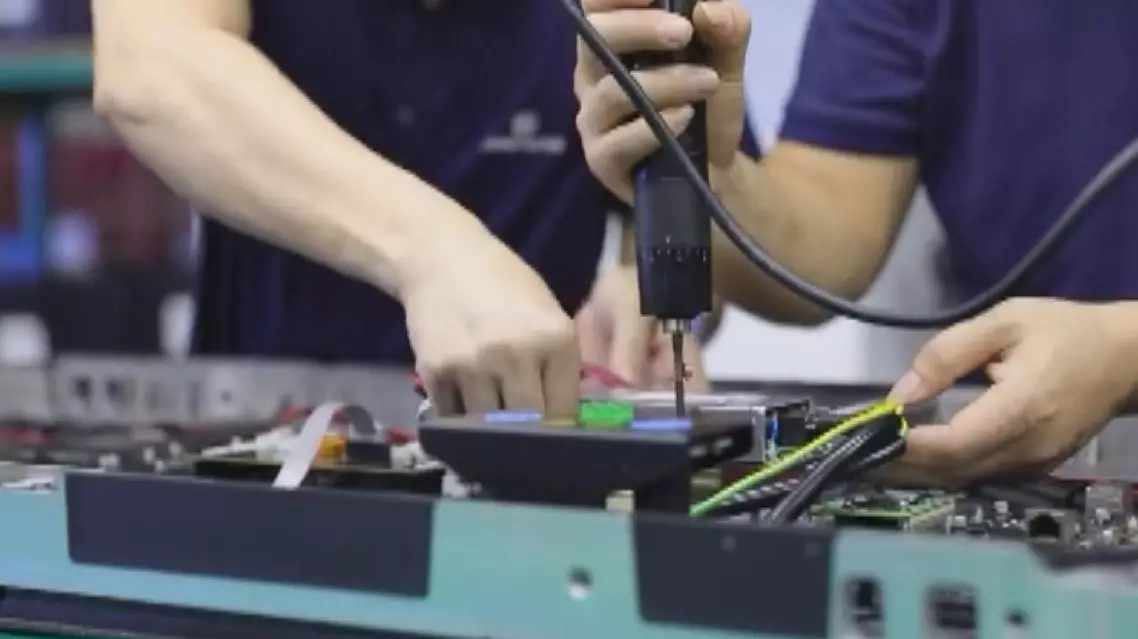
China's self-developed film projection system achieves technological upgrade, goes overseas
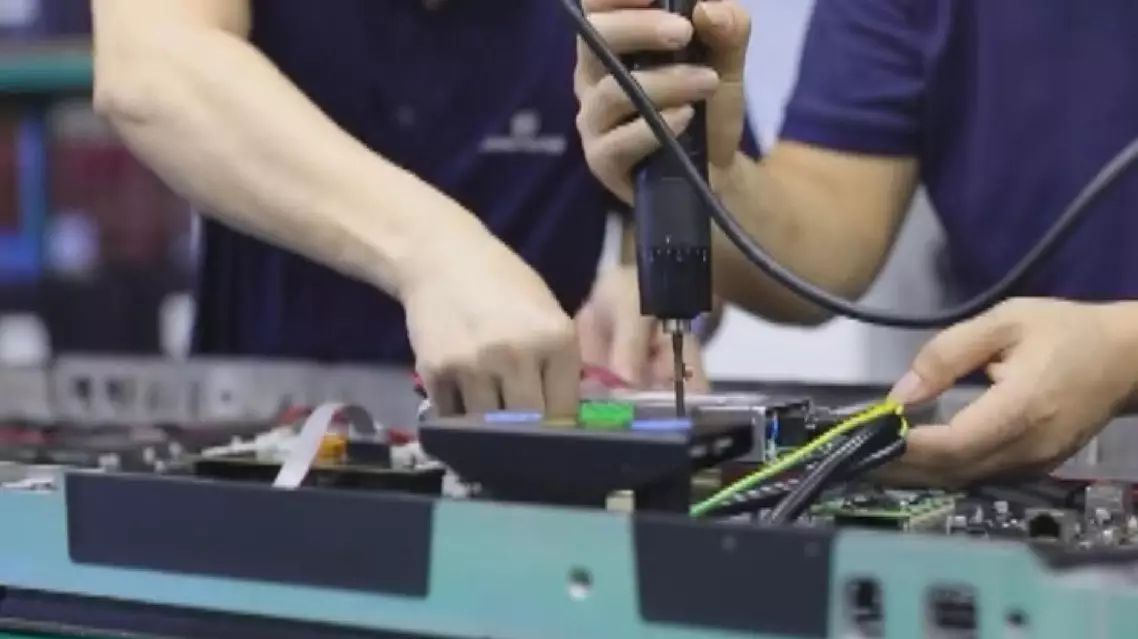
China's independently-developed film projection system achieves technological upgrade, reaching out to int'l market