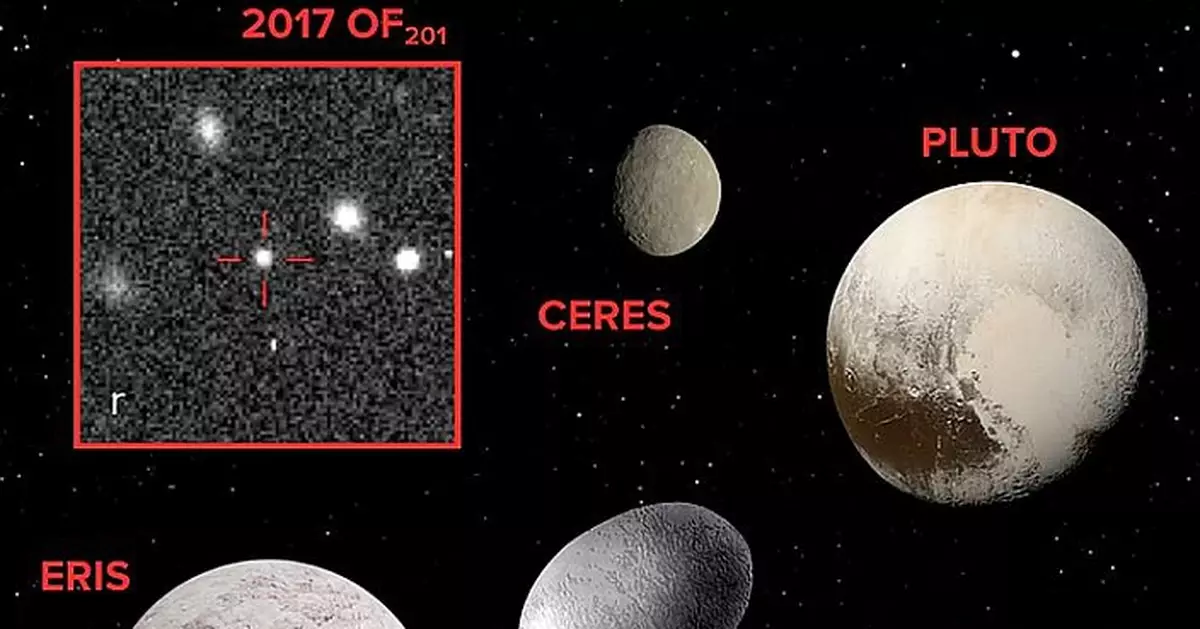
據《科學警報》(ScienceAlert)網站報導,天文學家在太陽系遙遠邊陲發現一顆可能的新矮行星「2017,OF201」。這顆直徑約700公里的天體的發現,不僅可能改寫太陽系家族名單,更因其獨特軌道對理論中的「第九行星」存在假說構成挑戰。
🚨 New dwarf planet candidate: 2017 OF201 🚨
— Tony Dunn (@tony873004) May 22, 2025
~700 km wide, now 90.5 AU from the Sun.
Orbit: a = 838 AU, q = 44.9 AU — deep into the inner Oort Cloud.
Possibly part of a hidden population totaling ~1% of Earth’s mass.
📄 Paper: https://t.co/zR5Cer6mzr#astronomy #dwarfplanet pic.twitter.com/btZDSHBb2R
該矮行星軌道極為特殊
美國普林斯頓高等研究院天體物理學家程思浩(Sihao,Cheng)指出,「2017,OF201」的軌道極為特殊,最遠點超過地球軌道1600倍,最近點則與冥王星軌道相仿。它以極端橢圓軌道運行,深入內奧爾特雲(Oort,Cloud),公轉一圈長達2萬5千年,其形成原因尚待進一步研究。
An object called 2017 OF201 is shaking up ideas about our solar system's outer zone:
— Corey S. Powell (@coreyspowell) May 28, 2025
It follows an extreme, 25,000-year orbit.
It may be 1 of 100s of such bodies filling a seemingly empty region.
And its existence casts doubt on searches for Planet 9.https://t.co/Dhrox94Z4k pic.twitter.com/3hqBjKtZ2J
儀器進步令觀測有所進展
由於搜尋「海王星外天體」(Trans-Neptunian,Objects,TNOs)極為困難,但近年來儀器進步使科學家得以窺探「柯柏伊帶」(Kuiper,Belt)以外的區域。程思浩團隊從「暗能量相機遺產巡天」(DECaLS)及「加法夏望遠鏡」(CFHT)的歷史數據中,透過19次觀測記錄,確認了「2017,OF201」的軌道。
RPG NEWS:
— RPG The Random Post Generator (@JimmyMcSqueezle) May 26, 2025
Scientists discovered a mysterious new world beyond Pluto, potentially rewriting the solar system's map.
This icy world, temporarily named 2017 OF201, is a distant cousin of Pluto. At its farthest, it's over 1,600 times Earth's distance from the sun; at its closest,… pic.twitter.com/vOMhx1Ihoi
獨特軌道挑戰「第九行星」假說
它最初在距太陽約90.5天文單位(AU,1天文單位為地球到太陽的平均距離)處被發現,是冥王星平均軌道距離的兩倍有餘。關鍵在於,「2017,OF201」的軌道與那些曾被認為指向「第九行星」存在的TNO聚集軌道顯著不同。模擬顯示,若無「第九行星」,「2017,OF201」可穩定存在;反之,若有「第九行星」,它將在1億年內被逐出太陽系。這對「第九行星」假說是一大打擊。
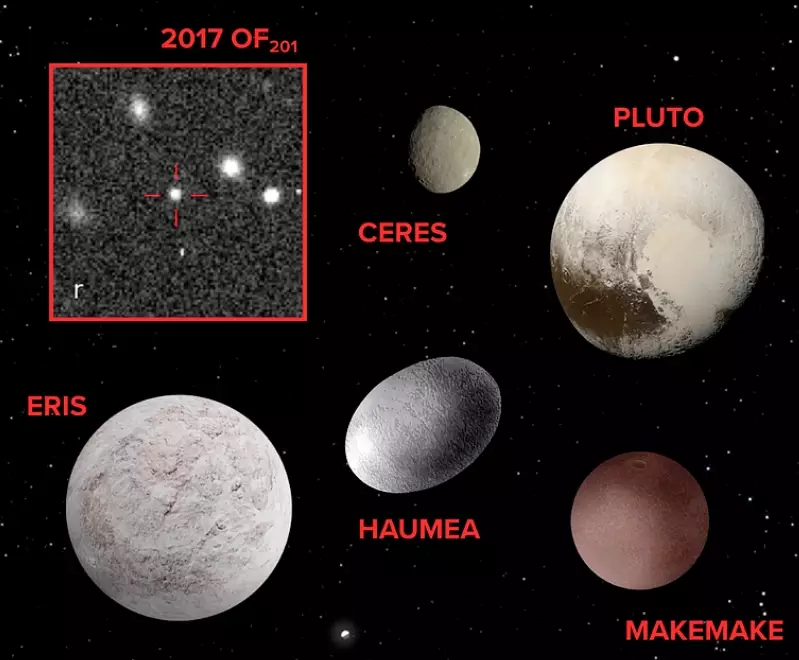
圖片來源:sihaocheng.github.io
可能還有許多相似天體未被觀測到
程思浩表示,這顆天體的出現,暗示著「可能還有約上百個軌道和大小與其相似的天體」因距離太遠而未被發現。他強調,「關於我們自己的太陽系,仍有大量未知等待發掘。」此發現已獲國際天文學聯合會(IAU)正式公佈,並已提交至預印本網站arXiv。
Descobreixen un objecte, en el nostre sistema solar, que podria qualificar com a planeta nan (igual com ho són Plutó i uns pocs cossos més del cinturó de Kuiper, a més de l'asteroide Ceres).
— Joan Anton Català Amigó (@estelsiplanetes) May 28, 2025
El seu nom és 2017 OF201. La part més allunyada de la seva òrbita es troba 1.600 cops més… pic.twitter.com/xdhGeFdnXm