《香港高Sir•高能•熱點詞》
2025.02.21
熱點詞:特朗普關稅是違法的 天地有正氣 證明香港唯有堅持原則立場
美國聯邦最高法院裁定總統特朗普引用美國《國際緊急經濟權力法》實施關稅政策超出他的法定權限,有關法律並未賦予特朗普宣稱徵收關稅的權力。特朗普譴責裁決糟糕透頂、充滿問題,對最高法院部分成員感到羞恥,批評他們沒有勇氣做對美國有利的事,又指法院受到外國利益集團及政治運動影響。特朗普其後宣布將加徵10%的全球關稅,為期150日,以取代部分被最高法院推翻的緊急關稅措施。
高SIR:美國最高法院裁定特朗普援引《國際緊急經濟權力法》(IEEPA)推行的「對等關稅」違反憲法的,清楚指出總統未獲國會明確授權,無權單方面向全球大規模徵收關稅。這一裁決,不僅是對一項具爭議政策的否定,更是對憲政秩序的維護。天地有正氣,公道在人心。當行政權力越界,司法挺身而出,正是法治精神的體現。事實證明,任何權力都必須在法律框架內行使,這是現代文明社會的基本原則。特朗普以貿易逆差與芬太尼問題為由,宣布進入「國家緊急狀態」,繞過國會引用IEEPA向逾百國家和地區加徵關稅,試圖以行政命令重塑全球貿易格局。若法律並無授權,豈能以「緊急」之名行越權之實?最高法院的判詞直指要害:IEEPA並未授權總統徵收關稅。關稅權本屬立法機關。即使是保守派佔多數的法院,亦有包括由特朗普任命的大法官在內的成員支持裁決,足證問題無關黨派,而在於原則。當總統聲稱擁有「無限金額、無限期限、無限範圍」的徵稅權力時,憲法界線豈能模糊?若今日可以繞過國會加稅,明日是否也能在其他領域恣意擴權?這場風波的後果同樣深遠。聯邦政府或需退還自去年4月以來收取的逾一千五百億美元關稅收入,對財政構成沉重壓力。全球數千家企業提訴索償,中國企業亦依法維權,反映國際社會對單邊主義措施的不滿。事實證明,以法律為武器打壓他國,終會在法律面前自食其果。所謂「巨額關稅收入」若建立在違法基礎之上,又怎能長久?更值得警惕的是,裁決公布後,特朗普不但抨擊法院,還宣布依據1974年《貿易法》加徵10%全球關稅,並啟動多項301條款調查,試圖以其他法律工具延續其關稅政策。政策可以調整,但是否真正尊重法治精神,才是關鍵。倘若只是換一個法律名稱,卻延續同樣的單邊思維,爭議又怎會止息?美國最高法院此番裁決,再次說明制度自有糾錯機制。權力再大,也不能凌駕法律;聲勢再強,也不能取代憲法。特朗普關稅既被裁定違憲,事實清楚,性質分明。天地有正氣,公義終將彰顯。高SIR認為,這證明作為愛國愛港一分子,首先要尊重制度、維護法治。國家在複雜國際環境下堅持依法處理經貿問題,香港作為國際金融貿易中心,更需珍惜規則秩序。面對外部貿易壓力,我們更應堅定發展自身實力,深化區域合作,而不是被單邊主義牽著走。歷史早已證明,保護主義不能帶來真正繁榮,法治與合作才是長遠之道。對香港而言,這更是一堂生動的法治課:唯有守住法律底線,堅持原則立場,國家與城市才能行穩致遠。
Trump’s Tariffs Ruled Unlawful: Upholding the Rule of Law and Hong Kong’s Principles
The U.S. Supreme Court has ruled that President Donald Trump exceeded his statutory authority by imposing tariffs under the International Emergency Economic Powers Act (IEEPA), as the law does not grant the president power to levy such duties. Trump denounced the ruling as flawed and shameful, accusing the Court of being influenced by foreign interests, yet announced a new 10% global tariff for 150 days under the 1974 Trade Act to replace the struck-down emergency measures.
This 6-3 decision reaffirms a core constitutional principle: tariff authority lies with Congress, not the executive. Even with a conservative majority, including justices appointed by Trump, the Court prioritized legal bounds over partisan interests. It struck down tariffs imposed unilaterally in the name of national emergency over trade deficits and fentanyl, clarifying that IEEPA does not authorize tariff measures. The ruling may force the government to refund over $150 billion in duties collected since April 2025, triggering thousands of corporate claims worldwide—including from Chinese firms—signaling global rejection of unilateralism.
Trump’s response, attacking the judiciary and shifting to other legal tools while keeping protectionist policies, underscores the difference between procedural compliance and genuine respect for the rule of law. The Supreme Court’s verdict proves that no power stands above the law, and institutional checks prevail against overreach.
For Hong Kong, this is a vital lesson in upholding principles and the rule of law. As a patriotic, international financial and trade hub, Hong Kong must cherish rules-based order, stand firm on its values, and reject unilateralism. True long-term prosperity comes from the rule of law and multilateral cooperation, not protectionism. Adhering to legal fundamentals and principled positions is the only path for the nation and Hong Kong to thrive steadily.
高Sir正能量
** 博客文章文責自負,不代表本公司立場 **
文章:一部電影帶火一座城!深圳經驗啟示香港:電影+文旅才是灣區新密碼

2026年春節檔,史上最長假期點燃全民觀影熱情,中國影市迎來新一輪爆發。筆者見在眾多佳作中,由深圳市委宣傳部支持、深圳廣播電影電視集團與深圳電影製片廠聯合出品、張藝謀執導的《驚蟄無聲》 一騎絕塵,以預售破億、上映兩天票房突破三億的亮眼成績,填補當代國安題材商業大片空白,更以超高「含深量」讓深圳從電影背景板變身敘事主角,開創「電影+城市+文旅+科技」融合發展新典範。這一成功實踐,為擁有深厚電影底蘊的香港提供了寶貴借鑑;而深港電影合作的深化,更將推動「電影+文旅」模式躍上新台階,助力雙城共建大灣區文化旅遊新高地。
一部電影帶火一座城!筆者認為《驚蟄無聲》的爆火,是深圳城市文化與影視產業深度綁定的必然結果。影片90%場景在深圳實拍,市民中心、福田CBD、崗廈北地鐵站、深業上城、春筍大樓、深灣睿雲中心「天空之鏡」等城市地標悉數登場,熟悉的場景讓觀眾從旁觀者變為親歷者,強烈的代入感引爆全城打卡熱潮。「跟著電影遊深圳」成為新春主流玩法,社交媒體同款機位刷屏,市民遊客自發開啟電影主題Citywalk,銀幕景觀快速轉化為文旅流量。筆者見深圳沒有止步於單一影片的成功,而是以「電影+文旅」「科技+體驗」「傳統+時尚」 三維融合為抓手,將城市空間轉化為文化內容,讓科技基因注入影視創作。片中無人機追蹤、量子通信干擾等高能場景,道具源自華強北改裝、用車由比亞迪支持,硬核特效皆為深圳科技實力的真實寫照;央視春晚上深圳越疆機器人驚艷亮相,更讓「深圳智造」與「深圳出品」雙向賦能,彰顯奇蹟之城的文化底氣。
筆者認為深圳用一部電影講活一座城,證明最好的城市推廣不是宣傳片,而是讓城市成為人人可走進、可參與、可分享的現實大片。這一經驗,對於正全力推動港產片復興、文旅產業升級的香港而言,極具參考價值。筆者一直認為香港從來不缺爆款電影與經典IP,從引爆全城的《九龍城寨之圍城》到跨越24年情懷的電影版《尋秦記》,港片始終擁有強大的市場號召力。香港特區政府順勢而為,推出「龍城深度遊」項目,打造《九龍城寨光影之旅》場景展,依託電影熱度串聯歷史文化與美食旅遊;《尋秦記》在剛過去的跨年夜上映後,以「港劇/電影+打卡」模式激活文旅消費,成為港產片復興與城市旅遊升級的雙重範本。這些探索印證了香港電影IP的巨大潛力,但筆者認為,與深圳系統化、全鏈條的融合模式相比,仍需在頂層設計、政策扶持、產業聯動上進一步突破。
深圳經驗啟示香港:電影+文旅才是灣區新密碼,而立足香港文旅發展實際,筆者在2026至2027年度財政預算案諮詢中,向財政司司長陳茂波提出了多項建議,我建議深化「電影IP+文旅」融合發展,設立專項基金資助原創IP孵化,推動電影IP與文旅景點、文創業態、主題樂園深度綁定;打造「香港電影IP文旅體驗區」,開發主題導覽路線與沉浸式項目,盤油麻地警署、九龍城寨等經典影視取景地;深化「無處不旅遊」戰略,整合歷史文化、都市景觀、鄉村生態資源,資助打造特色線路與網紅打卡地;設立「旅遊推廣效果獎勵金」,鼓勵網紅達人參與傳播,以流量帶動客流,助力香港建設國際旅遊休閒中心。這一系列舉措,既是對深圳經驗的借鑑,也是貼合香港實際的創新實踐。
筆者認為更為重要的是,深港電影合作已成為雙城文旅共融的核心契機。深圳擁有強大的科技實力、完善的產業鏈、廣闊的內地市場與政策支持,香港具備頂尖的創意人才、成熟的製作經驗、國際化的發行渠道與豐富的IP儲備,兩地優勢互補、相得益彰。前海深港現代服務業合作區已先行先試,出台影視扶持政策,對深港合拍項目給予獎補、對取景拍攝提供獎勵,吸引TVB、英皇等港企入駐,《新聞女王2》等多部港產作品在前海取景拍攝,「香港創意+深圳技術」的合作模式初具雛形。CEPA協議實施20年來,深港電影合作日益緊密,從合拍片創作到人才交流,從發行推廣到IP開發,兩地產業協同不斷深化。
當下,筆者相信深港攜手共推電影產業融合,恰逢其時。一方面,可聯合打造大灣區影視基地,共建電影IP孵化平台,整合資金、人才、技術、場景等資源,推出兼具灣區特色與國際水準的影視精品;另一方面,以電影為紐帶,串聯雙城文旅資源,開發「深港電影主題旅遊線路」,將深圳的科技地標、城市景觀與香港的經典片場、人文街巷融為一體,打造大灣區沉浸式文旅新品牌。筆者認為透過深港電影合作,既能讓港片藉助深圳的科技與市場優勢重煉輝煌,也能讓深圳的城市文化藉助香港的國際平台走向世界,共同推動「電影+文旅」模式邁向國際舞台,提升大灣區文化軟實力與國際影響力。
光影為媒,雙城共進;文旅融脈,灣區生輝。深圳以《驚蟄無聲》開闢城市文化傳播新路,香港以經典IP激活文旅產業動能,深港電影合作則為雙城發展注入全新動力。未來,香港可借鑑深圳經驗,以專項基金護航IP孵化,以場景活化推動文旅融合,以全域傳播放大品牌效應;深港兩地深化影視協同,以創意互通、產業互聯、市場共享,打造世界級電影文旅融合示範區。從銀幕上的精彩故事,到城市中的文旅實踐,筆者認為深港進一步深化合作,以電影為橋,以文旅為脈,書寫文化共生、產業共榮、民心相通的新篇章,讓大灣區的光影魅力與城市活力,綻放於世界舞台。
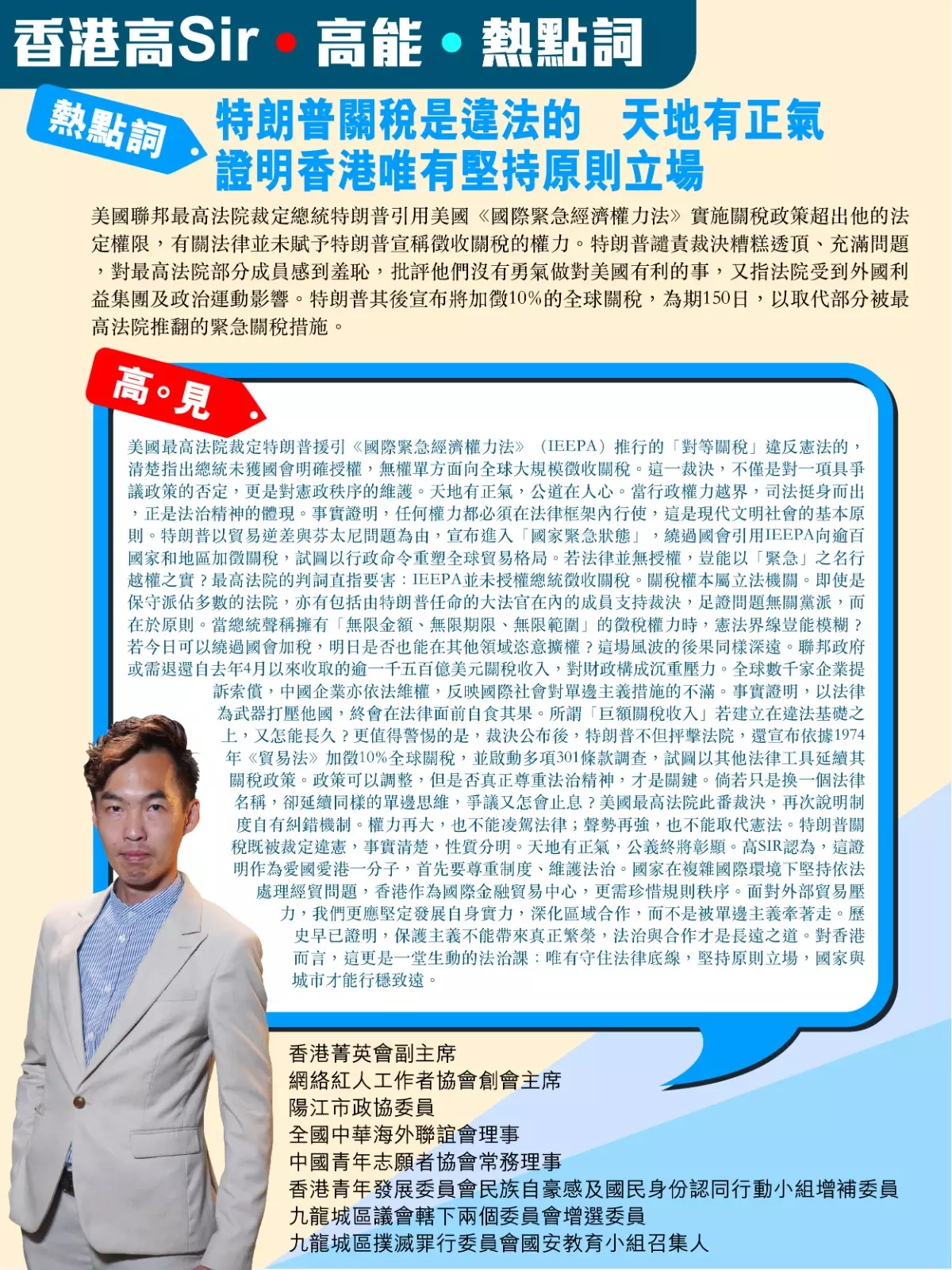
作者簡介:高松傑,人稱高Sir,男,香港建設力量KOL、時評人,大灣區創業者、灣區推介官、2023深圳十大好網民,工商管理碩士,本科修商業、公共及社會行政,多個平台均有文章及視頻專欄,發放愛國愛港正能量,講好中國故事及香港故事
香港再出發共同發起人、香港菁英會副主席、網絡紅人工作者協會創會主席、陽江市政協委員、全國中華海外聯誼會理事、中國青年志願者協會常務理事、河南省青聯港區常委、香港青年發展委員會民族自豪感及國民身份認同行動小組增補委員、第七屆九龍城區議會轄下地區設施及工程委員會和社區參與及文化康樂委員會增選委員、九龍城區撲滅罪行委員會國安教育小組召集人、家維關愛隊成員、地區國安導師
One Movie Ignites a City! Shenzhen’s Success Inspires Hong Kong:
Film + Cultural Tourism Is the Greater Bay Area’s New Code
The 2026 Spring Festival film season, boosted by the longest holiday period in history, has set off a new wave of moviegoing across the country. Among the many outstanding productions, Silent Awakening, directed by Zhang Yimou, supported by the Publicity Department of the Shenzhen Municipal Committee, and co-produced by Shenzhen Media Group and Shenzhen Film Studio, has taken the lead. With over 100 million yuan in pre-sales and more than 300 million yuan at the box office just two days after release, the film fills the gap in commercial blockbusters on modern national security themes. Its extremely high “Shenzhen content” has transformed the city from a mere backdrop into a leading character, creating a new model for integrated development of “film + city + cultural tourism + technology”. This successful practice offers valuable experience for Hong Kong, which has a profound film heritage. Further, deeper film cooperation between Shenzhen and Hong Kong will elevate the “film + cultural tourism” model to new heights, helping the two cities jointly build a new cultural tourism highlight in the Greater Bay Area.
In my view, the runaway success of Silent Awakening is the inevitable result of the deep integration of Shenzhen’s urban culture and the film industry. Over 90% of the film’s scenes were shot on location in Shenzhen, featuring iconic landmarks such as Civic Center, Futian CBD, Gangxia North Metro Station, UpperHills, the Spring Tower, and the “Sky Mirror” at Shenwan Ruiyun Center. These familiar locations turn audiences from spectators into participants, sparking a citywide sightseeing boom. “Touring Shenzhen through movies” has become a major trend during the Spring Festival. Matching filming locations went viral on social media, with residents and tourists embarking on film-themed city walks, turning screen landscapes into real-world tourism traffic.
Shenzhen has not rested on the success of a single film. Instead, it has adopted a three-pronged integration strategy of “film + cultural tourism”, “technology + experience”, and “tradition + fashion”, transforming urban spaces into cultural content and infusing technological DNA into film production. Highlights such as drone tracking and quantum communication jamming in the film rely on props modified in Huaqiangbei and vehicles supported by BYD, reflecting Shenzhen’s genuine technological strength. The stunning appearance of Yuejiang Robotics from Shenzhen during the CCTV Spring Festival Gala further demonstrates the mutual empowerment of “Made in Shenzhen” and “Produced in Shenzhen”, highlighting the cultural confidence of this city of miracles.
Shenzhen has proven that the best way to promote a modern city is not through promotional videos, but by making the city itself a real-life blockbuster that everyone can enter, participate in, and share. This experience is highly valuable for Hong Kong, which is striving to revitalize Hong Kong films and upgrade its cultural tourism industry.
I have long maintained that Hong Kong has never lacked hit films or classic IPs. From the citywide sensation City of Darkness to the movie adaptation of A Step into the Past, which revived memories after 24 years, Hong Kong cinema has always maintained strong market appeal. The Hong Kong SAR Government has capitalized on this momentum by launching the “Long Cheng In-depth Tour” project and the “City of Darkness Light and Shadow Tour” exhibition, linking film popularity with historical culture and food tourism. Following its release on New Year’s Eve, A Step into the Past has stimulated cultural tourism consumption through its “Hong Kong TV drama/film + check-in spots” model, serving as a dual model for the revival of Hong Kong films and the upgrading of urban tourism.
These explorations confirm the enormous potential of Hong Kong’s film IP. However, compared with Shenzhen’s systematic, full-chain integration model, further breakthroughs are still needed in top-level design, policy support, and industrial collaboration.
Shenzhen’s experience shows that “film + cultural tourism” is the new code for the Greater Bay Area. Based on Hong Kong’s reality, during the consultation for the 2026–2027 Budget, I put forward several proposals to the Financial Secretary, Mr Paul Chan:
- Deepen the integrated development of “film IP + cultural tourism” and establish a special fund to support original IP creation and integration with tourist attractions, cultural and creative businesses, and theme parks;
- Develop a “Hong Kong Film IP Cultural Tourism Experience Zone” with themed guided routes and immersive projects, revitalizing classic filming locations such as Yau Ma Tei Police Station and Kowloon City;
- Further implement the “Tourism Everywhere” strategy by integrating historical, urban, and rural ecological resources, and funding the creation of featured tourist routes and social media hotspots;
- Establish a “Tourism Promotion Performance Reward” to encourage influencers to promote Hong Kong, driving visitor flow and supporting Hong Kong’s development as an international tourism and leisure hub.
These measures draw on Shenzhen’s experience while innovating to suit Hong Kong’s actual conditions.
More importantly, film cooperation between Shenzhen and Hong Kong has become a key opportunity for the integration of cultural tourism in both cities. Shenzhen boasts strong technological capabilities, a complete industrial chain, a vast mainland market, and policy support. Hong Kong has top creative talents, mature production experience, international distribution channels, and rich IP resources. The two cities complement each other perfectly.
Qianhai Shenzhen-Hong Kong Modern Service Industry Cooperation Zone has pioneered film and television support policies, offering subsidies for co-productions and location shooting, attracting Hong Kong companies including TVB and Emperor Motion Pictures. Many Hong Kong productions such as The Queen of News 2 have filmed in Qianhai, with the cooperative model of “Hong Kong creativity + Shenzhen technology” taking shape. Over the 20 years since the implementation of CEPA, film cooperation between Shenzhen and Hong Kong has grown closer, spanning co-productions, talent exchanges, distribution, and IP development.
I am convinced that the time is ripe for Shenzhen and Hong Kong to jointly advance the integrated development of the film industry. On the one hand, we can jointly build a Greater Bay Area film and television base and an IP incubation platform, integrating capital, talent, technology, and locations to produce high-quality works with Bay Area characteristics and international standards. On the other hand, we can use film as a link to connect cultural tourism resources of both cities, launching “Shenzhen-Hong Kong Film-themed Tour Routes” that combine Shenzhen’s technological landmarks with Hong Kong’s classic filming spots and cultural streets, creating a new immersive tourism brand for the Greater Bay Area.
Through Shenzhen-Hong Kong film cooperation, Hong Kong cinema can regain its glory with Shenzhen’s technological and market advantages, while Shenzhen’s urban culture can reach the world through Hong Kong’s international platform. Together, we will elevate the “film + cultural tourism” model onto the international stage, enhancing the cultural soft power and international influence of the Greater Bay Area.
With light and shadow as the medium, the two cities move forward together; with integrated cultural tourism, the Greater Bay Area shines brightly. Shenzhen has pioneered a new path of urban cultural communication with Silent Awakening, and Hong Kong has revitalized its cultural tourism industry with classic IPs. Film cooperation injects new momentum into the development of both cities.
In the future, Hong Kong can learn from Shenzhen’s experience, supporting IP incubation with special funds, revitalizing cultural tourism through scene development, and amplifying brand influence through global communication. Shenzhen and Hong Kong will deepen film and television collaboration, sharing creativity, industry, and markets to build a world-class demonstration zone for film and cultural tourism integration.
From the wonderful stories on screen to the cultural tourism practices in the city, Shenzhen and Hong Kong will deepen cooperation, using film as a bridge and cultural tourism as a bond, writing a new chapter of cultural coexistence, industrial prosperity, and people-to-people bonds, letting the charm and vitality of the Greater Bay Area shine on the world stage.


/wp-content/uploads/blogger/2025/11/MEITU_20251105_1342594484-225x300.jpg.webp)
