/wp-content/uploads/blogger/2025/11/MEITU_20251105_1342594484-225x300.jpg.webp)
明天,3月4日,全國政協十四屆四次會議將在北京正式開幕;3月5日,十四屆全國人大四次會議隨即召開,中國進入「兩會時間」。日前,大批港區人大代表、政協委員已經啟程赴京,行政長官李家超、澳門行政長官岑浩輝也相繼抵達首都,香港與祖國同頻共振、共赴盛會。
行政長官李家超早上抵達北京,準備列席星期四舉行的第十四屆全國人民代表大會第四次會議的開幕會。他下午先後拜訪國家民航局和國務院國資委。李家超表示,期待各代表和委員在全國兩會期間,積極提出極具建設性的建議和提案,為推動香港融入和服務國家發展大局建言獻策。
首先我用最簡單的話,同大家講清楚:全國兩會是什麼。
兩會就是全國人民代表大會和中國人民政治協商會議。人大是國家最高權力機關,審議規劃、通過法律、決定大事;政協是專門協商機構,匯聚各界聲音、建言獻策、凝聚共識。兩會合在一起,就是國家定方向、定規劃、定民生的頂層盛會,事關每一個中國人,當然也事關香港。
今年兩會,議程非常清晰、分量極重:
- 審議政府工作報告,總結過去、部署今年;
- 重點審查、討論「十五五」規劃綱要草案,這是未來五年國家發展的總藍圖;
- 審議計劃、預算,關乎經濟、民生、就業、醫療、養老;
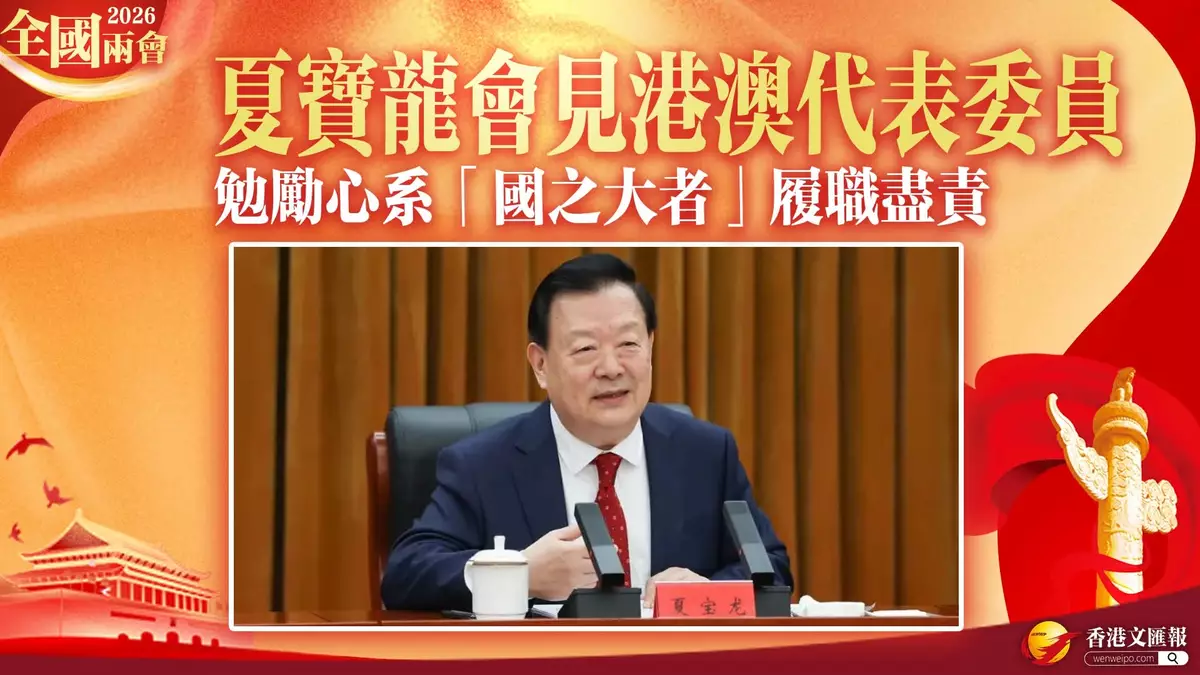
- 港澳地區代表委員到港澳辦座談交流,在全國兩會前夕,3月3日下午,港澳地區全國人大代表、全國政協委員到中央港澳工作辦公室、國務院港澳事務辦公室座談交流。中央港澳工作辦公室主任、國務院港澳事務辦公室主任夏寶龍對港澳代表委員來京參加全國兩會表示歡迎,希望大家充分認識「十五五」時期對港澳的非凡意義,倍加珍惜港澳來之不易的大好局面,心懷「國之大者」,認真履職盡責,帶頭學習宣傳貫徹全國兩會精神,支持特區政府依法施政,推動港澳高質量發展、更好融入和服務國家發展大局,為共建香港、澳門美好家園,為推動強國建設、民族復興作出新貢獻。中央港澳工作辦公室、國務院港澳事務辦公室分管日常工作的副主任徐啟方,副主任周霽、鄭新聰、農融,駐港國家安全公署署長董經緯等參加座談交流活動。
今年對香港特別重要,因為是國家「十五五」規劃開局之年,也是香港首次主動制定本地五年規劃、全面對接國家戰略的關鍵一年。兩會每一個決策,都會直接影響香港的未來。
這次兩會,對香港有三大深遠影響
第一,鞏固「一國兩制」優勢,確保香港長期繁榮穩定。
中央一貫堅定不移貫徹「一國兩制」、「港人治港」、高度自治,落實愛國者治港。兩會將進一步明確,支持香港防風險、保穩定、推良政善治,讓香港社會更安定、市民更安心。
第二,國家戰略紅利全面對接,香港機遇滿滿。
「十五五」規劃明確支持香港:
鞏固國際金融、航運、貿易中心地位;
建設國際創科中心;
打造國際高端人才集聚高地。
無論是金融互聯互通、人民幣國際化、河套深港科技合作、北部都會區,還是大灣區一小時生活圈,國家都會給政策、給平台、給空間,讓香港「背靠祖國、聯通世界」的優勢更強。
第三,民生議題直達中央,切切實實幫港人解難。
港區代表委員這次帶去大量提案建議:
大灣區養老醫療便利化、高鐵增班次、青年就業創業、專業服務北上、跨境民生銜接等等。兩會就是香港的「直通車」,市民的急難愁盼,可以直接在國家層面推動解決。
今次李家超特首赴京列席人大開幕會,同日返港,高效務實。離港期間由政務司司長陳國基署理行政長官職務,政府運作暢順有序,充分展現香港良政善治的新氣象。
各位朋友,香港從來都是國家發展的參與者、貢獻者、受益者。國家好,香港一定好;香港好,國家更好。
在這里,高sir衷心預祝2026年全國兩會圓滿成功、勝利召開!
期待港區代表委員履職盡責、多建真言、多獻良策;
期待香港抓住「十五五」黃金機遇,拼經濟、謀發展、惠民生;
期待香江明珠更加璀璨,在國家發展大局中書寫更精彩的新篇章!
Three Far-Reaching Impacts of the 2026 Two Sessions on Hong Kong
Tomorrow, on March 4, the 14th National Committee of the Chinese People's Political Consultative Conference (CPPCC) will open in Beijing, followed by the 14th National People's Congress (NPC) on March 5, marking China's entry into the "Two Sessions" period. Recently, numerous Hong Kong deputies to the NPC and members of the CPPCC have departed for Beijing, while Chief Executive John Lee and Macao Chief Secretary Sam Hou Fai have successively arrived in the capital. This reflects Hong Kong's resonance with the motherland as we join this grand event.
Chief Executive John Lee arrived in Beijing in the morning, preparing to attend the opening session of the 14th National People's Congress on Thursday. In the afternoon, he paid visits to the Civil Aviation Administration of China and the State-owned Assets Supervision and Administration Commission. Chief Executive Lee expressed the expectation that all deputies and members would actively put forward highly constructive proposals and motions during the Two Sessions, contributing to Hong Kong's integration into and service to the overall national development strategy.
First, let me explain in the simplest terms what the Two Sessions are.
The Two Sessions refer to the National People's Congress (NPC) and the Chinese People's Political Consultative Conference (CPPCC). The NPC is the highest organ of state power, deliberating on development plans, enacting laws, and making major decisions. The CPPCC is a specialized consultative body, gathering voices from all walks of life, offering advice and suggestions, and building consensus. Together, the Two Sessions represent a top-level event where the country sets its direction, formulates plans, and addresses people's livelihoods—matters concerning every Chinese citizen, and of course, Hong Kong as well.
This year's Two Sessions feature a clear and highly consequential agenda:
- Deliberating the Government Work Report, summarizing the past year and outlining plans for the current year;
- Focusing on the review and discussion of the Draft Outline of the 15th Five-Year Plan, which serves as the overall blueprint for China's development over the next five years ;
- Deliberating economic and social development plans and budgets, which are crucial for the economy, people's livelihoods, employment, healthcare, and elderly care;
- A forum attended by Hong Kong and Macao deputies and members. On the afternoon of March 3, on the eve of the Two Sessions, Hong Kong and Macao deputies to the NPC and members of the CPPCC held a discussion at the Hong Kong and Macao Affairs Office of the State Council. Director Xia Baolong of the Hong Kong and Macao Affairs Office of the State Council welcomed them, emphasizing the need to fully understand the extraordinary significance of the 15th Five-Year Plan period for Hong Kong and Macao, cherish the hard-won sound situation in Hong Kong and Macao, keep in mind the "greatest interests of the country," perform their duties earnestly, take the lead in learning, propagating and implementing the spirit of the Two Sessions, support the special administrative region governments in governing in accordance with the law, promote the high-quality development of Hong Kong and Macao, better integrate into and serve the overall national development strategy, and make new contributions to building a better home for Hong Kong and Macao and advancing national rejuvenation.
This year is particularly crucial for Hong Kong. It marks the start of the national 15th Five-Year Plan, and also a pivotal year for Hong Kong to take the initiative in formulating its first local five-year plan and fully align with national strategies . Every decision made at the Two Sessions will directly impact Hong Kong's future.
This year's Two Sessions will bring three far-reaching impacts to Hong Kong:
First, consolidating the advantages of the "One Country, Two Systems" principle to ensure long-term prosperity and stability in Hong Kong.
The Central government has always unwaveringly implemented the "One Country, Two Systems" principle, under which the people of Hong Kong govern Hong Kong with a high degree of autonomy, and upholds the principle of "patriots governing Hong Kong." The Two Sessions will further clarify support for Hong Kong in managing risks, maintaining stability, and advancing good governance, making Hong Kong's society more stable and its residents more secure .
Second, fully aligning with national strategic dividends to bring abundant opportunities to Hong Kong.
The 15th Five-Year Plan explicitly supports Hong Kong in:
- Consolidating its status as an international center for finance, shipping, and trade ;
- Building an international innovation and technology hub ;
- Creating a highland for international top talents.
From financial connectivity and RMB internationalization to the Shenzhen-Hong Kong Science and Technology Cooperation Zone, the Northern Metropolis , and the one-hour living circle of the Greater Bay Area, the Central government will provide policies, platforms, and space for Hong Kong to strengthen its advantages of "relying on the motherland and connecting the world."
Third, ensuring that livelihood issues reach the Central government directly, effectively solving Hong Kong people's difficulties.
Hong Kong deputies and members have brought numerous proposals to the Two Sessions, including facilitating elderly care and medical services in the Greater Bay Area , increasing high-speed rail services, supporting youth employment and entrepreneurship, enabling professional services to move north, and improving cross-border livelihood connectivity. The Two Sessions act as a "direct train" for Hong Kong, allowing citizens' urgent concerns to be addressed directly at the national level.
Chief Executive Lee's efficient and pragmatic visit to Beijing—attending the NPC opening session and returning to Hong Kong the same day, with Chief Secretary for Administration Chan Kwok-ki acting as Chief Executive during his absence—demonstrates the smooth operation of the government and the new atmosphere of good governance in Hong Kong.
Dear friends, Hong Kong has always been a participant, contributor, and beneficiary of the motherland's development. When the motherland thrives, Hong Kong will surely thrive; and when Hong Kong prospers, the motherland will benefit even more.
Here, I sincerely wish the 2026 Two Sessions a complete success!
We look forward to Hong Kong deputies and members performing their duties earnestly, offering more valuable advice and suggestions;
We look forward to Hong Kong seizing the golden opportunities of the 15th Five-Year Plan to boost the economy, pursue development, and benefit people's livelihoods;
We look forward to the Pearl of the Orient shining even more brilliantly, writing a more exciting new chapter in the overall national development!
高Sir正能量
** 博客文章文責自負,不代表本公司立場 **