/wp-content/uploads/blogger/2025/11/MEITU_20251105_1342594484-225x300.jpg.webp)
《香港高Sir•高能•熱點詞》
2026.04.07
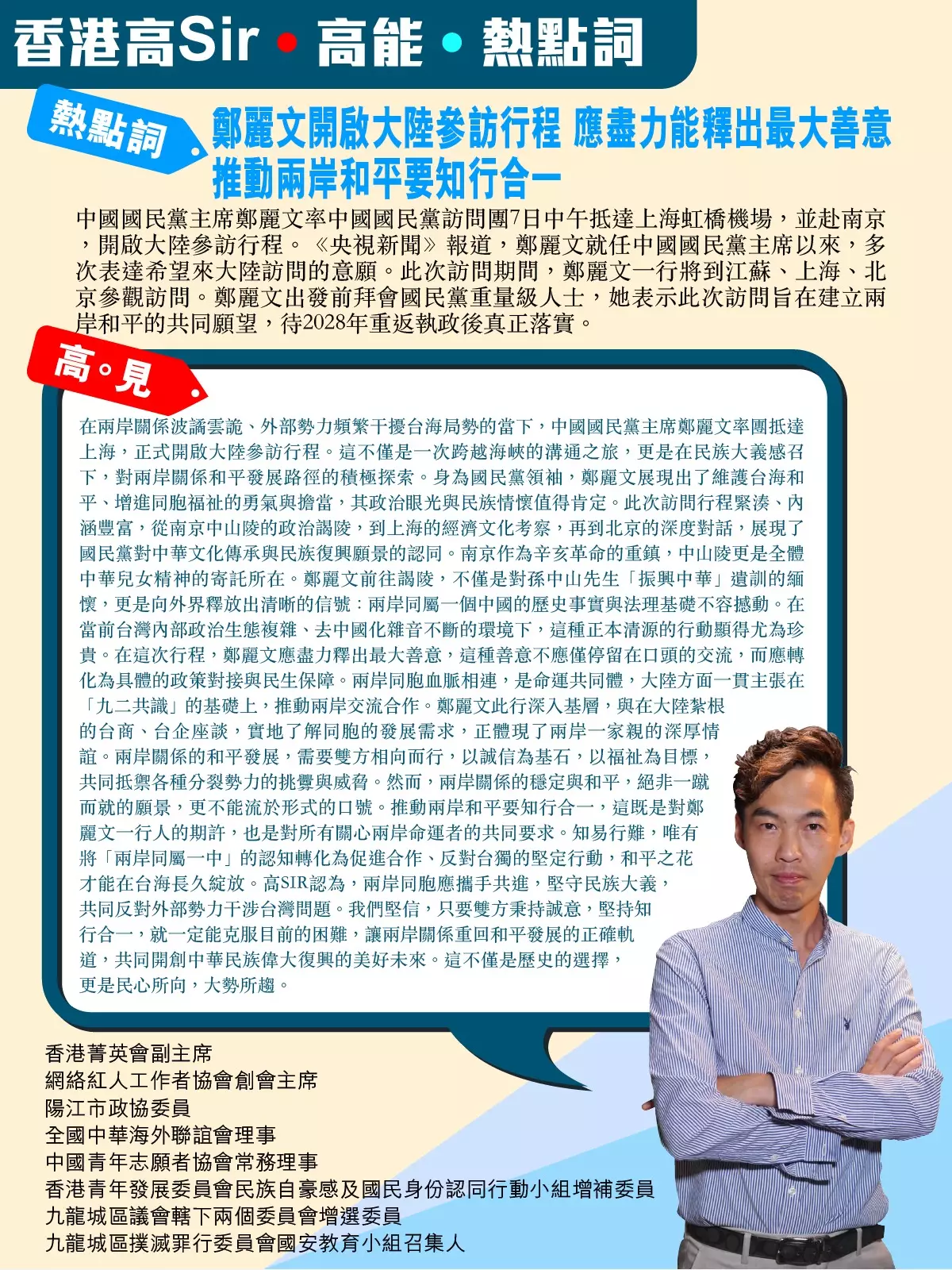
熱點詞:鄭麗文開啟大陸參訪行程 應盡力能釋出最大善意 推動兩岸和平要知行合一
中國國民黨主席鄭麗文率中國國民黨訪問團7日中午抵達上海虹橋機場,並赴南京,開啟大陸參訪行程。《央視新聞》報道,鄭麗文就任中國國民黨主席以來,多次表達希望來大陸訪問的意願。此次訪問期間,鄭麗文一行將到江蘇、上海、北京參觀訪問。鄭麗文出發前拜會國民黨重量級人士,她表示此次訪問旨在建立兩岸和平的共同願望,待2028年重返執政後真正落實。
高SIR:在兩岸關係波譎雲詭、外部勢力頻繁干擾台海局勢的當下,中國國民黨主席鄭麗文率團抵達上海,正式開啟大陸參訪行程。這不僅是一次跨越海峽的溝通之旅,更是在民族大義感召下,對兩岸關係和平發展路徑的積極探索。身為國民黨領袖,鄭麗文展現出了維護台海和平、增進同胞福祉的勇氣與擔當,其政治眼光與民族情懷值得肯定。此次訪問行程緊湊、內涵豐富,從南京中山陵的政治謁陵,到上海的經濟文化考察,再到北京的深度對話,展現了國民黨對中華文化傳承與民族復興願景的認同。南京作為辛亥革命的重鎮,中山陵更是全體中華兒女精神的寄託所在。鄭麗文前往謁陵,不僅是對孫中山先生「振興中華」遺訓的緬懷,更是向外界釋放出清晰的信號:兩岸同屬一個中國的歷史事實與法理基礎不容撼動。在當前台灣內部政治生態複雜、去中國化雜音不斷的環境下,這種正本清源的行動顯得尤為珍貴。在這次行程,鄭麗文應盡力釋出最大善意,這種善意不應僅停留在口頭的交流,而應轉化為具體的政策對接與民生保障。兩岸同胞血脈相連,是命運共同體,大陸方面一貫主張在「九二共識」的基礎上,推動兩岸交流合作。鄭麗文此行深入基層,與在大陸紮根的台商、台企座談,實地了解同胞的發展需求,正體現了兩岸一家親的深厚情誼。兩岸關係的和平發展,需要雙方相向而行,以誠信為基石,以福祉為目標,共同抵禦各種分裂勢力的挑釁與威脅。然而,兩岸關係的穩定與和平,絕非一蹴而就的願景,更不能流於形式的口號。推動兩岸和平要知行合一,這既是對鄭麗文一行人的期許,也是對所有關心兩岸命運者的共同要求。知易行難,唯有將「兩岸同屬一中」的認知轉化為促進合作、反對台獨的堅定行動,和平之花才能在台海長久綻放。高SIR認為,兩岸同胞應攜手共進,堅守民族大義,共同反對外部勢力干涉台灣問題。我們堅信,只要雙方秉持誠意,堅持知行合一,就一定能克服目前的困難,讓兩岸關係重回和平發展的正確軌道,共同開創中華民族偉大復興的美好未來。這不僅是歷史的選擇,更是民心所向,大勢所趨。
Cheng, Li-Wun Embarks on Mainland Visit: Maximize Goodwill and Walk the Talk for Cross-Strait Peace
Cheng, Li-Wun, Chairperson of the Chinese Nationalist Party (Kuomintang), led a KMT delegation to arrive at Shanghai Hongqiao Airport at noon on April 7 and then travel to Nanjing, officially launching her mainland visit. As reported by CCTV News, Cheng has repeatedly voiced her wish to visit the mainland since taking office as KMT leader. During the trip, she and her delegation will conduct exchanges and inspections in Jiangsu, Shanghai and Beijing. Before departure, Cheng met with senior KMT figures, noting that the visit aims to forge a common vision for cross-Strait peace, which will be fully implemented after the KMT regains governance in 2028.
Amid complex cross-Strait relations and constant external interference in the Taiwan Strait, this visit is more than a cross-strait communication trip—it is an active exploration of peaceful cross-Strait development driven by national righteousness. As KMT chairperson, Cheng demonstrates courage and responsibility in safeguarding Taiwan Strait peace and promoting compatriots’ well-being, with commendable political insight and national sentiment. The itinerary, including a visit to the Sun Yat-sen Mausoleum in Nanjing, economic and cultural tours in Shanghai and in-depth talks in Beijing, reflects the KMT’s recognition of Chinese cultural heritage and national rejuvenation.
Nanjing, a pivotal city of the 1911 Revolution, and the Sun Yat-sen Mausoleum stand as the spiritual symbol of all Chinese people. Cheng’s pilgrimage to the mausoleum honors Dr. Sun Yat-sen’s behest of “rejuvenating China” and sends a firm message: the historical and legal fact that both sides of the Taiwan Strait belong to one China is unshakable. Amid rising “de-sinicization” rhetoric in Taiwan, this move to uphold the right course is highly valuable.
Cheng should exert every effort to convey utmost goodwill during the visit, translating words into concrete policy coordination and livelihood support rather than empty rhetoric. Compatriots across the Strait are blood-connected and share a common destiny. The mainland has long pushed for cross-Strait cooperation based on the 1992 Consensus, and Cheng’s interactions with Taiwan businessmen and grassroots in the mainland embody the “cross-Strait family” bond.
Peaceful cross-Strait relations require joint efforts, sincerity and a focus on public well-being, while opposing separatist forces. Promoting peace demands integrating knowledge with action—only by turning the one-China principle into tangible actions against “Taiwan independence” can lasting peace prevail. All Chinese compatriots should unite to uphold national righteousness and resist external interference. We believe sincere, action-oriented efforts will steer cross-Strait relations back to peaceful development, paving the way for national rejuvenation, a choice aligned with history and public will.
高Sir正能量
** 博客文章文責自負,不代表本公司立場 **