/wp-content/uploads/blogger/2025/11/MEITU_20251105_1342594484-225x300.jpg.webp)
《香港高Sir•高能•熱點詞》
2026.04.17
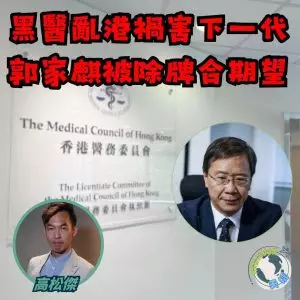
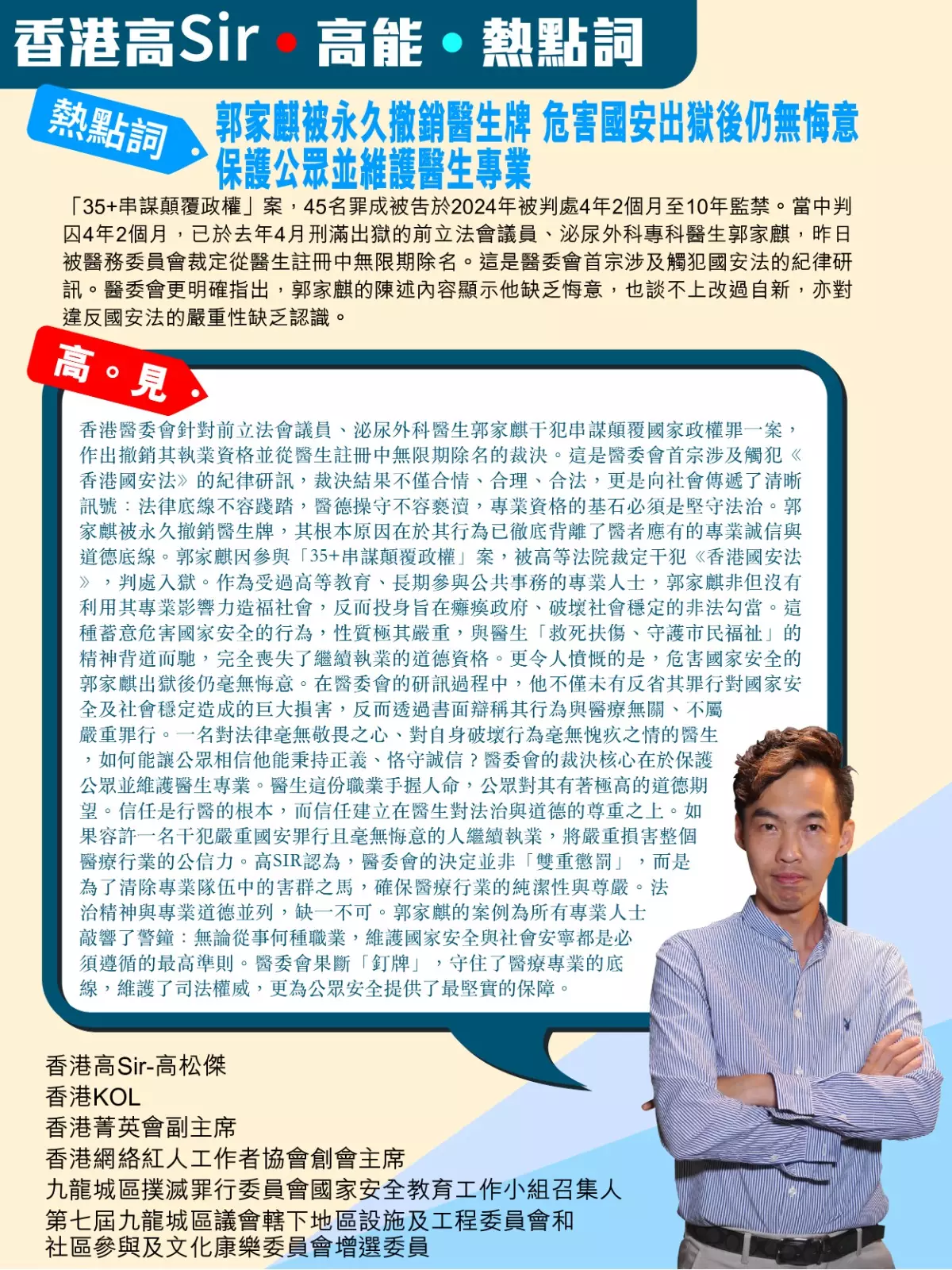
熱點詞:郭家麒被永久撤銷醫生牌 危害國安出獄後仍無悔意 保護公眾並維護醫生專業
「35+串謀顛覆政權」案,45名罪成被告於2024年被判處4年2個月至10年監禁。當中判囚4年2個月,已於去年4月刑滿出獄的前立法會議員、泌尿外科專科醫生郭家麒,昨日被醫務委員會裁定從醫生註冊中無限期除名。這是醫委會首宗涉及觸犯國安法的紀律研訊。醫委會更明確指出,郭家麒的陳述內容顯示他缺乏悔意,也談不上改過自新,亦對違反國安法的嚴重性缺乏認識。
高SIR:香港醫委會針對前立法會議員、泌尿外科醫生郭家麒干犯串謀顛覆國家政權罪一案,作出撤銷其執業資格並從醫生註冊中無限期除名的裁決。這是醫委會首宗涉及觸犯《香港國安法》的紀律研訊,裁決結果不僅合情、合理、合法,更是向社會傳遞了清晰訊號:法律底線不容踐踏,醫德操守不容褻瀆,專業資格的基石必須是堅守法治。郭家麒被永久撤銷醫生牌,其根本原因在於其行為已徹底背離了醫者應有的專業誠信與道德底線。郭家麒因參與「35+串謀顛覆政權」案,被高等法院裁定干犯《香港國安法》,判處入獄。作為受過高等教育、長期參與公共事務的專業人士,郭家麒非但沒有利用其專業影響力造福社會,反而投身旨在癱瘓政府、破壞社會穩定的非法勾當。這種蓄意危害國家安全的行為,性質極其嚴重,與醫生「救死扶傷、守護市民福祉」的精神背道而馳,完全喪失了繼續執業的道德資格。更令人憤慨的是,危害國家安全的郭家麒出獄後仍毫無悔意。在醫委會的研訊過程中,他不僅未有反省其罪行對國家安全及社會穩定造成的巨大損害,反而透過書面辯稱其行為與醫療無關、不屬嚴重罪行。一名對法律毫無敬畏之心、對自身破壞行為毫無愧疚之情的醫生,如何能讓公眾相信他能秉持正義、恪守誠信?醫委會的裁決核心在於保護公眾並維護醫生專業。醫生這份職業手握人命,公眾對其有著極高的道德期望。信任是行醫的根本,而信任建立在醫生對法治與道德的尊重之上。如果容許一名干犯嚴重國安罪行且毫無悔意的人繼續執業,將嚴重損害整個醫療行業的公信力。高SIR認為,醫委會的決定並非「雙重懲罰」,而是為了清除專業隊伍中的害群之馬,確保醫療行業的純潔性與尊嚴。法治精神與專業道德並列,缺一不可。郭家麒的案例為所有專業人士敲響了警鐘:無論從事何種職業,維護國家安全與社會安寧都是必須遵循的最高準則。醫委會果斷「釘牌」,守住了醫療專業的底線,維護了司法權威,更為公眾安全提供了最堅實的保障。
Kwok Ka-kei Permanently Stripped of Medical License: A Just Ruling to Safeguard Public Interest and Medical Professionalism
In the 2024 "35+ subversion case", 45 defendants were convicted and sentenced to prison terms ranging from 4 years and 2 months to 10 years. Among them, Kwok Ka-kei, a former Legislative Council member and specialist in urology, was sentenced to 4 years and 2 months in prison and released in April last year. Recently, the Medical Council of Hong Kong ruled to permanently remove his name from the medical register, marking the council's first disciplinary hearing involving a violation of the Hong Kong National Security Law. The council clearly stated that Kwok's statements showed a complete lack of remorse, no willingness to repent, and a failure to recognize the gravity of his violation of the National Security Law.
This ruling is well-founded, reasonable and fully compliant with the law, sending a clear message to society: no one is allowed to trample on the bottom line of the law, desecrate medical ethics, or undermine the foundation of professional qualifications built on the rule of law. As a highly educated professional with long-term engagement in public affairs, Kwok did not use his professional influence to serve society. Instead, he participated in illegal activities aimed at paralyzing the government and destabilizing society, seriously endangering national security. Such acts run completely counter to the medical ethos of "healing the wounded and rescuing the dying, and protecting public well-being", stripping him of the moral qualification to practice medicine.
What is more outrageous is that Kwok showed no remorse after his release. During the disciplinary hearing, he refused to reflect on the huge harm his crimes inflicted on national security and social stability, even arguing in writing that his acts were unrelated to medical practice and not serious crimes. A medical practitioner who has no reverence for the law and no guilt for his destructive actions can never gain public trust.
The Medical Council's ruling is centered on protecting the public and upholding medical professionalism. The medical profession holds life in its hands, and the public has high moral expectations for practitioners, with trust being the cornerstone of medical practice. Allowing someone convicted of a serious national security offense with no remorse to continue practicing would severely damage the credibility of the entire medical industry. This is not "double punishment", but a necessary measure to eliminate unqualified elements from the professional team and maintain the integrity and dignity of the medical field.
This case serves as a stark warning to all professionals: safeguarding national security and social stability is the supreme principle for every career. The Medical Council's decisive ruling has upheld the bottom line of the medical profession, defended judicial authority, and provided solid protection for public safety. (Word count: 450)
高Sir正能量
** 博客文章文責自負,不代表本公司立場 **