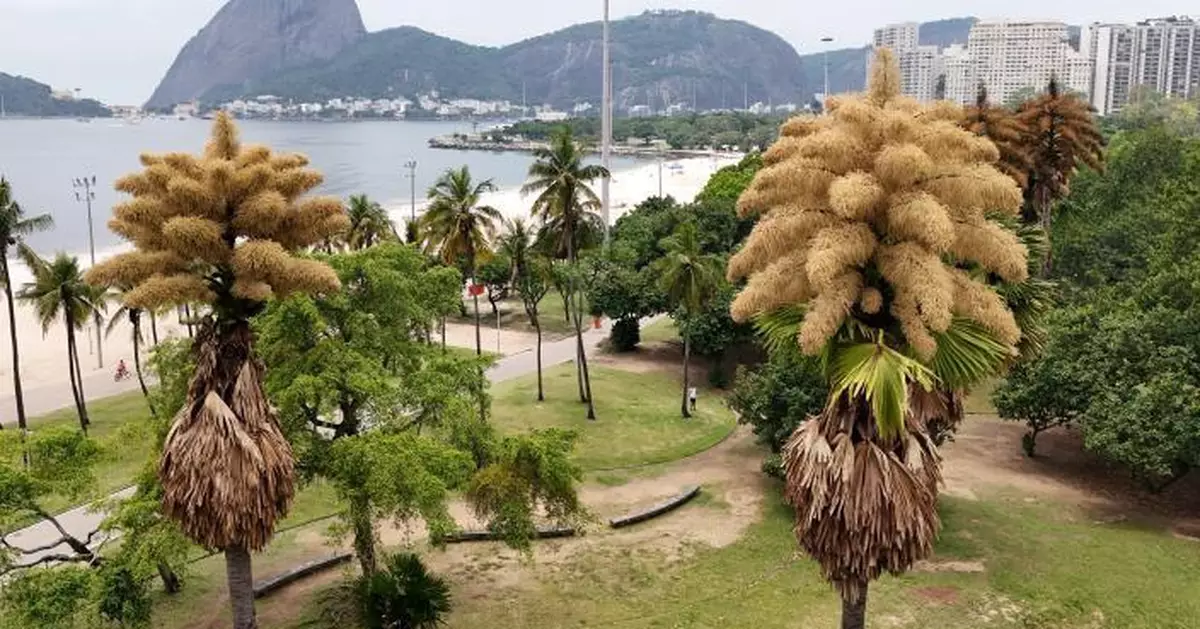
巴西里約熱內盧近日展現出壯觀的植物景觀:多棵已成長超過60年的貝葉棕(Talipot palm)首次開花,但這也意味著它們生命中的最後一次綻放,吸引了許多民眾特地前來觀賞。
巴西里約貝葉棕種植60年後終開花
根據法新社的報導,這批貝葉棕樹生長在里約熱內盧的「佛朗明哥公園」和植物園,這些樹木是在1960年代由巴西傳奇景觀建築師馬克斯(Roberto Burle Marx)引入並種植的。經過60多年的成長,這些棕櫚樹已經長成壯麗的巨樹,也達到了它們的生命巔峰,數百萬朵小小的黃色花朵在樹冠頂端形成了壯觀的花冠。
An extraordinary botanical spectacle is drawing crowds in Rio de Janeiro: several talipot palm trees, planted more than six decades ago, are blooming for the first -- and last -- time in their lives. ➡️ https://t.co/1BYuxyBKrb pic.twitter.com/TCfiUpcL87
— AFP News Agency (@AFP) December 12, 2025
一生只開花結果一次
貝葉棕是原產於印度南部和斯里蘭卡的樹種,是全球最大的棕櫚科植物之一,有些可以長到超過30公尺高。這種樹木通常需要長到40到70歲才會開花,並且一生只開花結果一次。里約植物園的研究員納德魯茲(Marcus Nadruz)表示:「貝葉棕一生僅開花結果一次,最多能結出約500萬顆果實」。
VIDEO: 🇧🇷 Palms bloom for first -- and last -- time in Rio de Janeiro
— AFP News Agency (@AFP) December 12, 2025
Several talipot palms, native to southern India and Sri Lanka but planted more than six decades ago in the Brazilian seaside city, are blooming. The process, from the opening of the first flowers to the… pic.twitter.com/mCoLix7cG1
10月起陸續開花
里約的這些貝葉棕從10月起陸續開花,納德魯茲指出,從第一朵花開放到結果,整個過程約需一年時間,當果實落下後,樹木也將走向不可避免的結局,逐漸枯死。
In the 1960s, famed Brazilian landscape architect Roberto Burle Marx introduced rare talipot palms to a park in Rio de Janeiro. Now they're flowering for the first and only time before their natural death.
— BBC World Service (@bbcworldservice) December 9, 2025
🎧Tracing the roots of ancient trees https://t.co/4dsroDvzeP pic.twitter.com/rKUyBQlbsq
從聖保羅特地前來里約觀賞貝葉棕開花的法雷德(Deborah Faride)表示:「我於1961年出生,它(貝葉棕)與我同齡,這是它的盛年」,她說:「我們就像同時綻放,唯一的區別在於,貝葉棕在盛開後生命即將終結,而我希望自己能繼續前行」。

巴西里約熱內盧近日展現出壯觀的植物景觀:多棵已成長超過60年的貝葉棕(Talipot palm)首次開花。AP圖