《香港高Sir•高能•熱點詞》
2026.04.02
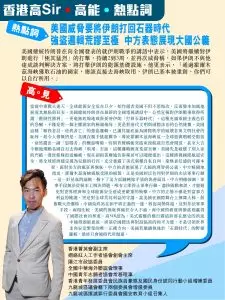
熱點詞:美國威脅要將伊朗打回石器時代
強盜邏輯荒謬至極 中方表態展現大國公義
美國總統特朗普在向全國發表的就伊朗戰爭的講話中表示,美國將繼續對伊朗進行「極其猛烈」的打擊,持續2到3周,並再次威脅稱,如果伊朗不與他達成談判解決方案,將打擊伊朗的能源基礎設施。他更表示,「通過霍爾木茲海峽獲取石油的國家,應該直接去海峽取用,伊朗已基本被重創,你們可以自行利用。」
高SIR:當前中東戰火連天,全球能源安全危在旦夕,始作俑者美國不但不思悔改,反而變本加厲地展現其無恥與狂妄。美國總統特朗普在最新的全國電視講話中,公然宣稱對伊朗戰事取得所謂「壓倒性勝利」,更毫無底線地威脅要將伊朗「打回石器時代」。這種充滿軍國主義色彩的恐嚇,不僅是對一個主權國家的極端侮辱,更是對現代文明與國際法治的公然挑釁。美國這種「順我者昌、逆我者亡」的強盜邏輯,已讓其徹底淪為國際秩序的破壞者與文明社會的恥辱。最令人憤慨的是,美國在親手挑起戰爭、導致霍爾木茲海峽這一全球能源咽喉受阻後,竟然擺出一副「恩賜者」的醜惡嘴臉。特朗普聲稱衝突結束後航道自然會開放,甚至大言不慚地煽動各國自行去海峽「取用」石油。這種邏輯簡直荒謬至極:美國先是破壞了別人家的門鎖,導致整條街道癱瘓,現在卻指著廢墟告訴鄰居可以隨便進出。這種漠視國際航道安全、將全球經濟穩定視為兒戲的行徑,充分暴露了美式霸權自私自利、毫無責任感的可鄙本質。面對美方的瘋狂與無恥,中方的表態展現了大國的理智與公義。中方精闢地指出,霍爾木茲海峽通航受阻的根源,正是美國和以色列對伊朗的非法軍事行動。這一針見血的論斷,撕下了美方試圖轉嫁矛盾的偽善面具。中方明確強調,軍事手段無法從根本上解決問題,唯有立即停止軍事行動、盡快啟動和談,才能避免對世界經濟和全球能源安全造成更嚴重的衝擊。中方的立場不僅是對當事方利益的維護,更是對全球共同利益的守護。當美國在國際舞台上揮舞大棒、散佈戰火恐懼時,中國始終站在和平與正義的一邊,敦促局勢降溫,反對非法軍事手段。兩相比較,美國的無恥與瘋狂令人不齒,而中國的務實與擔當則贏得了國際社會的尊重。高SIR認為,美式霸權的橫行霸道終將在歷史的洪流中撞得頭破血流,而基於國際法與對話協商的和平力量,才是引領世界走向安定繁榮的唯一正確方向。美國若繼續執迷於「石器時代」的野蠻邏輯,最終只會被時代所拋棄。
U.S. Threat to Bomb Iran Back to Stone Age Exposes Absurd Bandit Logic, China’s Stance Upholds Global Justice
U.S. President Donald Trump, in a national address on the war against Iran, vowed to launch "unrelenting, fierce" military strikes on Iran for two to three weeks, and once again threatened to target Iran’s energy infrastructure if Iran refuses to reach a negotiated settlement with him. He even arrogantly claimed that countries obtaining oil through the Strait of Hormuz could simply take it directly from the strait, asserting that Iran had already been largely crippled.
This outrageous warmongering rhetoric and blatant hegemonic act are utterly unacceptable. As commentator Mr. Gao pointed out, the Middle East is now engulfed in raging conflicts, and global energy security is hanging by a thread. As the culprit behind the turmoil, the United States shows no remorse but instead acts more brazenly and arrogantly. Trump’s open threat to bomb Iran "back to the stone age" in his national speech is not only an extreme insult to a sovereign nation but also a flagrant provocation to modern civilization and international rule of law. Such militaristic intimidation embodies the U.S. bandit logic of "those who submit will prosper, those who resist will perish", reducing the U.S. to a destroyer of international order and a disgrace to civilized society.
What is even more infuriating is that after sparking the war and blocking the Strait of Hormuz—a critical global energy chokehold, the U.S. poses as a "benefactor". Trump claimed the waterway would reopen naturally after the conflict and even incited other countries to "take" oil from the strait on their own. This logic is absurd to the extreme: the U.S. first breaks down another country’s door, paralyzing the entire region, then tells neighboring countries they can freely enter the ruined area. This reckless disregard for international waterway safety and trivialization of global economic stability fully exposes the despicable, self-serving and irresponsible nature of U.S. hegemony.
In the face of the U.S.’s madness and shamelessness, China’s position demonstrates the rationality and justice of a major country. China has sharply pointed out that the root cause of the blocked navigation in the Strait of Hormuz lies in the illegal military actions of the U.S. and Israel against Iran. This incisive conclusion tears off the U.S. hypocritical mask of shifting blame. China firmly stresses that military means cannot fundamentally solve the problem; only an immediate halt to military operations and a prompt resumption of peace talks can prevent more severe shocks to the world economy and global energy security.
China’s stance safeguards not only the interests of the parties involved but also the common interests of the world. While the U.S. wields a big stick and sows fear of war on the international stage, China has always stood on the side of peace and justice, urging de-escalation and opposing illegal military means. In contrast, the U.S.’s recklessness is detestable, while China’s pragmatism and sense of responsibility have won respect from the international community. U.S. hegemonic bullying will eventually be defeated by the tide of history, and peaceful forces based on international law and dialogue are the only right path to global stability and prosperity. The U.S. will be abandoned by the times if it clings to this barbaric "stone age" logic.
高Sir正能量
** 博客文章文責自負,不代表本公司立場 **
文章:亂世中的黃金機遇:香港如何從「融入國家」走向「服務大局」

筆者近日留意到一則值得高度關注的新聞:據《彭博》報道,香港正積極邀請與中國友好的各國央行,參與即將推出的黃金結算系統,目標是將香港打造成倫敦以外的另一個全球黃金交易中心。表面上看,這是一則金融基建的消息;但細心拆解,當中蘊含的戰略意義、時代機遇以及香港角色的升華,遠超一般人的想像。
中東戰亂:香港的「安全港」優勢被急劇放大
首先,我們必須把這個計劃放在最新的國際地緣政治背景下審視。中東戰亂持續升溫,無論是紅海航道危機、產油國區域衝突,還是西方對部分國家實施的金融制裁,都讓全球央行——尤其是發展中國家的央行——對資產安全產生前所未有的焦慮。黃金作為最傳統的避險資產,其儲存與結算的中心一旦受到地緣政治干擾,後果不堪設想。
倫敦固然是百年黃金交易中心,但正因為它深深嵌入西方金融體系,對於那些不希望「把所有雞蛋放在西方籃子裡」的國家而言,倫敦並非毫無風險的選擇。此時,香港的獨特價值就浮現了:香港擁有「一國兩制」下的普通法體系、資金自由進出、聯繫匯率穩定,而且遠離中東火藥桶。 更重要的是,香港是中國的國際金融中心,而中國本身是全球最大的黃金生產國和消費國。對於希望在西方體系之外建立「備用通道」的國家來說,香港的黃金結算系統不僅是一個選項,更是一個必要選項。
筆者認為,中東的亂局非但沒有削弱香港的吸引力,反而令香港的「安全港」優勢變得更加突出。戰火提醒世界:金融基礎設施不能單一化。而香港,正是那個「第二選擇」的最佳候選人。
十五五規劃:從「融入」到「服務」的香港新角色
其次,這個黃金結算計劃精準呼應了國家「十五五」規劃對香港的定位轉變。細心的讀者會留意到,過去我們常說「香港要融入國家發展大局」;但在最新的規劃論述中,表述已經升級為「香港要更好融入國家發展大局,同時更要服務國家發展大局」。這兩個層次有本質區別:「融入」是被動對接,而「服務」是主動貢獻,是發揮自身所長、滿足國家所需。
香港邀請「一帶一路」沿線友好國家的央行參與黃金結算系統,正是一個典型的「服務大局」案例。一方面,這些國家需要一個安全、高效、不受西方單邊制裁影響的黃金交易與儲存平台,香港恰好能夠提供;另一方面,這個系統可以與人民幣結算相結合,逐步擴大人民幣在國際貴金屬交易中的使用場景,助力人民幣國際化。這不是一筆單純的生意,這是香港以自身金融基建,服務國家整體戰略的具體行動。
筆者相信,未來幾年我們會看到更多類似的安排——香港不再是單純的「超級聯繫人」,而是升級為「超級增值人」和「戰略執行者」。
競爭與優勢:香港為何能超越新加坡?
當然,有人會問:新加坡也在積極發展黃金市場,香港有何勝算?筆者認為,香港的優勢在於「內外聯通」的獨特結構。內地對黃金進出口有嚴格管制,所有進口必須經由上海黃金交易所處理;但香港作為離岸中心,黃金可以自由進出。這意味著,對於外國央行而言,香港提供了一個既靠近全球最大的實物黃金市場(中國內地),又不受內地資本管制約束的操作平台。這種「一個國家、兩種制度」的紅利,是新加坡無論如何也複製不了的。
更何況,香港已經與上海黃金交易所簽署合作協議,並承諾三年內將黃金倉儲容量擴大到2000噸。再加上滙豐、渣打、中銀、工行等頂級銀行的大力支持,香港的黃金樞紐計劃已經具備了扎實的市場基礎和執行能力。
不只黃金,更是香港的新時代定位
總括而言,筆者認為,香港推動黃金結算系統的意義遠遠超出了黃金本身。這是一個關於香港如何在動盪的世界中重新定位自己的故事。 中東戰亂凸顯了香港的「安全」與「中立」價值;「十五五」規劃賦予了香港「服務大局」的新使命;而香港自身的獨特制度,則提供了實現這一使命的不二工具。
從「超級聯繫人」到「全球黃金新樞紐」,從「融入國家」到「服務大局」,香港正在用行動證明:我們有智慧、有實力,也有擔當,在國家的新征程上扮演不可替代的角色。這不僅是香港的黃金機遇,更是香港的時代機遇,筆者對香港的前景,充滿信心。
作者簡介:高松傑,人稱高Sir,男,香港建設力量KOL、時評人,大灣區創業者、灣區推介官、2023深圳十大好網民,工商管理碩士,本科修商業、公共及社會行政,多個平台均有文章及視頻專欄,發放愛國愛港正能量,講好中國故事及香港故事
香港再出發共同發起人、香港菁英會副主席、網絡紅人工作者協會創會主席、陽江市政協委員、全國中華海外聯誼會理事、中國青年志願者協會常務理事、河南省青聯港區常委、香港青年發展委員會民族自豪感及國民身份認同行動小組增補委員、第七屆九龍城區議會轄下地區設施及工程委員會和社區參與及文化康樂委員會增選委員、九龍城區撲滅罪行委員會國安教育小組召集人、家維關愛隊成員、地區國安導師
Golden Opportunities in a Turbulent World: How Hong Kong Moves from “Integrating into the Nation” to “Serving the Overall National Strategy”
Recently, I have noticed a highly noteworthy development: according to Bloomberg, Hong Kong is actively inviting central banks of countries friendly to China to participate in its upcoming gold settlement system, with the goal of turning Hong Kong into another global gold trading hub alongside London. On the surface, this is news about financial infrastructure; yet upon closer analysis, its strategic significance, the opportunities of our era, and the elevation of Hong Kong’s role far exceed common imagination.
Chaos in the Middle East Sharpens Hong Kong’s Edge as a “Safe Haven”
First, we must view this initiative against the latest backdrop of international geopolitics. As conflicts in the Middle East continue to escalate — from the Red Sea shipping crisis and clashes among oil-producing nations to unilateral financial sanctions imposed by Western powers — central banks worldwide, especially those of developing economies, face unprecedented anxiety over asset security. Gold, the oldest safe-haven asset, carries severe risks if its storage and settlement centers are disrupted by geopolitical tensions.
London has long been a century-old gold trading hub, but its deep integration into the Western financial system makes it far from risk-free for nations unwilling to “put all their eggs in the Western basket.” Herein lies Hong Kong’s unique value: under “one country, two systems”, it boasts a common law framework, free capital movement, a stable linked exchange rate, and geographic distance from the conflict zones in the Middle East. More importantly, as China’s international financial center, Hong Kong is backed by the world’s largest gold producer and consumer. For countries seeking alternative channels outside the Western-dominated system, Hong Kong’s gold settlement system is not merely an option — it is a necessity.
In my view, the turmoil in the Middle East has not diminished Hong Kong’s appeal; instead, it has dramatically highlighted Hong Kong’s strength as a safe haven. The conflicts remind the world that financial infrastructure must not be overly concentrated. Hong Kong stands as the prime candidate for this “second choice.”
The 15th Five-Year Plan: Hong Kong’s New Role from “Integration” to “Service”
Second, this gold settlement initiative aligns precisely with the evolving positioning of Hong Kong outlined in China’s 15th Five-Year Plan. Observant readers will recognize a shift in rhetoric: where Hong Kong was once urged to “integrate into the nation’s development,” the latest framework emphasizes that Hong Kong must “better integrate into the nation’s development and, more importantly, serve the overall national strategy.” The distinction is fundamental: “integration” implies passive alignment, while “service” denotes proactive contribution — leveraging Hong Kong’s strengths to meet national needs.
Hong Kong’s invitation to central banks from Belt and Road partner and friendly nations to join its gold settlement system is a quintessential example of serving the national strategy. On one hand, these countries demand a secure, efficient platform for gold trading and storage insulated from Western unilateral sanctions, a need Hong Kong is well-positioned to fulfill. On the other, the system can be integrated with renminbi settlement, gradually expanding the use of the RMB in international precious metals transactions and advancing RMB internationalization. This is no mere commercial venture; it is a concrete demonstration of Hong Kong deploying its financial infrastructure to support the nation’s overarching strategy.
I am confident that in the years ahead, we will witness more such initiatives — Hong Kong evolving beyond a “super connector” to a “super value adder” and a “strategic implementer.”
Competition and Strengths: Why Hong Kong Outperforms Singapore
Naturally, some may ask: Singapore is also aggressively developing its gold market — what advantages does Hong Kong hold? In my opinion, Hong Kong’s edge lies in its unique dual connectivity to both domestic and global markets. Mainland China maintains strict controls over gold imports and exports, with all inbound shipments channeled through the Shanghai Gold Exchange. As an offshore center, however, Hong Kong permits free cross-border movement of gold. For foreign central banks, this means access to a platform close to the world’s largest physical gold market (the Chinese mainland) yet unconstrained by mainland capital controls — a “one country, two systems” dividend that Singapore can never replicate.
Furthermore, Hong Kong has signed a cooperation agreement with the Shanghai Gold Exchange and pledged to expand its gold storage capacity to 2,000 tonnes within three years. Backed by leading financial institutions including HSBC, Standard Chartered, Bank of China, and ICBC, Hong Kong’s ambition to become a gold hub already enjoys solid market foundations and execution capabilities.
Beyond Gold: Redefining Hong Kong for a New Era
In summary, the significance of Hong Kong’s gold settlement system extends far beyond the metal itself. It is a story of how Hong Kong is repositioning itself in a volatile world. Conflicts in the Middle East underscore Hong Kong’s value as a secure and neutral hub; the 15th Five-Year Plan entrusts Hong Kong with the new mission of serving the national strategy; and Hong Kong’s distinctive institutional framework provides the ideal means to fulfill this mission.
From a super connector to a new global gold hub, from integrating into the nation to serving its overall strategy, Hong Kong is proving through action that we possess the wisdom, strength, and responsibility to play an irreplaceable role in the nation’s new journey. This is not only Hong Kong’s golden opportunity but also its historic chance. I am fully optimistic about Hong Kong’s future.
Jacky Chung Kit Jacky(HK Ko Sir)


/wp-content/uploads/blogger/2025/11/MEITU_20251105_1342594484-225x300.jpg.webp)
